Alexander Bobkin - hand-signed etching | 'Siberia' (Very large) - Sold
This item has been sold Show item
| Pick up | Yes, possible |
| Location | Woudrichem, The Netherlands |
Auction details
| Start time | 21-8-2026 at 22:33 |
| End time | 15-9-2026 at 19:07 |
Bids (1)
Log in or register to view the bidding history J
JJvanWijk The Netherlands
2015 | |
1336 sold | 69 followers |
- Description
- Alexander Bobkin (1952)
| Type of artwork | Prints (signed) |
| Period | 1945 to 1999 |
| Technique | Etching |
| Support | Handmade Paper |
| Framed | Not framed |
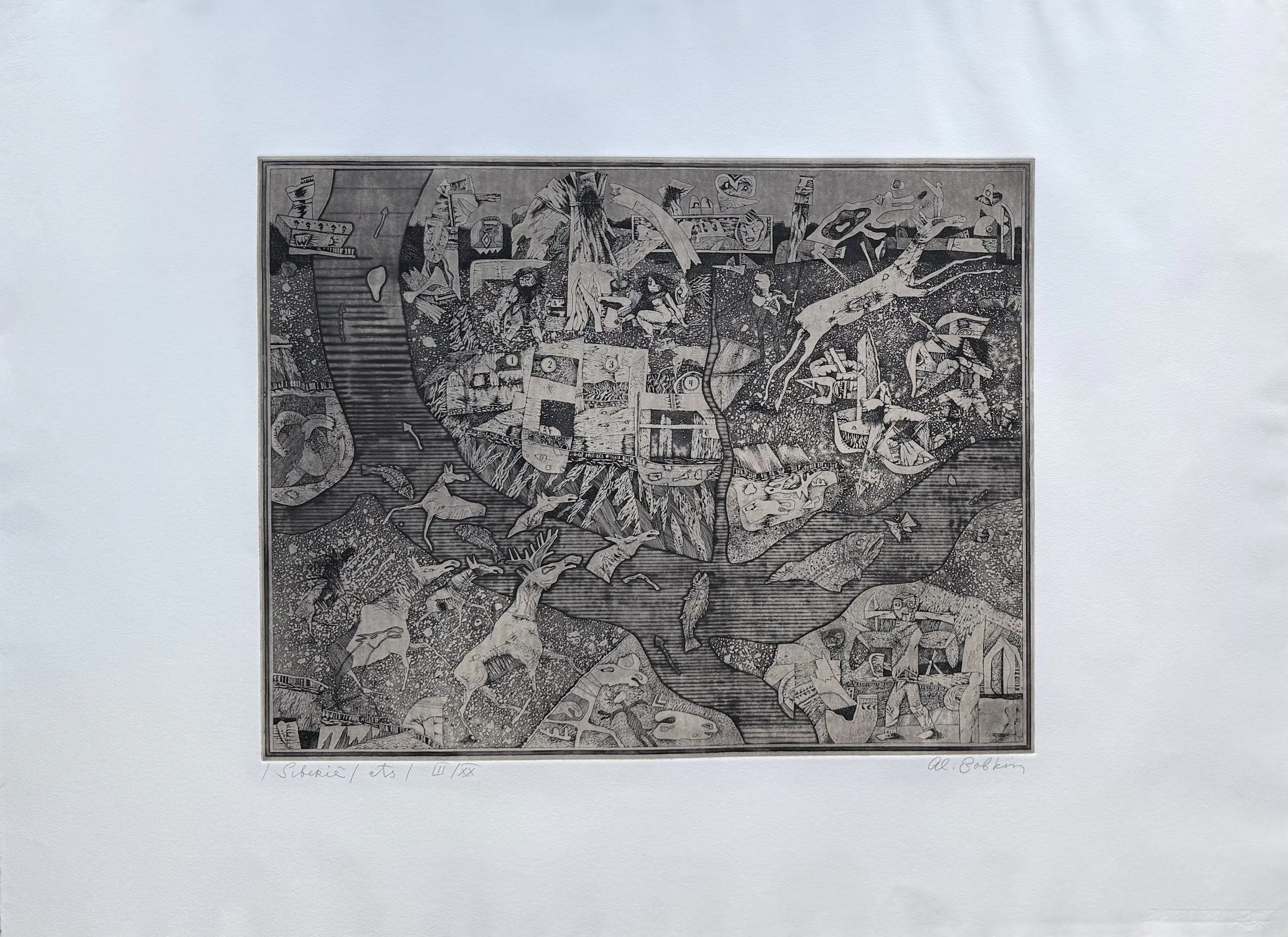
| Dimensions | 79 x 107 cm (h x w) |
| Signed | Hand signed |
| Edition | 20 exemplaren |
Translated with Google Translate. Original text show .
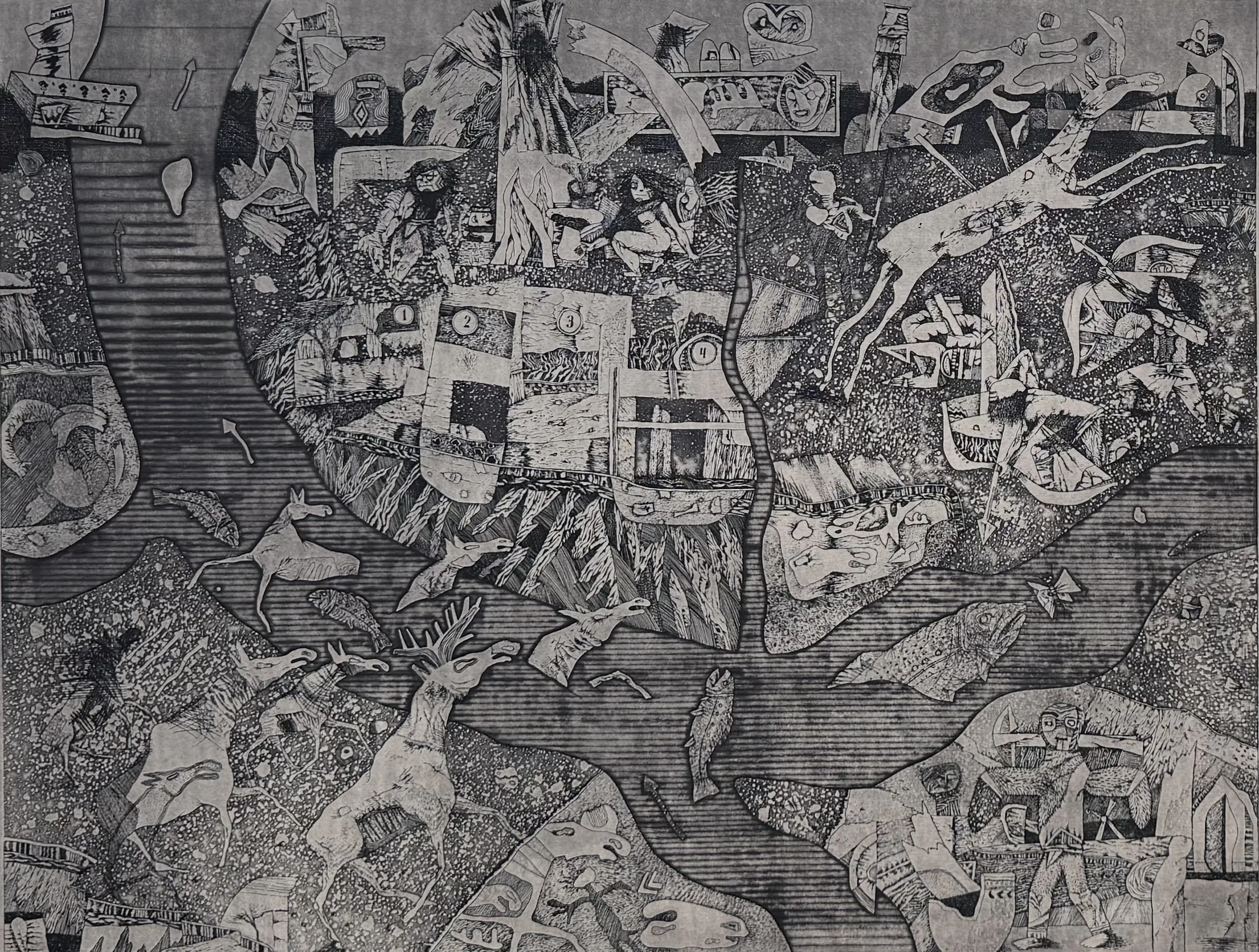
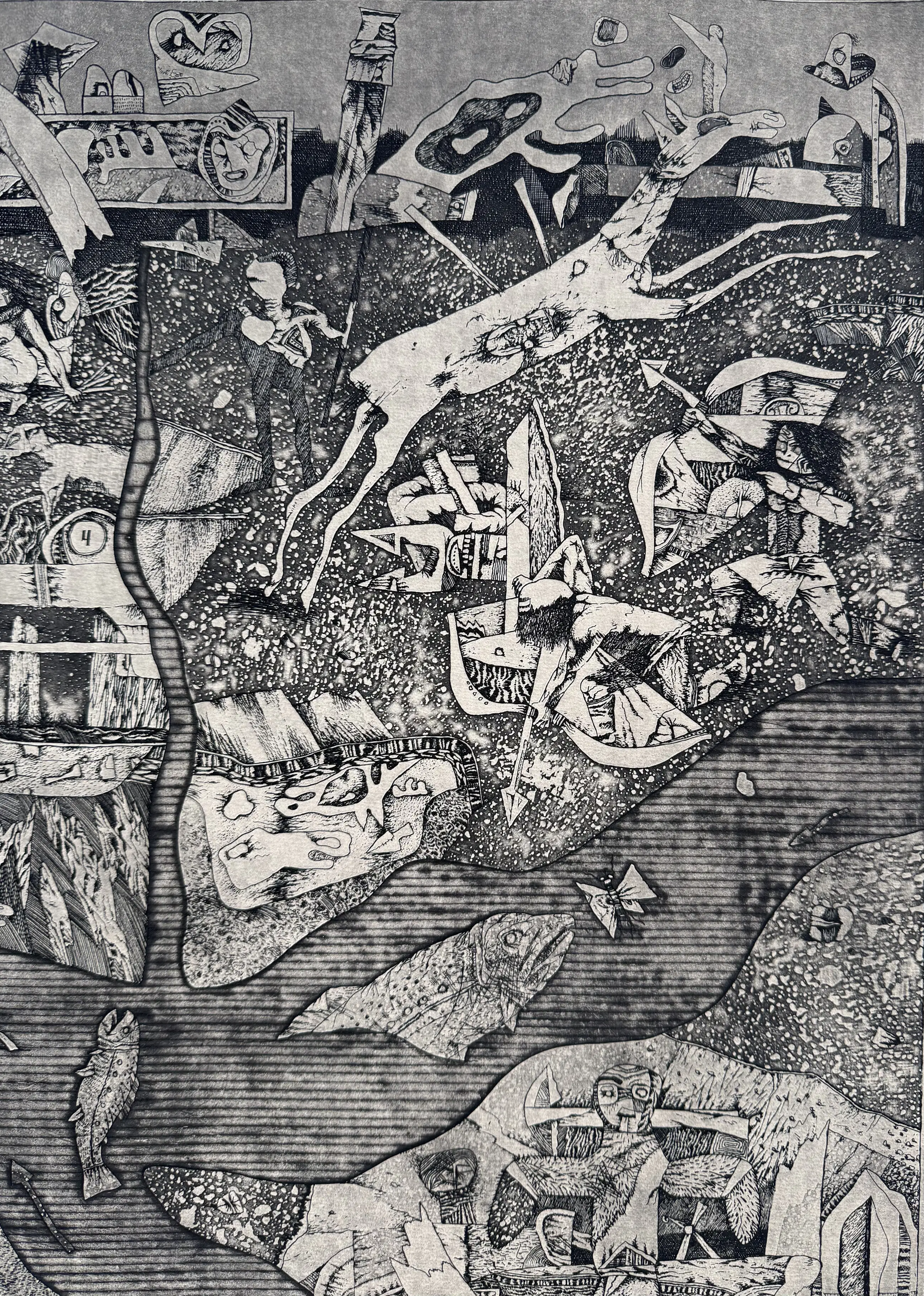
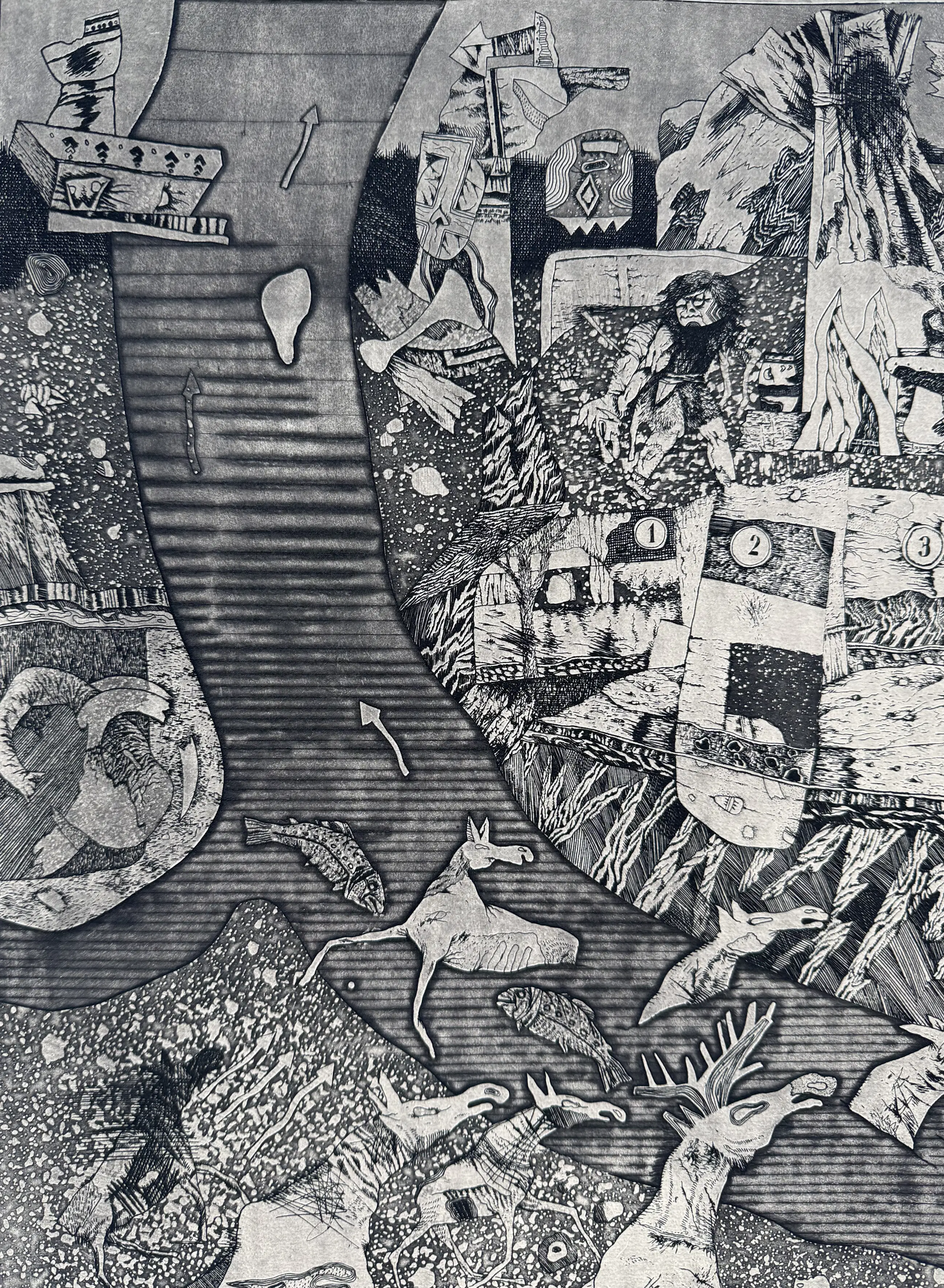
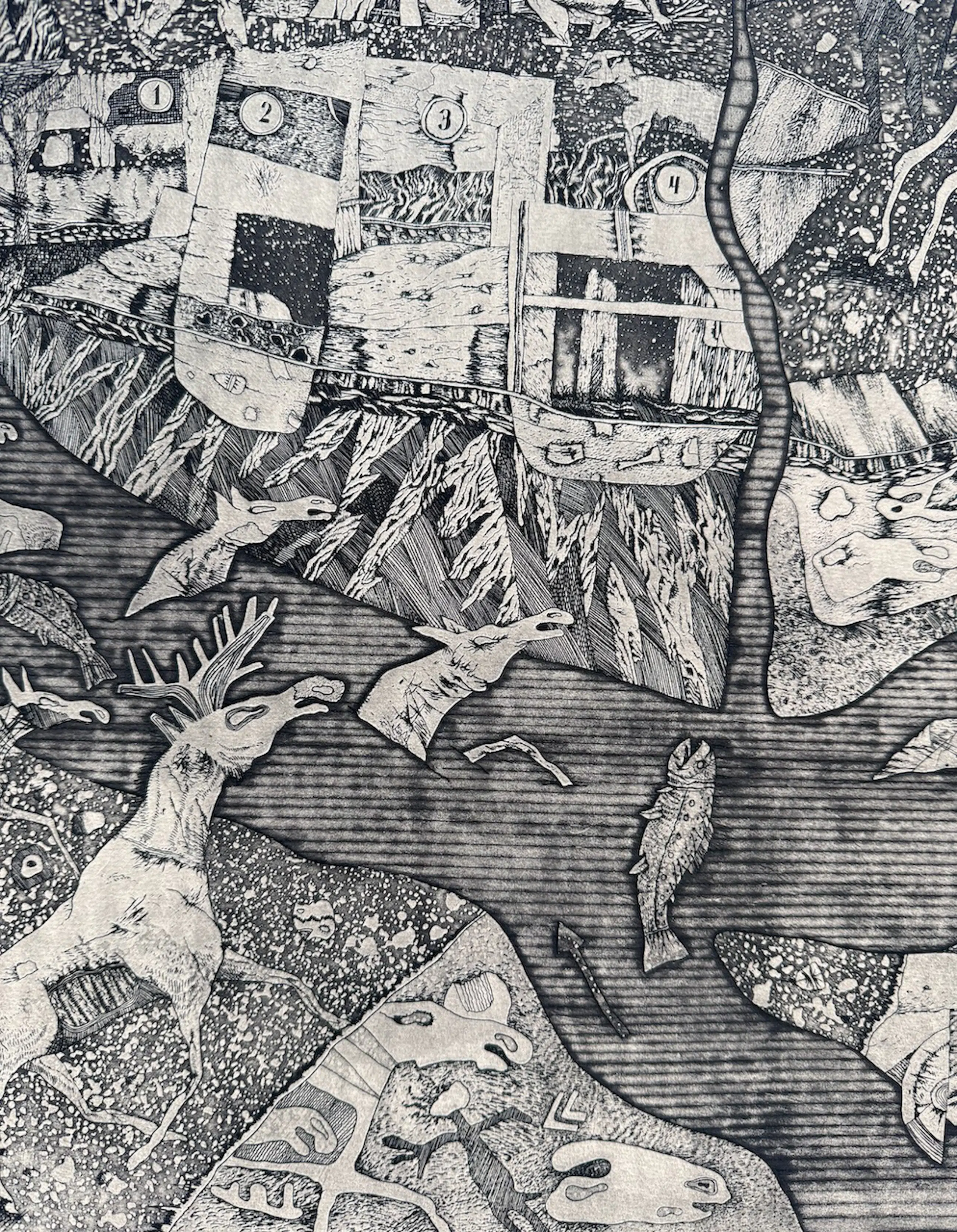
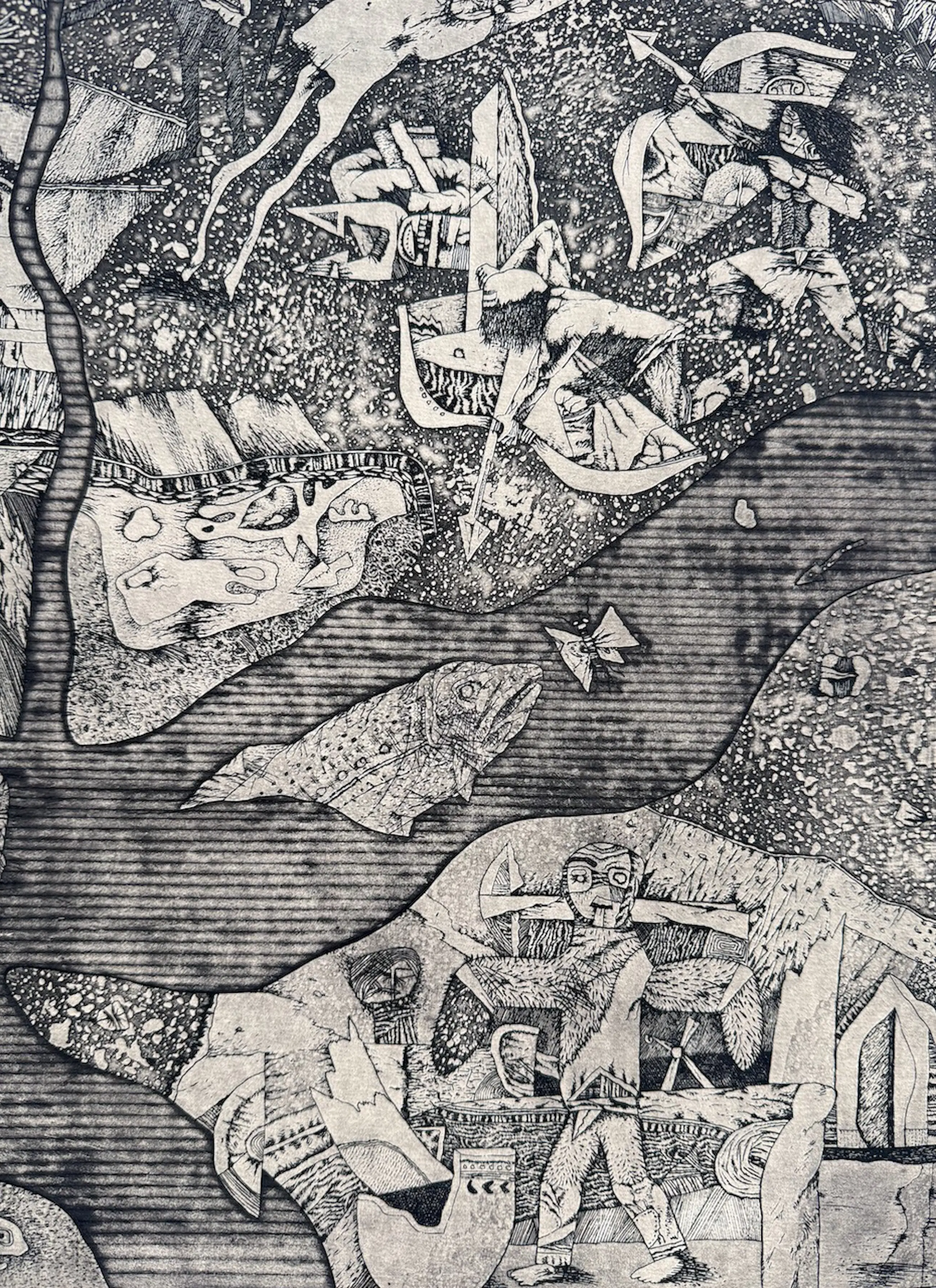
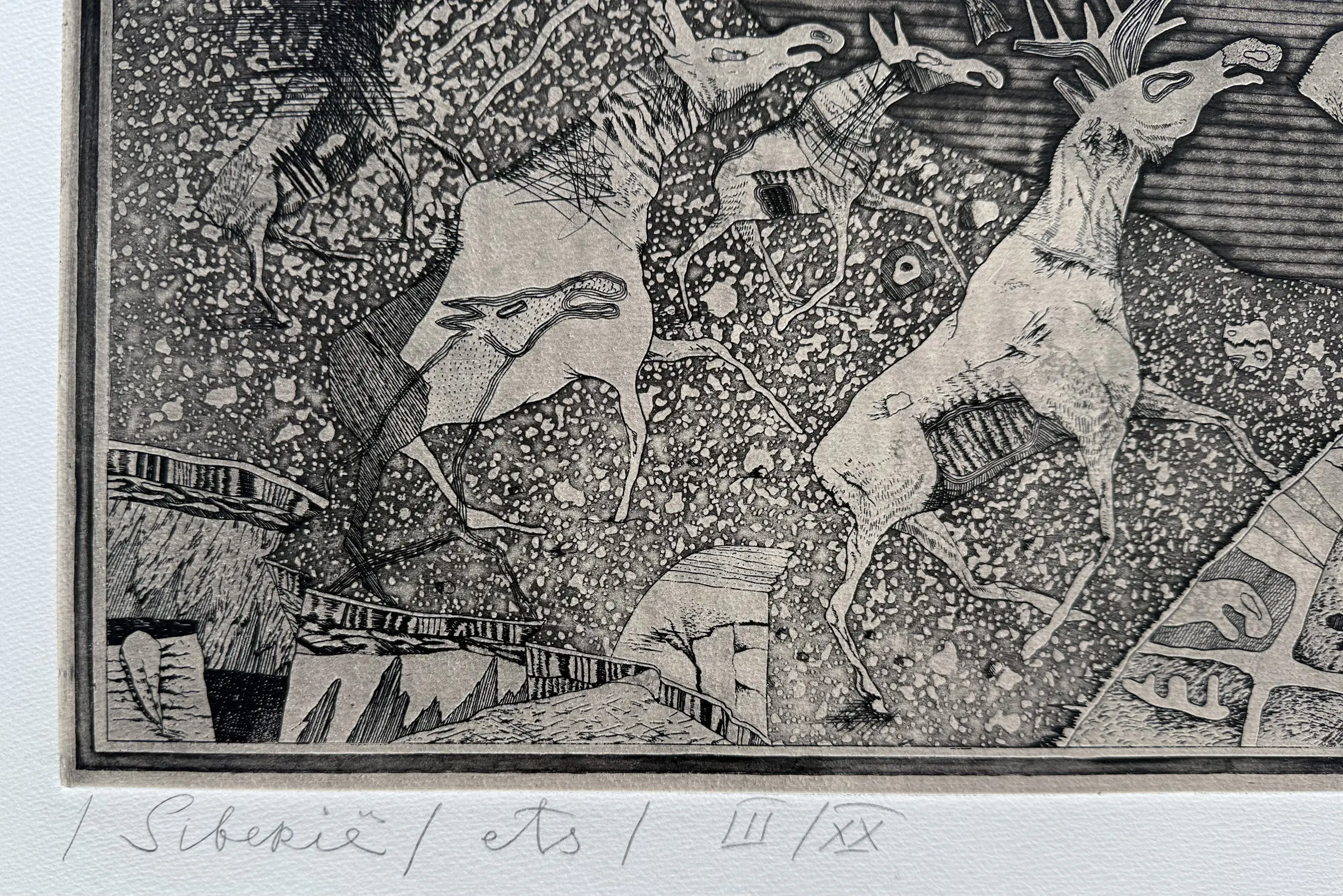
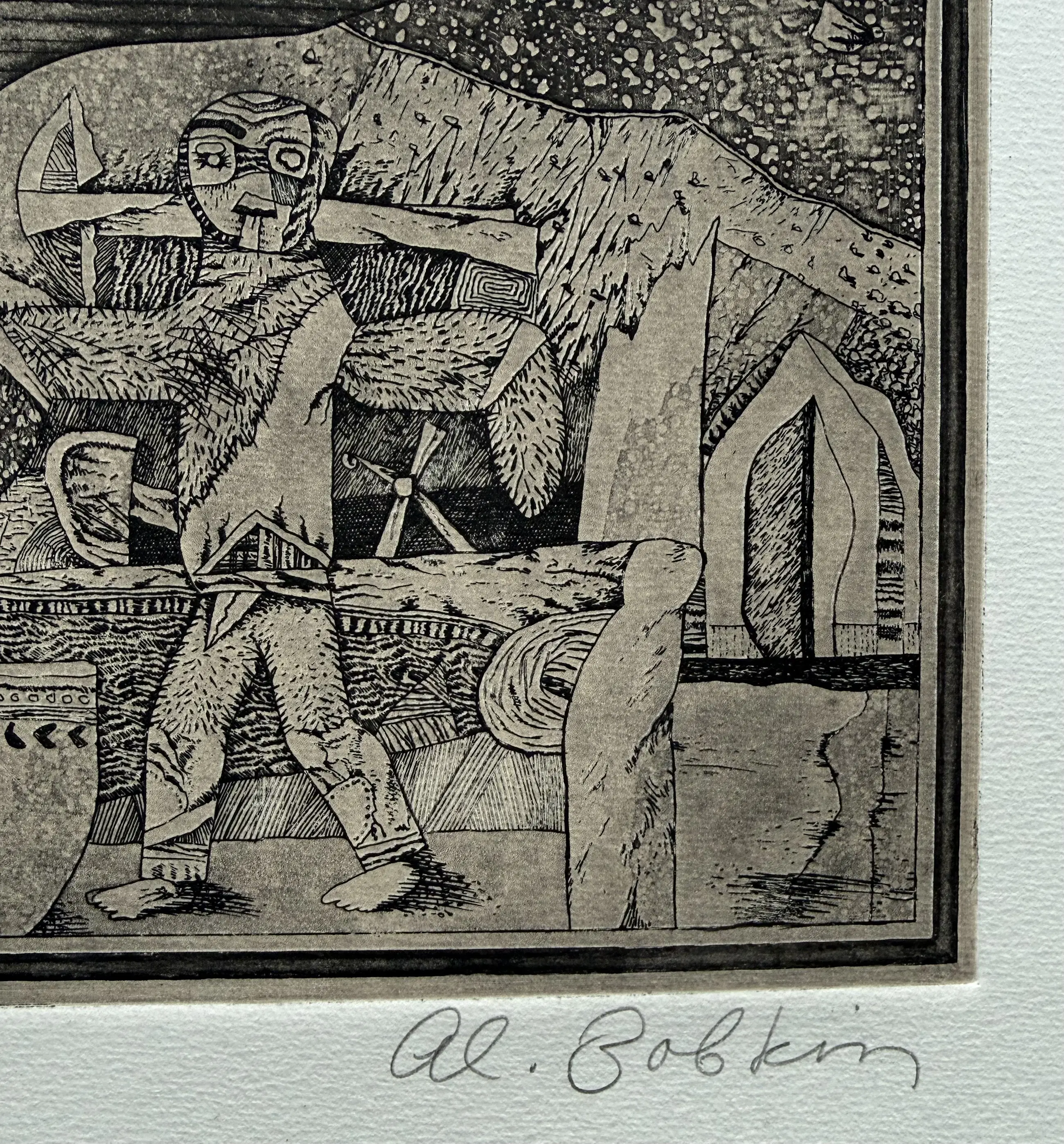
Museum etching by Alexander Bobkin. Signed in pencil lower right and titled and numbered by the artist lower left.
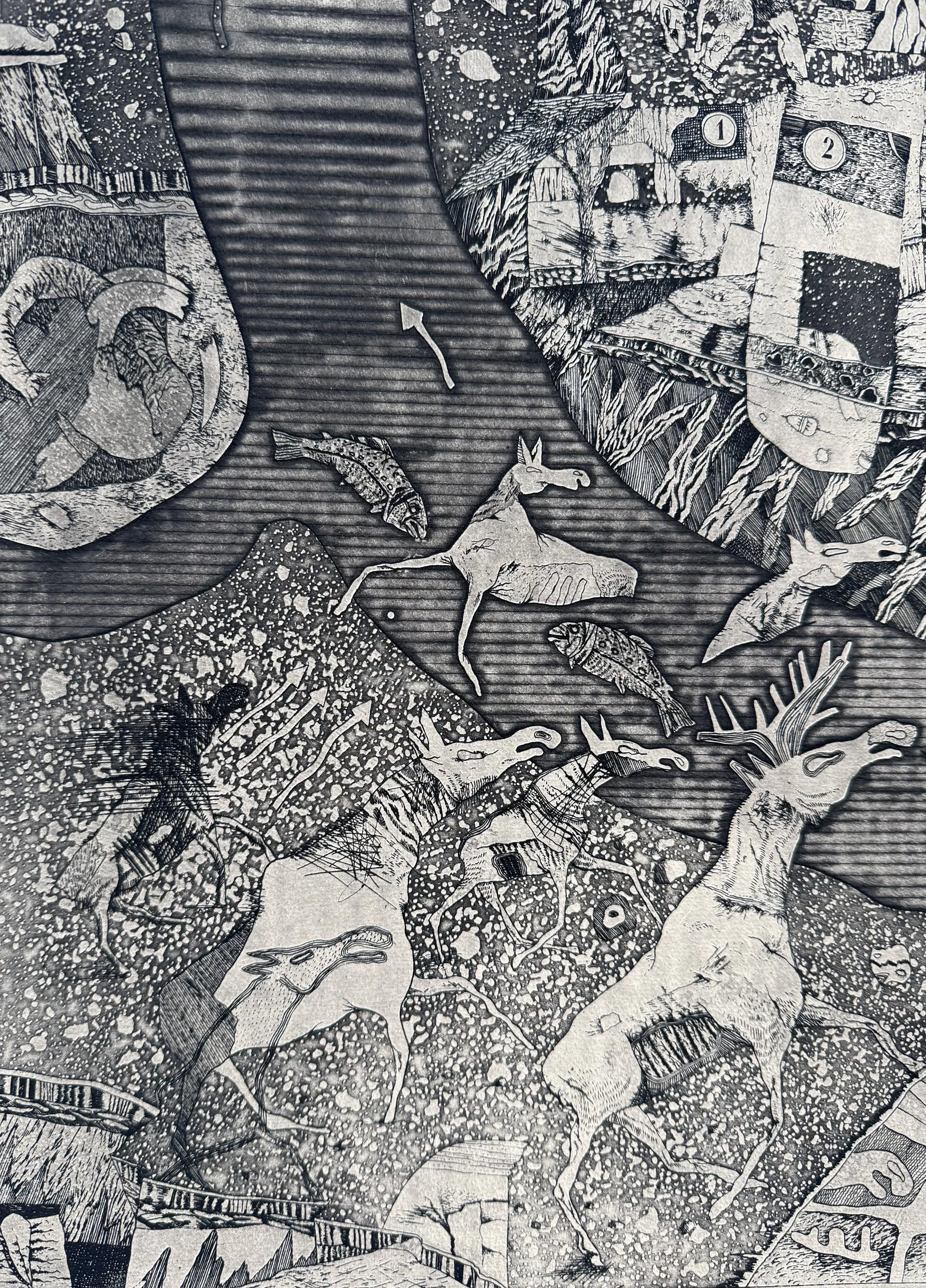
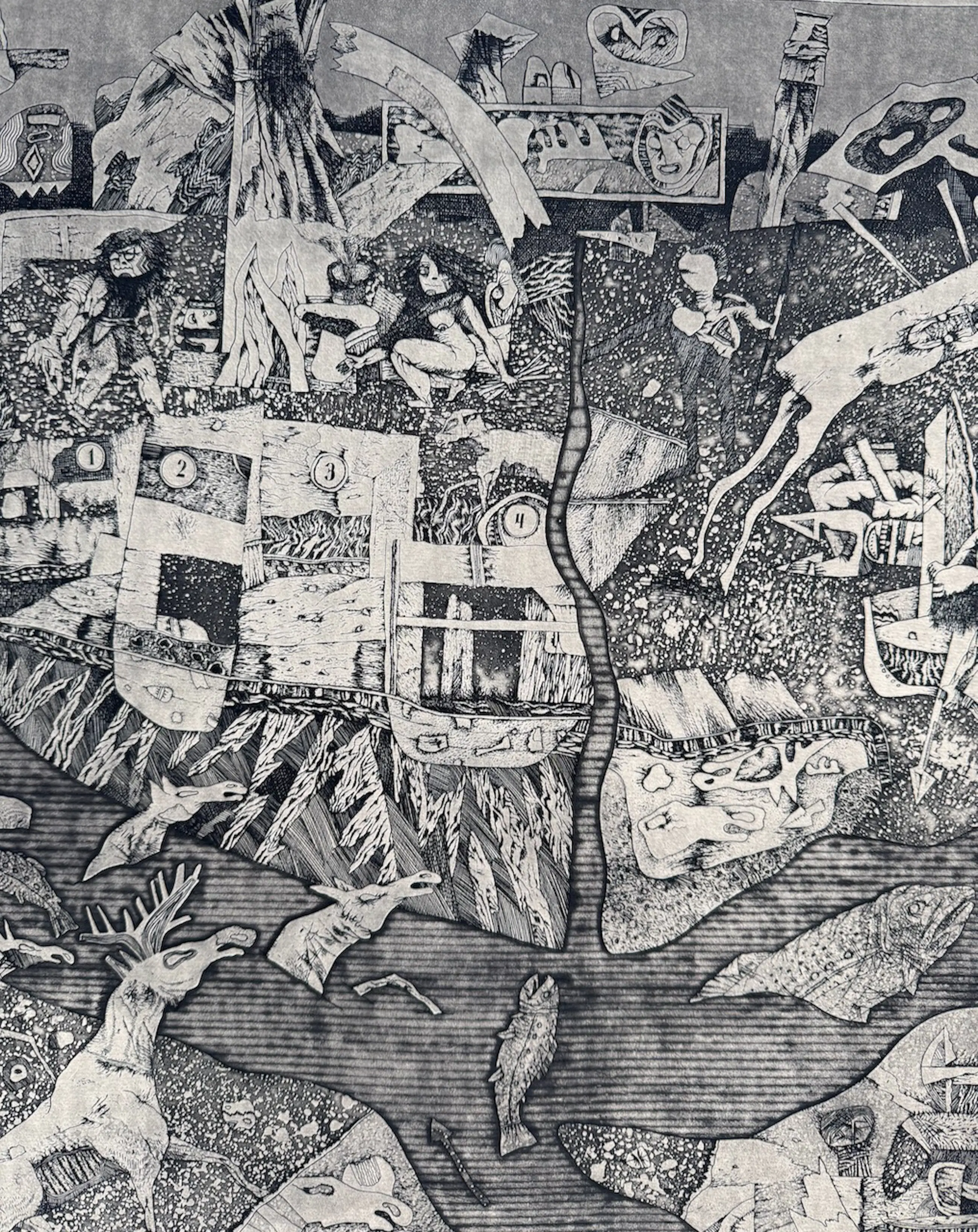
With an incredible amount of detail and symbolism, it was etched onto the plate and printed in a very small edition of only twenty copies.
The sheet measures 79 x 107 cm. The image itself measures 50 x 64 cm.
The whole is in neat condition.
Alexander Bobkin (Novokuznetsk, May 17, 1952) is an artist who has lived and worked in the Netherlands since 1991. Since the late 1970s, he has been known for his etchings, paintings, and drawings.
Bobkin was born in Stalinsk, now Novokuznetsk, in Siberia, in the former Soviet Union. In 1967, he entered the art academy in Yaroslavl, graduating in 1972 with a focus on etching and printmaking. After returning to his native city, he participated in exhibitions at various levels, including international exhibitions. In 1977, he became a member of the Union of Artists of the USSR, where he also served on the board from 1983 to 1986. This position allowed him to travel more extensively and further develop his work. In 1984, he was awarded the "Youth of Kuzbass" prize for his work.
As a board member of the graphic section of the Union of Artists, he organized artist trips through Siberia and other regions of the Soviet Union. During these journeys, he frequently encountered shamans and local tribes, a theme that became a key theme in his later work. In the late 1980s, Bobkin attracted increasing international attention. En route to an exhibition in London, he and his wife, artist Lucy Besson, stopped in the Netherlands. Due to the political situation in his native country, they decided to remain there and in 1991 were granted a residence permit based on their significant cultural interest.
Bobkin has lived and worked in the Netherlands since the early 1990s. This period marked a new phase in his career, in which he increasingly focused on painting. In his first year in the Netherlands, he had a successful exhibition at the Delta Art Gallery in Nijmegen, after which he exhibited regularly, both in the Netherlands and internationally, including in the United States, England, Germany, Belgium, Russia, and Japan.
Bobkin's work ranges from abstract to figurative and is characterized by a mystical atmosphere. He weaves references to Western cultural traditions and his personal mythology into his art. Over the years, his work has evolved toward an increasingly abstract form. The image becomes a symbol that represents the essence of the being depicted. By reducing the figuration of objects in his work, he allows the void to speak. In his words: "When setting up the background, I sometimes discover that everything is already there and I don't need to go any further. I leave these works empty—or actually, not empty at all; there's still a lot going on."
Besides painting, photography also plays a major role in Bobkin's life. In the 1980s, Bobkin was actively involved in social-documentary photography. In this work, he depicted the stark reality of the era, which stood in stark contrast to the imposed image of the time. In the Netherlands, this continued in the form of street photography, in which people and their surroundings take center stage.[6] "With photography, I immerse myself in reality, unlike painting. In that case, I look at people or situations from a greater distance." He also worked on projects as Mariken van Nimwegen.
Expeditions and residencies
1977: International Symposium Hungary
1978: Graphic symposium Kuzbass
1982: Symposium on drawing and watercolor Leningrad
1984: International Symposium Kuban
1987: International Expedition Khakassia
1988: International Expedition Taimyr
1988: International Symposium Turkmenistan
1989: Voronezh International Symposium
2003: International expedition Kyrgyzstan – Khakassija-Tuva – Baikal - Altay
2005: Autoexpedition Moscow - Altay
2006: International symposium Chanty-Mansijsk
2009: International Summer Symposium Cyprus
Several museums have also added paintings by Bobkin to their collections. These museums include:
Museum of Modern Art Novokuznetsk
Kemerovo Regional Art Museum
Novosibirsk State Art Museum
State Museum of Oriental Art in Moscow.
| Condition | |||||||||
| Condition | Very good | ||||||||
| Shipment | |||||||||
| Pick up | The work can be picked up on location. As a buyer you must bring your own packaging materials. The location is: Woudrichem, The Netherlands | ||||||||
| Shipment | Parcel post | ||||||||
| Price | > 10KG or bigger than 1.00 x 0.50 meter
| ||||||||
| Guarantee | |||||||||
| Guarantee | By putting the item up for auction, I agree with the Terms of Guarantee as they are applicable at Kunstveiling regarding the accuracy of the description of the item | ||||||||
| Consumer law | Business seller. Consumer law applies to a business seller. Read more | ||||||||
The seller takes full responsibility for this item. Kunstveiling only provides the platform to facilitate this transaction, which has to be settled directly with the seller. More information .
Alexander Bobkin (1952)
 Dutch
J
JJvanWijk The Netherlands
2015 | |
1336 sold | 69 followers |
107 cm
79 cm