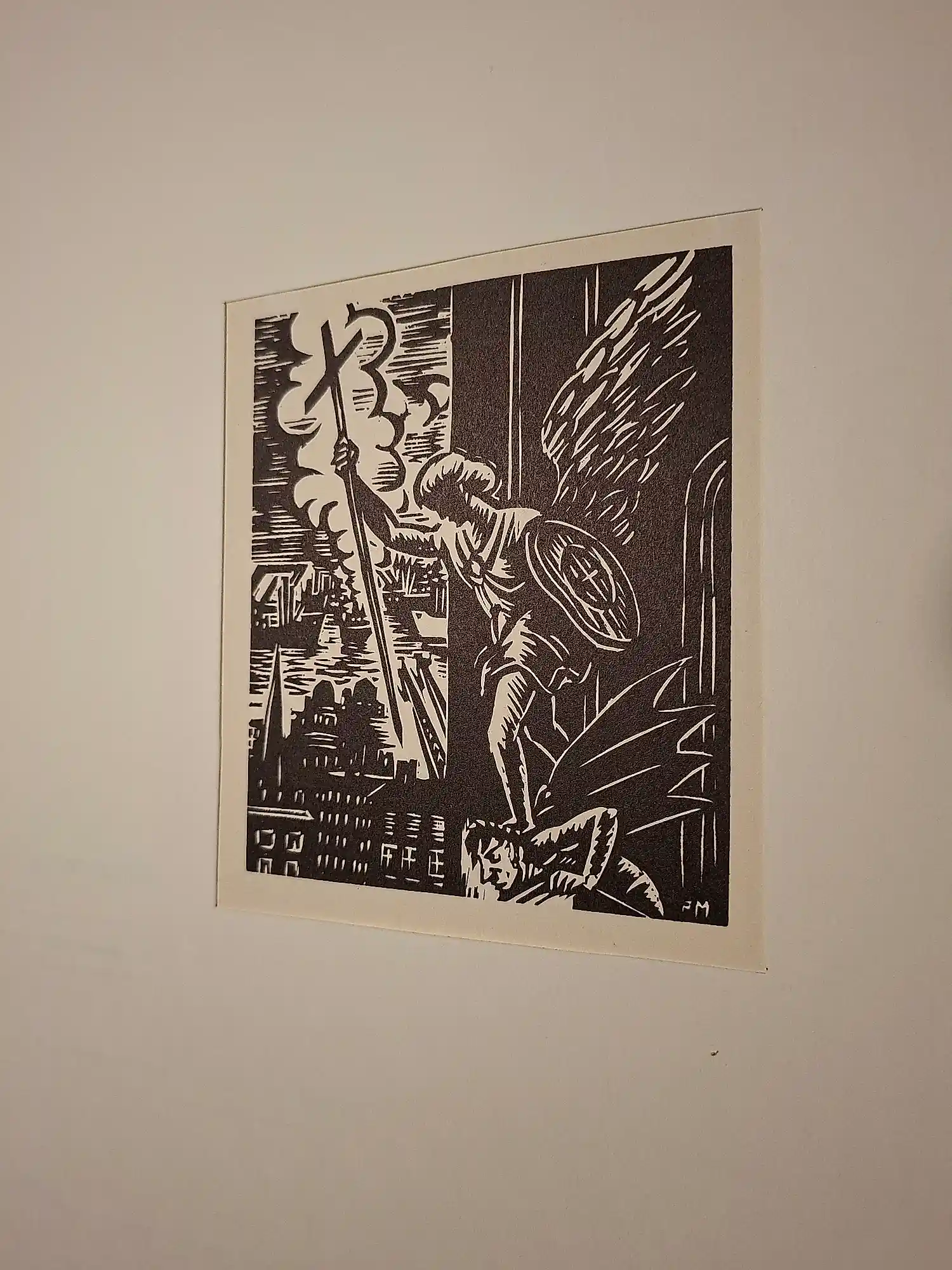
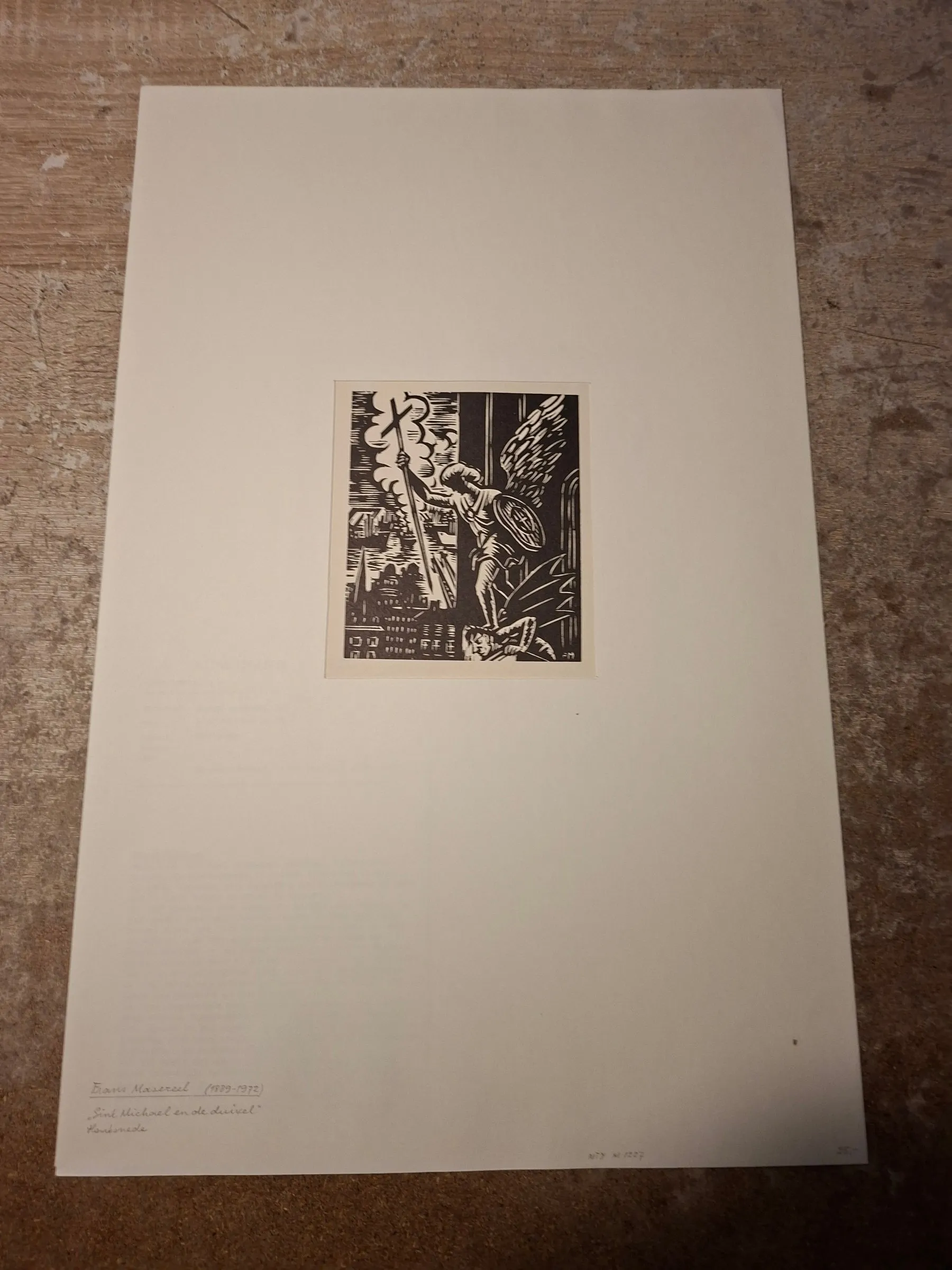
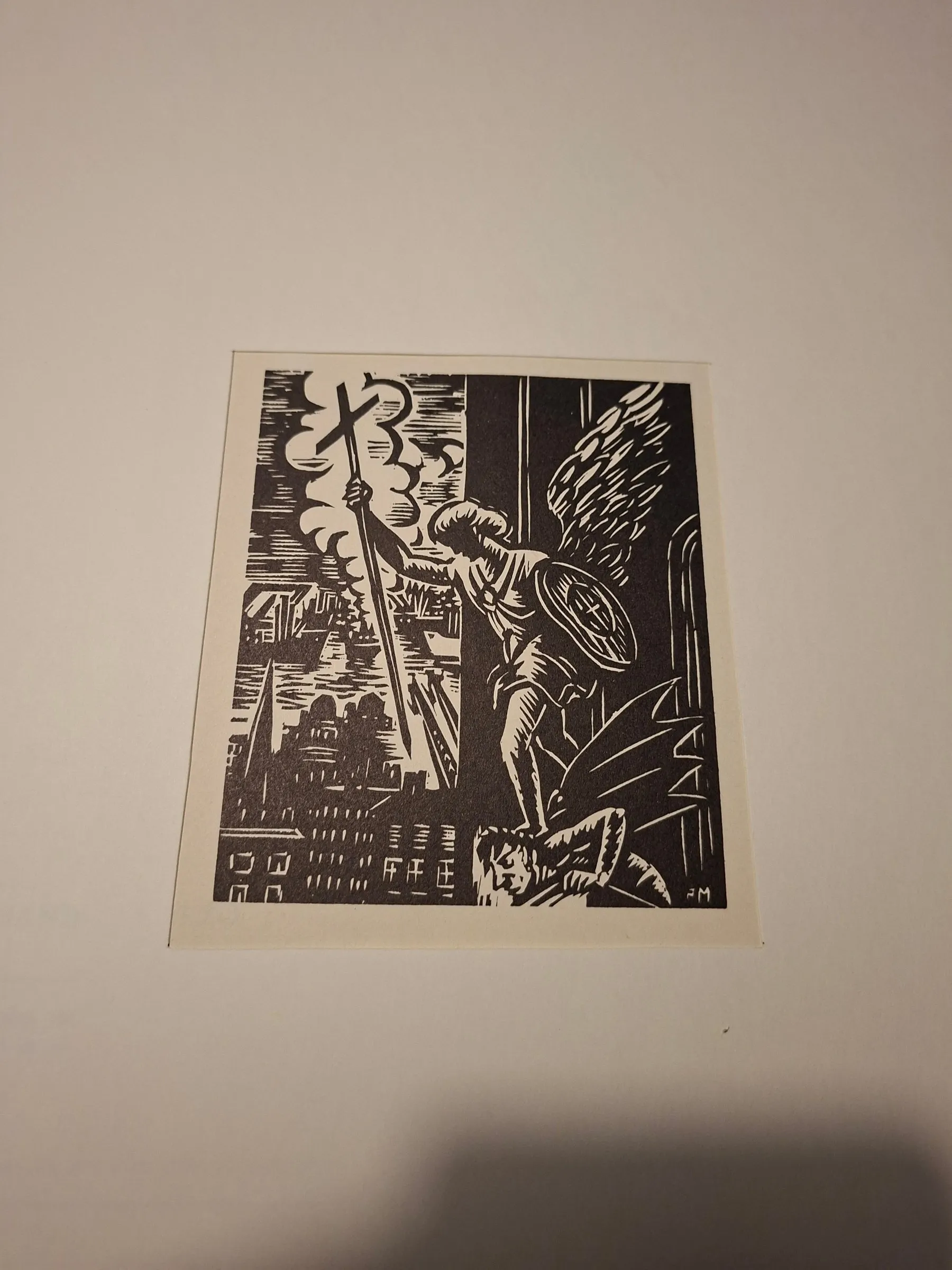
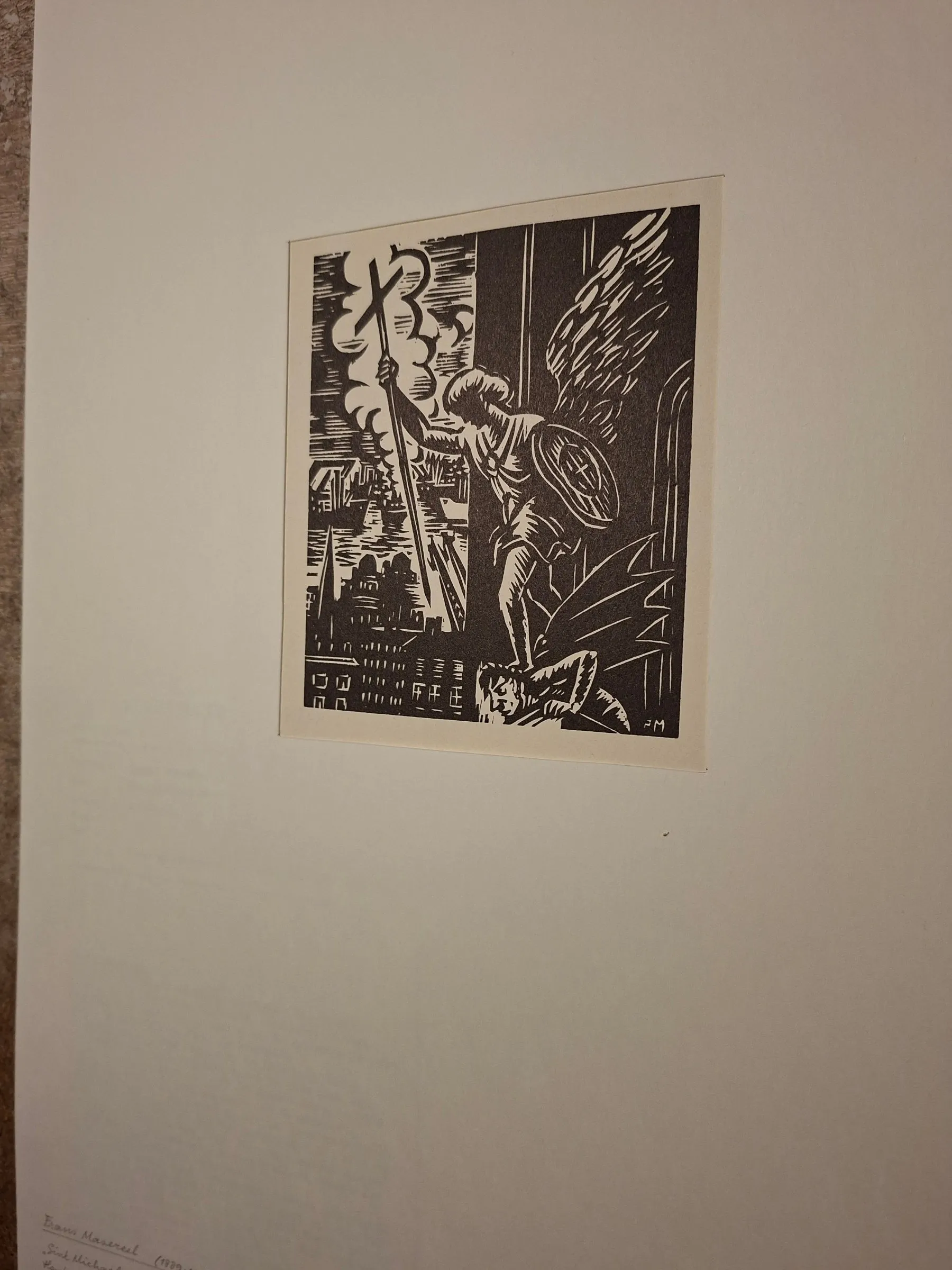
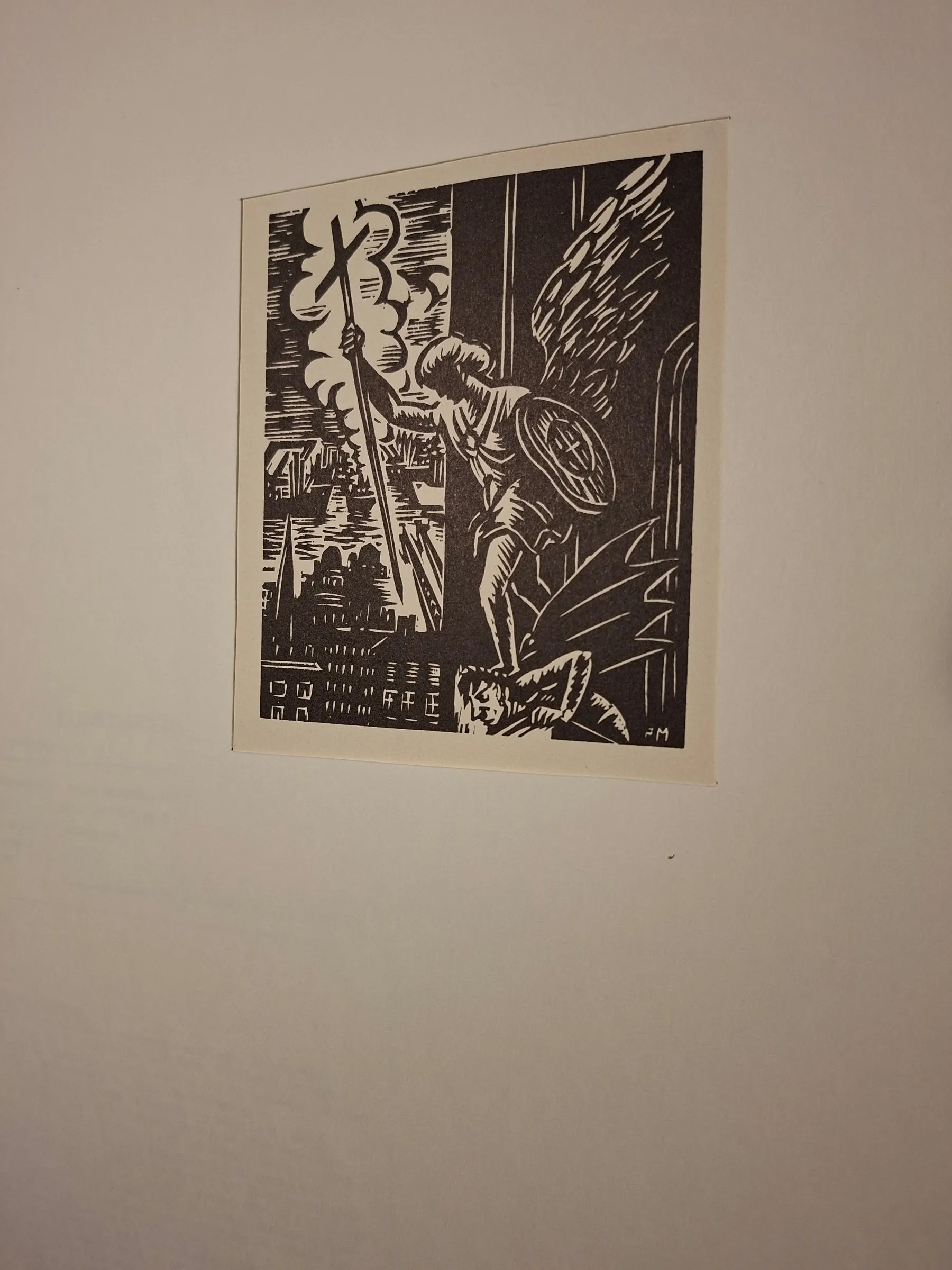
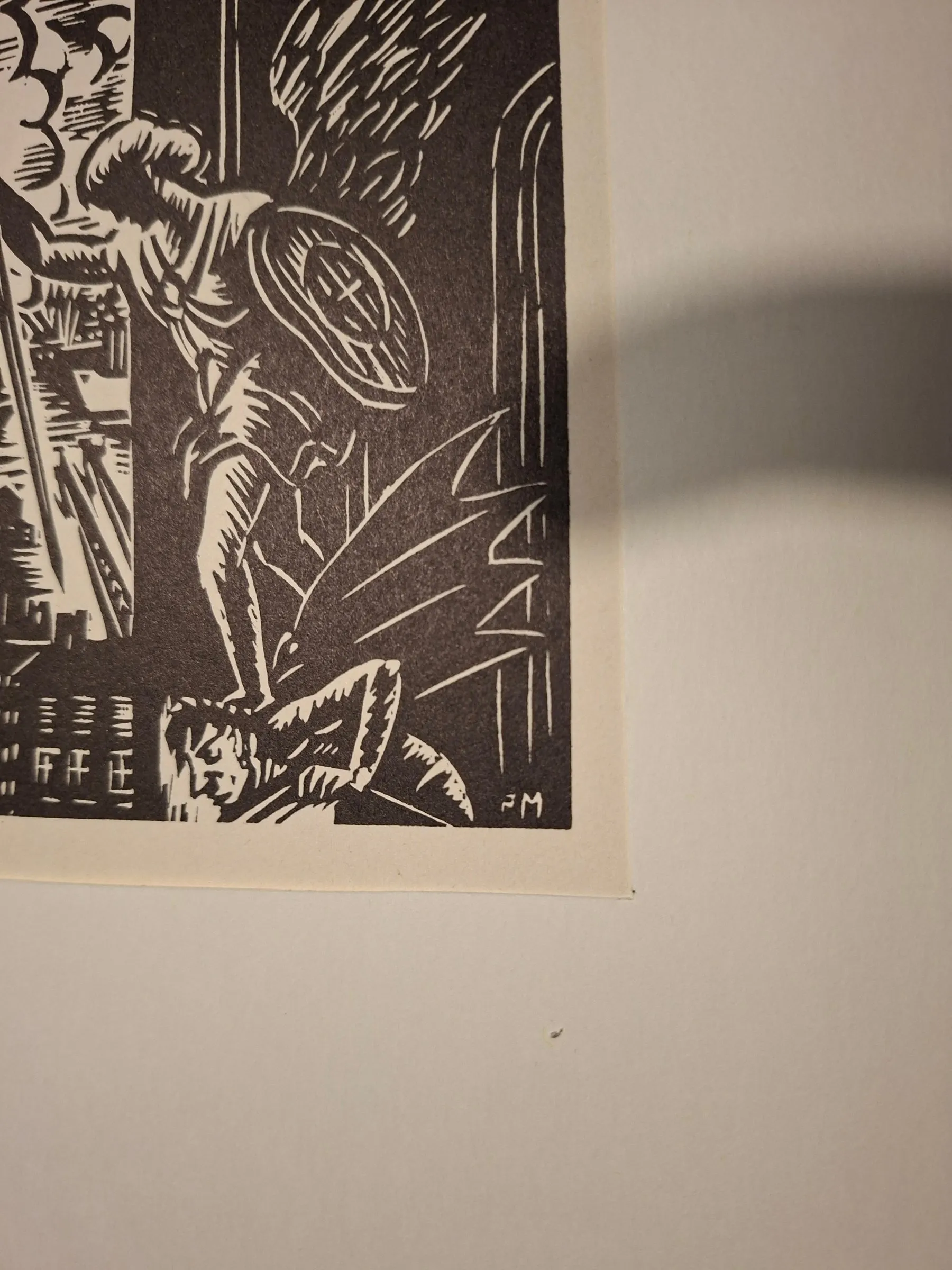
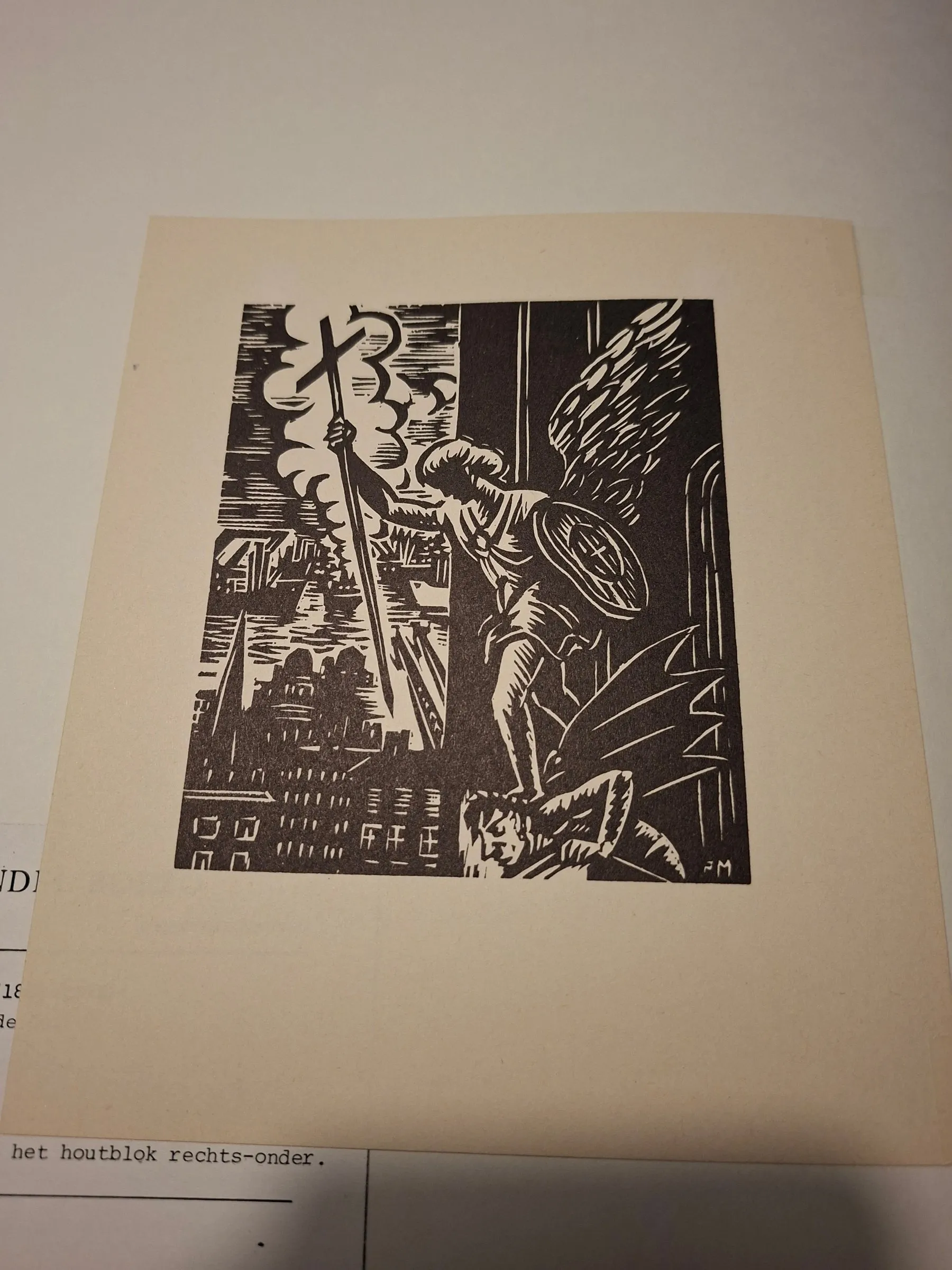
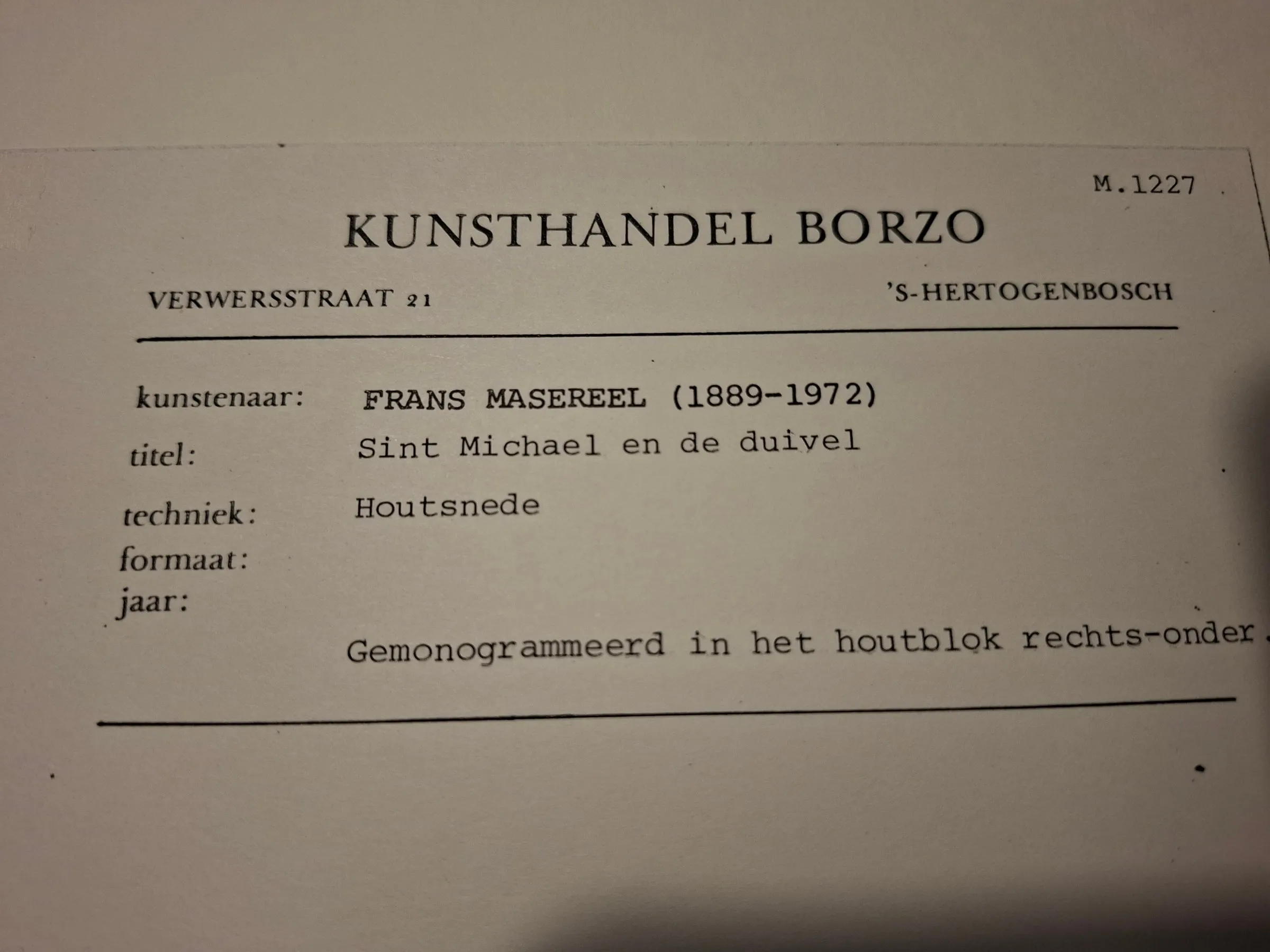
Frans Masereel - Woodcut, Title, "Saint Michael and the Devil".

Starting bid €35
Buyer's premium : 15%
| Pick up | Yes, possible |
| Location | ALKMAAR, The Netherlands |
Auction details
| Start time | 27-10-2026 at 17:29 |
| End time | 10-11-2026 at 21:04 |
Please note: if a bid is made in the last 5 minutes, the auction will be extended by 5 minutes.
C
CGMKunst The Netherlands
2024 | |
650 sold | 19 followers |
- Description
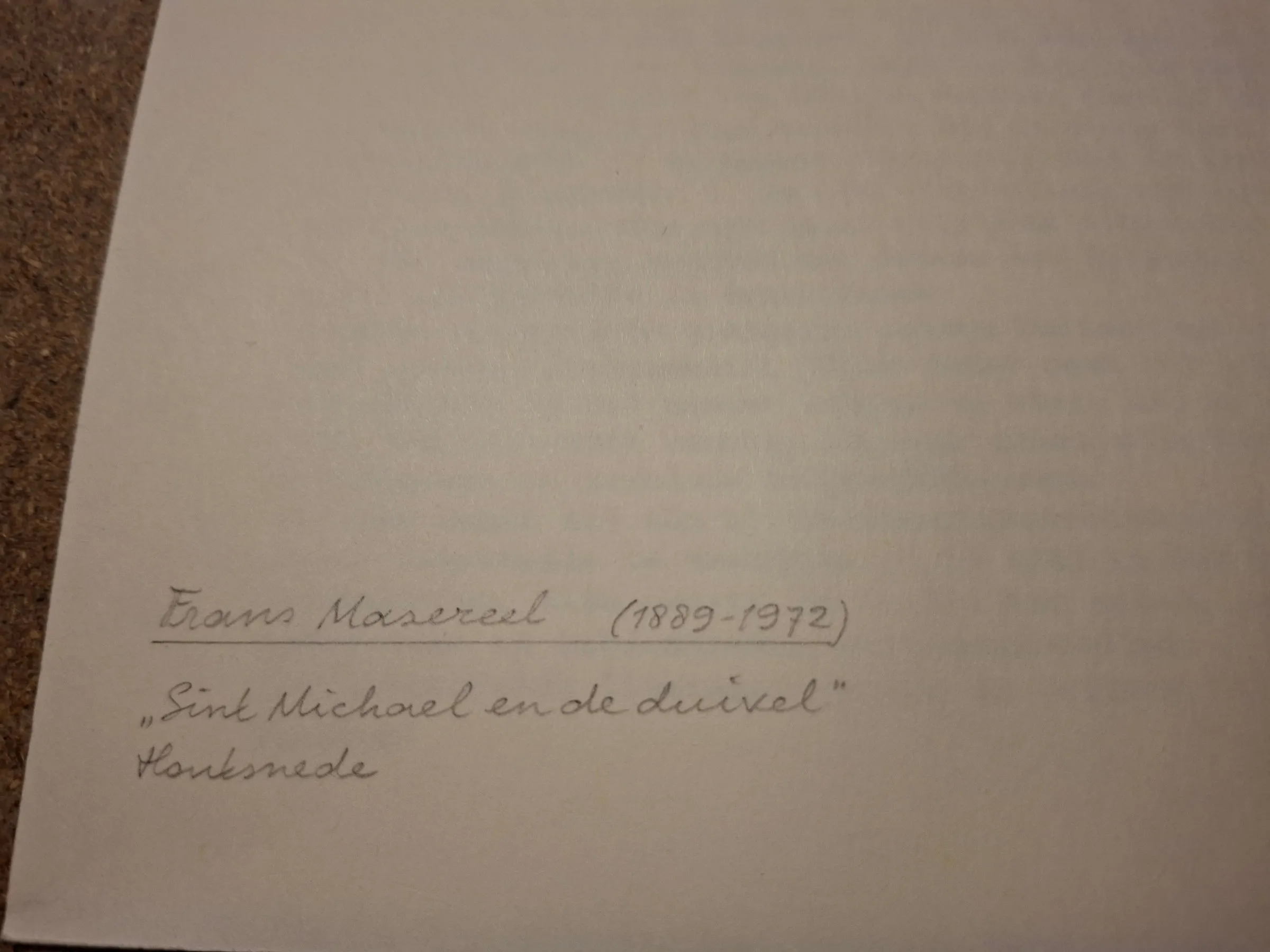
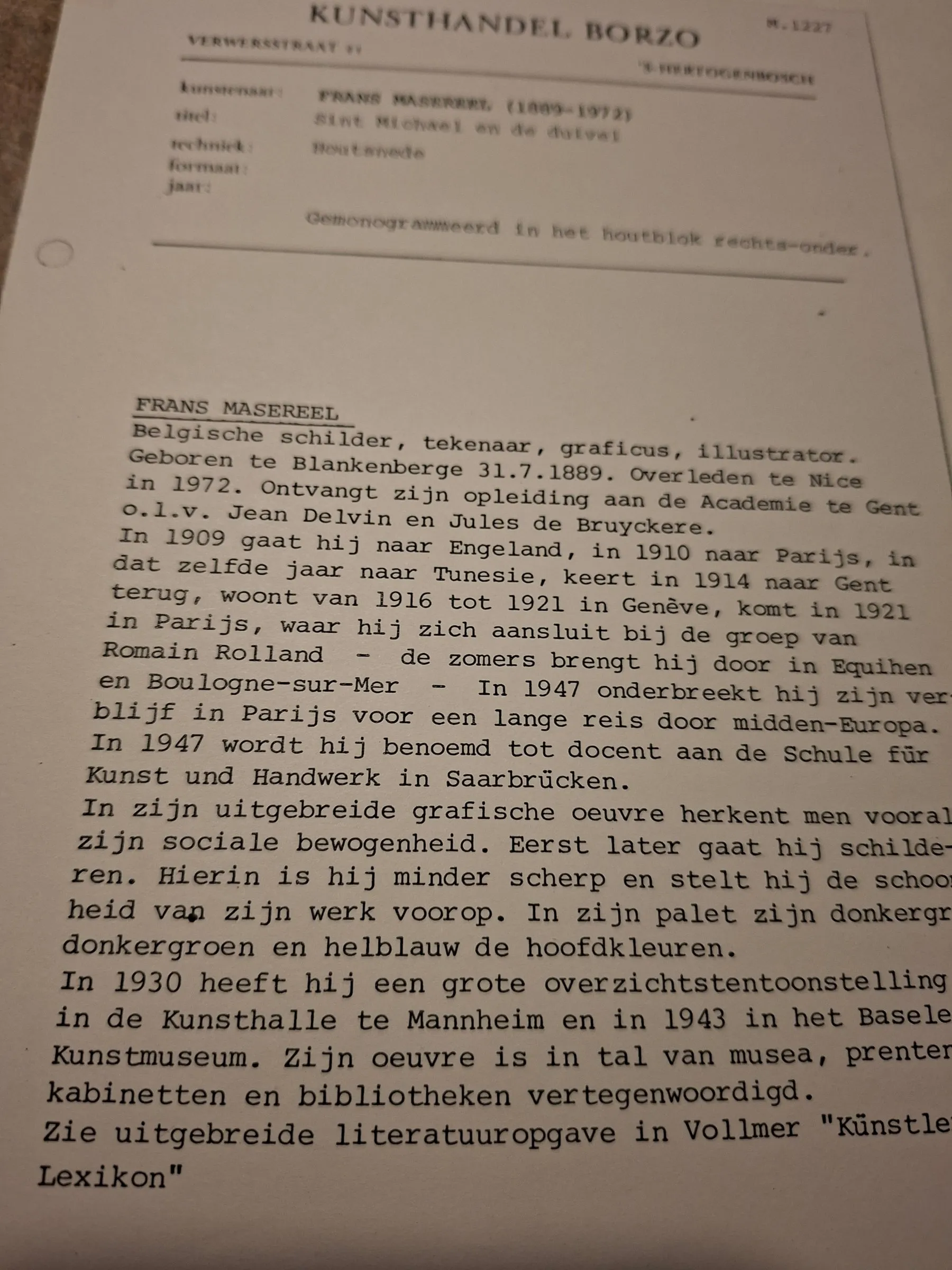
- Frans Masereel (1889-1972)
| Type of artwork | Prints & Editions |
| Period | 1900 to 1944 |
| Technique | Wood/Linocut |
| Style | Realistic |
| Subject | Religious |
| Framed | Only in Passe-partout |
| Dimensions | 14 x 12 cm (h x w) |
| Passe-partout | 50 x 32.5 cm (h x w) |
| Signed | Unsigned/Print signed |
Translated with Google Translate. Original text show .
Frans Masereel (1889-1972): Saint Michael and the Devil.
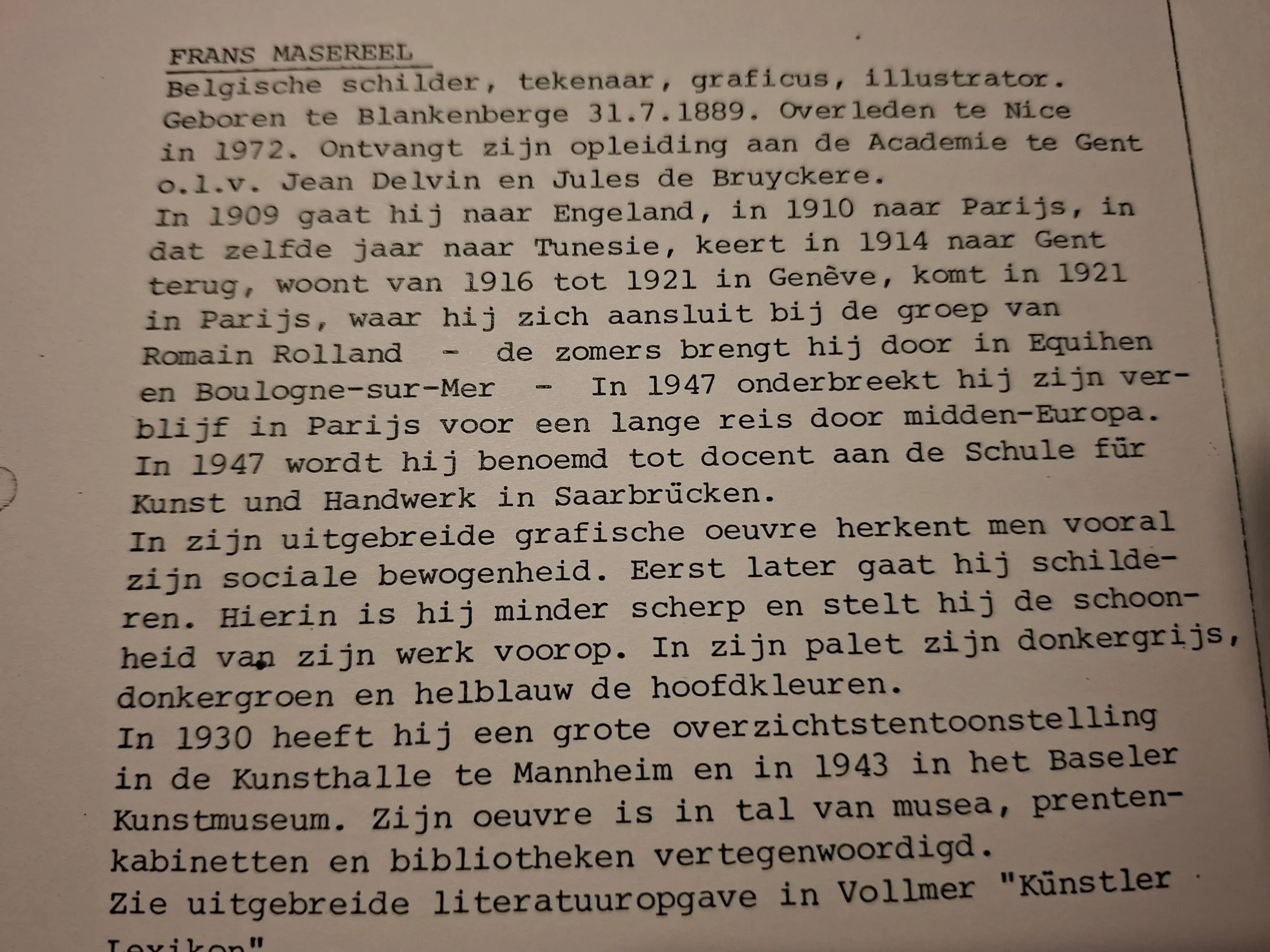
Original woodcut, monogrammed "FM" in the block, dimensions H.14 x W.12 cm, in Passe-Patoet H.50 x W 32.5 cm. Masereel was born in Blankenberge, on the Belgian coast, where his wealthy French-speaking parents from Ghent, François Masereel and Louisa Vandekerckhove, resided. In February 1894, the family returned to Ghent. Shortly thereafter, his father died, and his mother remarried in 1897 to the Ghent gynecologist and liberal freethinker Louis Lava. During the years 1907–1910, the young Frans attended "drawing" classes at the Royal Academy of Fine Arts in Ghent, studying under the painter Jean Delvin, among others. From 1906 to 1907, he also took classes in typography and book printing at the School of the Book. He meets the non-conformist Ghent artist Jules De Bruycker, who has a strong influence on the young artist's artistic evolution. He learns the technique of etching from him. In his studio in the working-class district of the Patershol, De Bruycker creates several remarkable portraits of the young Frans Masereel. In 1908, Masereel evades conscription by drawing lots with a high number. He does, however, join the "Garde Civique," a section of the Ghent Civic Guard. He travels extensively and goes to England and Germany in 1908. He visits Paris for the first time in 1909 and sketches the beggars there. In 1910, he meets Pauline Imhoff, a divorced French woman living in Ghent with her daughter. They marry in Geneva in 1921 and remain together for their entire lives. That same year, he travels to Tunisia with Pauline. In July 1911, they move in together in Paris. It is a time of study, searching, and experimenting, and drawing without stopping. In 1912, he participates for the first time in the Salon des Indépendants with three drawings. Here he meets Henri Guilbeaux, the publisher of the influential satirical magazine "L'Assiette au Beure". Eventually, Masereel succeeds in publishing several caricatures in the weekly Les Hommes du Jour on May 17, 1913. He devotes himself to drawings, watercolors, and graphic arts and happens to come into contact with the art of woodcut, intrigued by the late medieval "block books" and the many woodcuts by Albrecht Dürer. He learns the first principles of woodcutting from a certain Quatreboeufs, a friend of the engraver Bernard Naudin.
| Condition | |||||||||
| Condition | Very good | ||||||||
| Shipment | |||||||||
| Pick up | The work can be picked up on location. As a buyer you must bring your own packaging materials. The location is: Alkmaar, The Netherlands | ||||||||
| Shipment | Parcel post | ||||||||
| Price | Up to 2 kg.
| ||||||||
| Guarantee | |||||||||
| Guarantee | By putting the item up for auction, I agree with the Terms of Guarantee as they are applicable at Kunstveiling regarding the accuracy of the description of the item | ||||||||
| Consumer law | This seller has indicated that they are a private seller. Therefore, consumer law does not apply. Read more | ||||||||
The seller takes full responsibility for this item. Kunstveiling only provides the platform to facilitate this transaction, which has to be settled directly with the seller. More information .
Frans Masereel (1889-1972)
 Belgian
C
CGMKunst The Netherlands
2024 | |
650 sold | 19 followers |
32.5 cm
50 cm
12 cm
14 cm