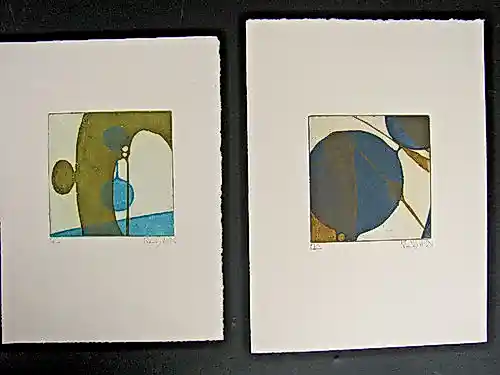
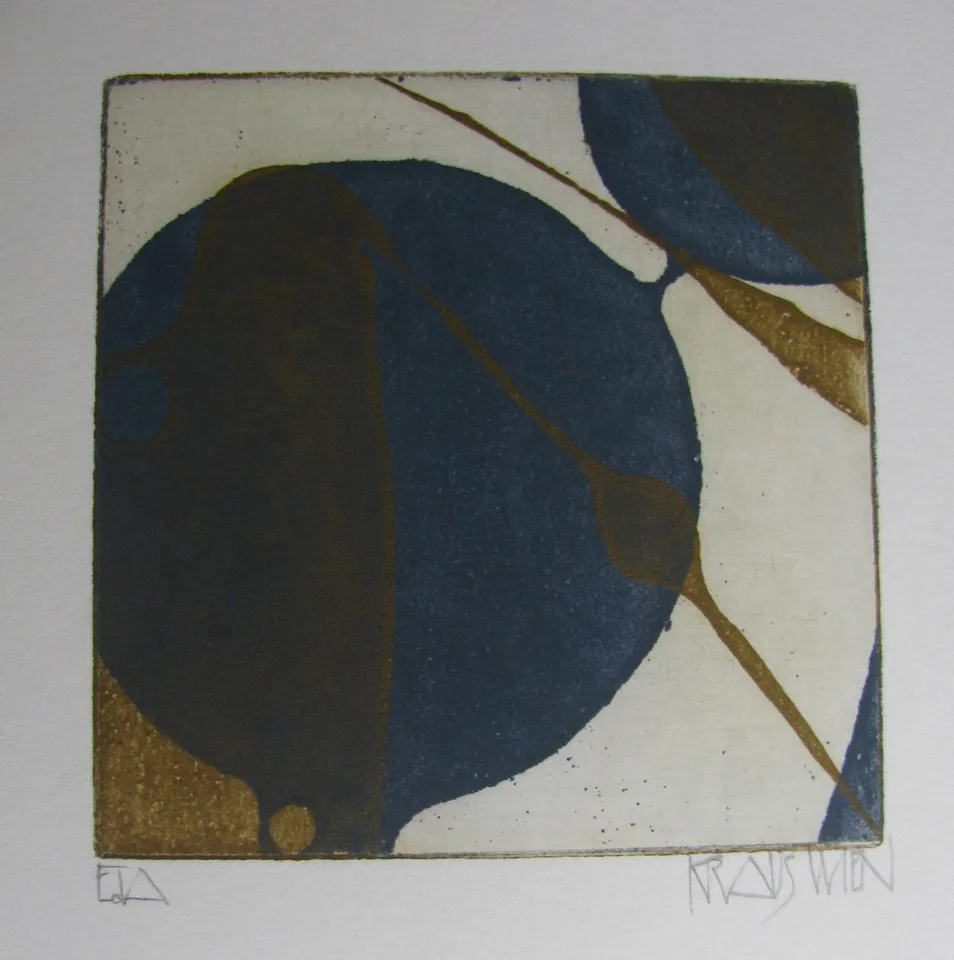
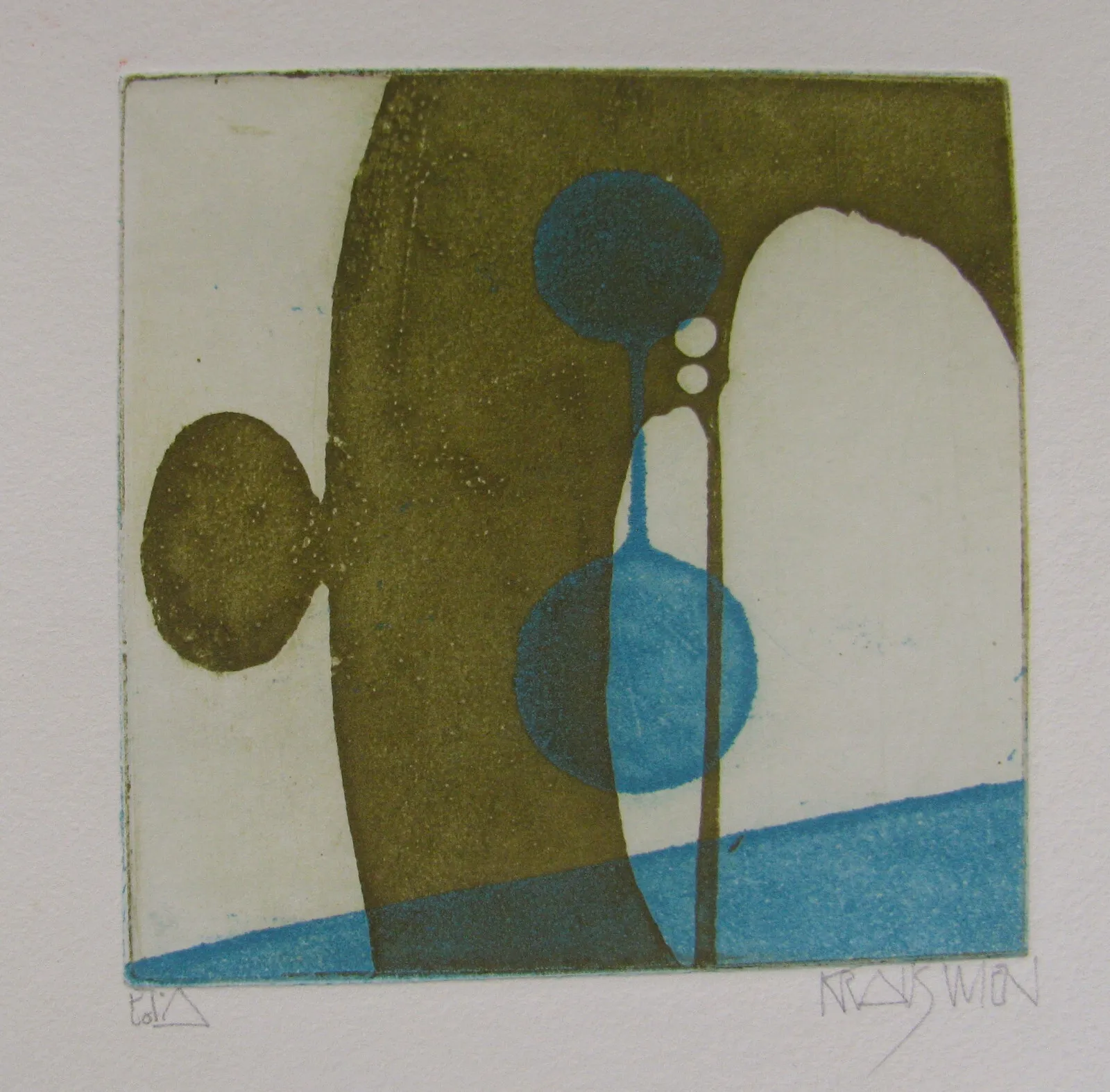
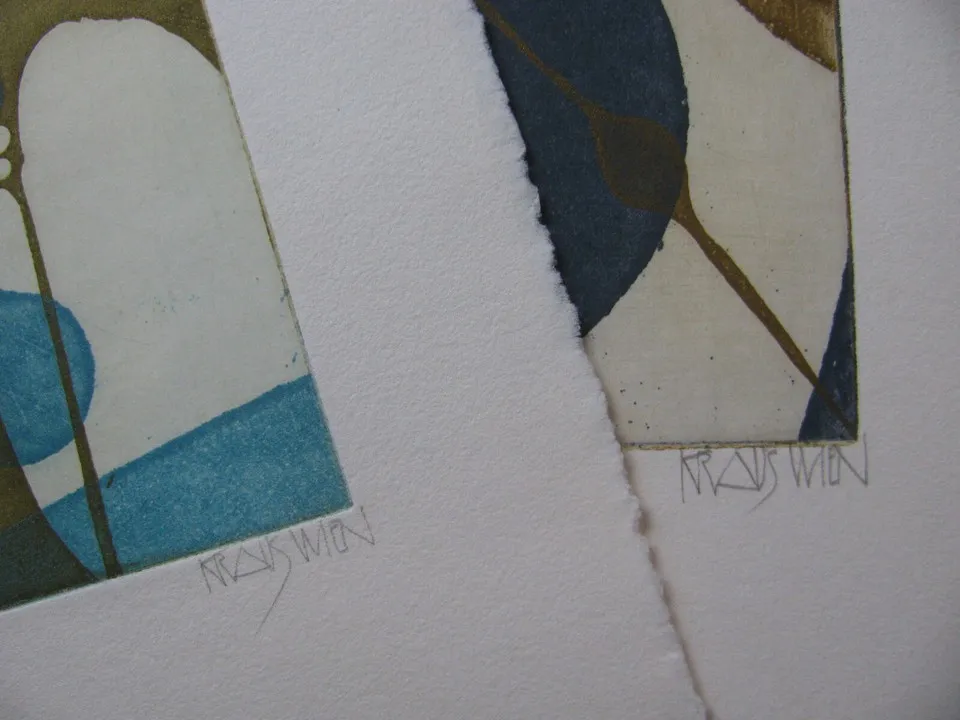
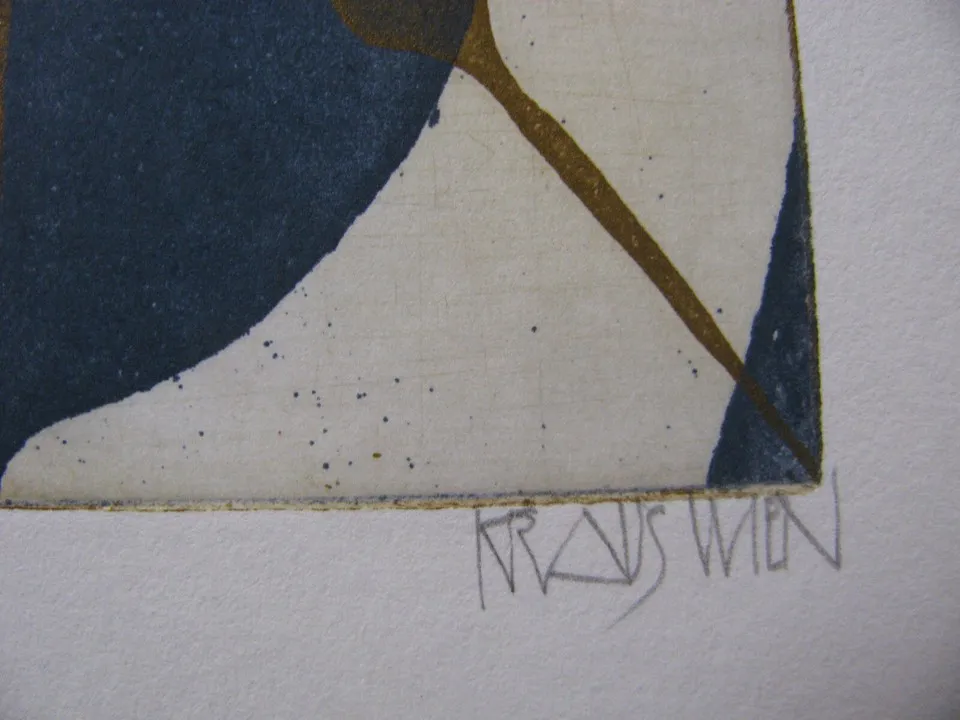
Gunther Kraus - 2 IRON ETCHINGS. E.A. signed

Auction details
| Start time | 29-9-2026 at 15:15 |
| End time | 4-10-2026 at 18:18 |
Starting bid €150
Buyer's premium : 15%
Missed the auction? The item may still be available. You can make one single bid in the aftersale.
| Pick up | No, not possible |
| Location | Berlin, Germany |
P
PetraOrtmann Germany
2001 | |
417 sold | 15 followers |
- Description
- Gunther Kraus (1930-1988)
| Type of artwork | Prints (signed) |
| Period | 1945 to 1999 |
| Technique | Etching/Aquatint |
| Support | Handmade Paper |
| Framed | Not framed |
| Dimensions | 10 x 10 cm (h x w) |
| Signed | Hand signed |
| Edition | EDITION ARTIST E. A. |
Translated with Google Translate. Original text show .
2 color etchings (or iron etchings)
Each sheet measures 10 x 10 cm (24 x 20 cm total) on handmade paper.
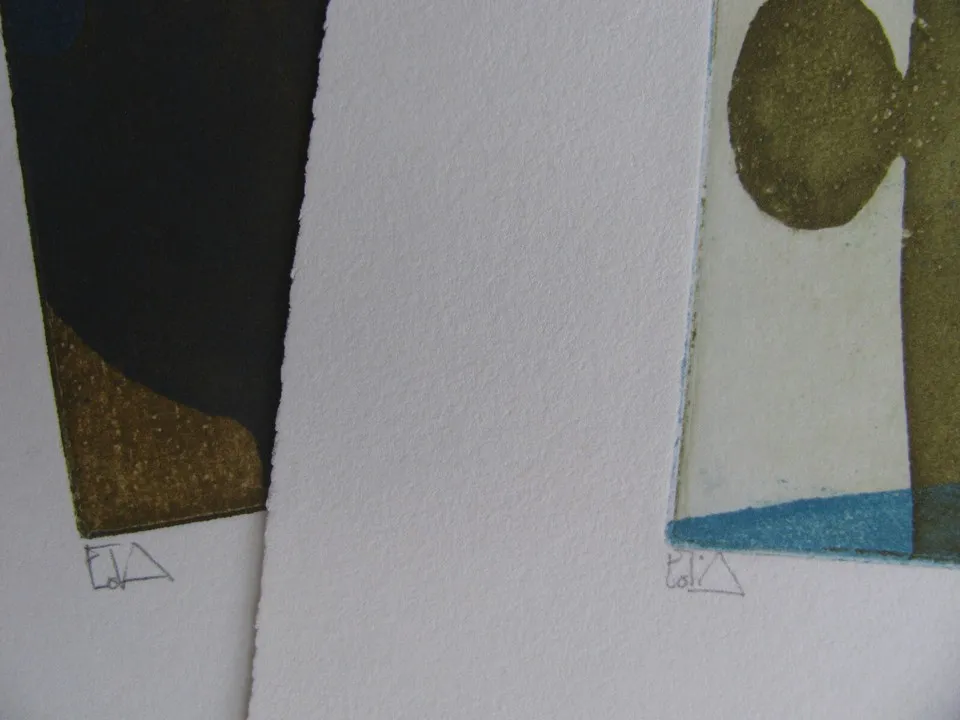
Signed and marked Ed. A. (Edition Artist) in pencil.
Very rare, probably unique pieces.
Magnificent print. Excellent condition.
Günther Kraus (August 20, 1930 in Klagenfurt – February 19, 1988 in Vienna) was an Austrian visual artist. From 1944 to 1949, Kraus studied painting and graphic arts at the Academy of Fine Arts Vienna, as well as heraldry, mosaic studies, and sculpture. He subsequently undertook study trips to New York, Philadelphia, Mexico City, Tokyo, and Paris. Impressed by the vibrant art scene abroad, Günther Kraus began working on his first Pop Art projects in Austria in the early 1950s. With his sensational exhibitions, he belonged to the avant-garde of the 1950s and 1960s. His design for the Parliament building in Ankara in 1951 attracted widespread attention. This led to commissions both in Austria and abroad. In the same year, he developed a plan for a pedestrian zone in Vienna. In the 1960s, the city showed interest in his idea, and in 1974 he won the international competition for the design of the Stephansplatz pedestrian zone. The design was not implemented. At his solo exhibition at the Vienna Secession in 1956, he met his future wife, Margarethe Herzele. Joint projects and exhibitions followed. The artist couple lived primarily in Vienna and Carinthia. Their daughter, Titanilla Eisenhart, born in 1961, also became an artist. Günther Kraus founded an artists' group with Margarethe Herzele, Ludwig Merwart, Theo Braun, and Peter Baum. Several joint exhibitions followed. With the sculptor Otto Eder, he founded the Krastal Sculpture Symposium. (TEXT WIKIPEDIA)
| Condition | |||||||
| Condition | Very good | ||||||
| Shipment | |||||||
| Shipment | Parcel post | ||||||
| Price | Up to 10 kg.
| ||||||
| Guarantee | |||||||
| Guarantee | By putting the item up for auction, I agree with the Terms of Guarantee as they are applicable at Kunstveiling regarding the accuracy of the description of the item | ||||||
| Consumer law | This seller has indicated that they are a private seller. Therefore, consumer law does not apply. Read more | ||||||
The seller takes full responsibility for this item. Kunstveiling only provides the platform to facilitate this transaction, which has to be settled directly with the seller. More information .
Gunther Kraus (1930-1988)
 Austrian
 P
PetraOrtmann Germany
2001 | |
417 sold | 15 followers |
10 cm
10 cm