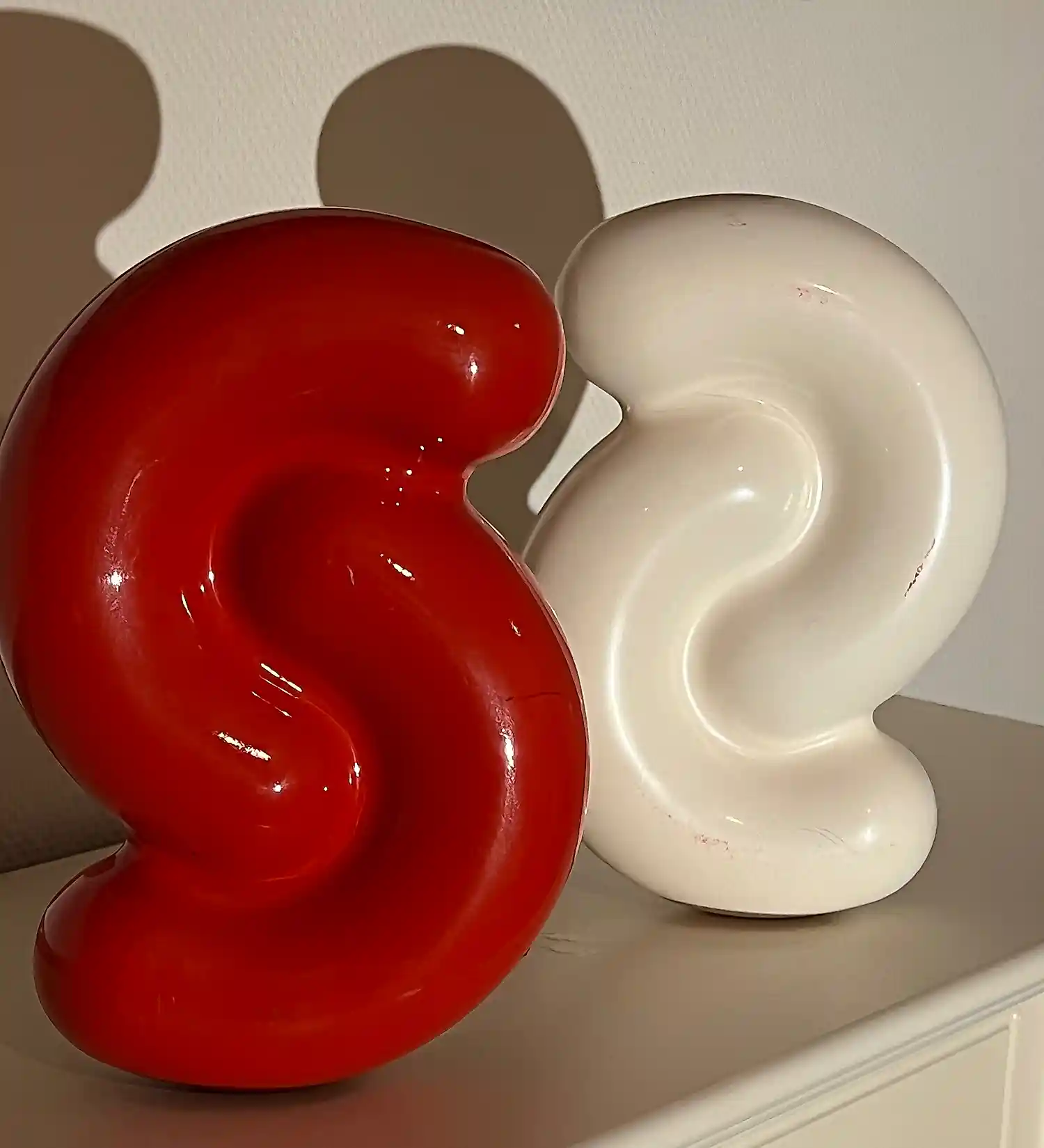
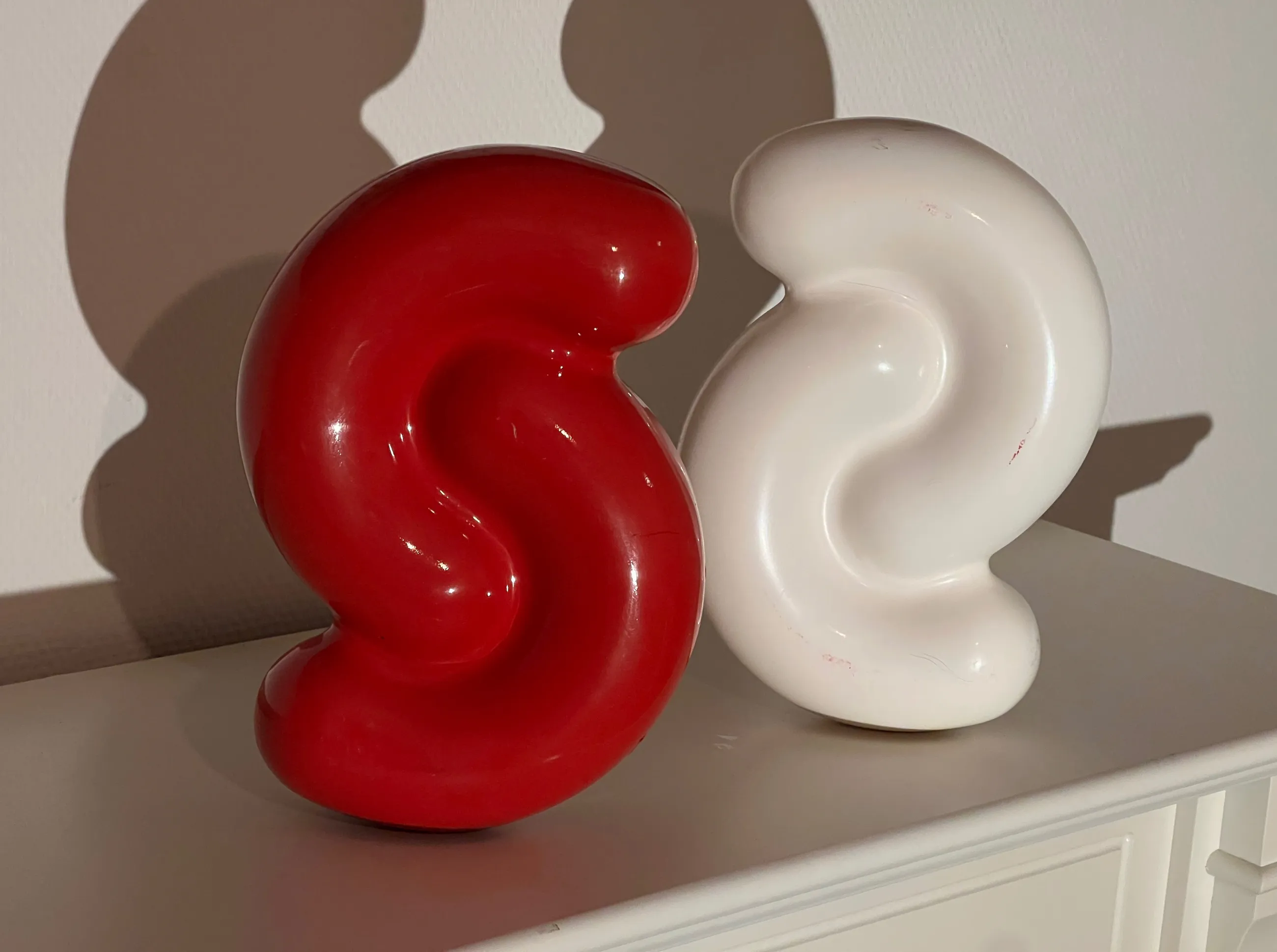
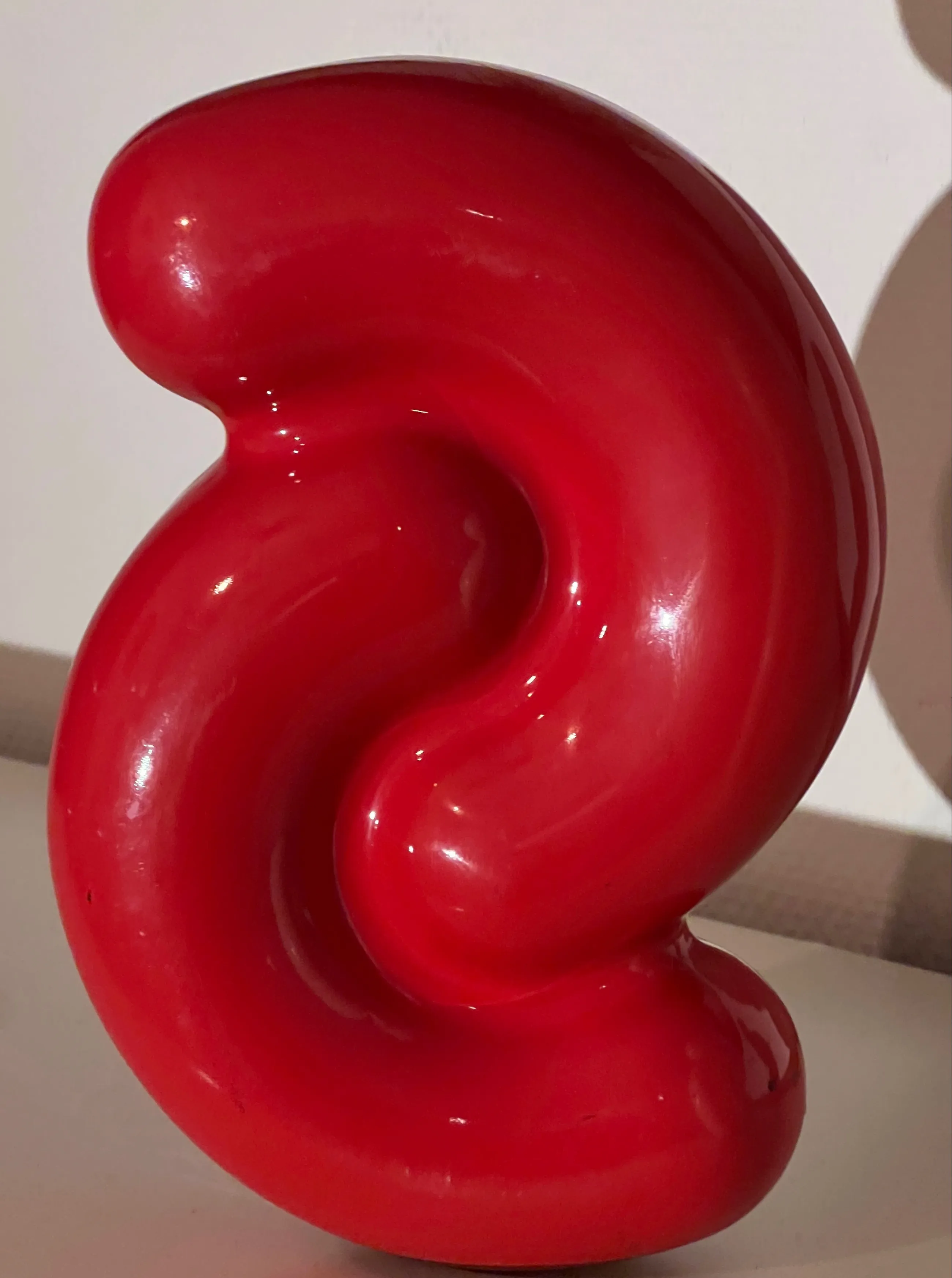
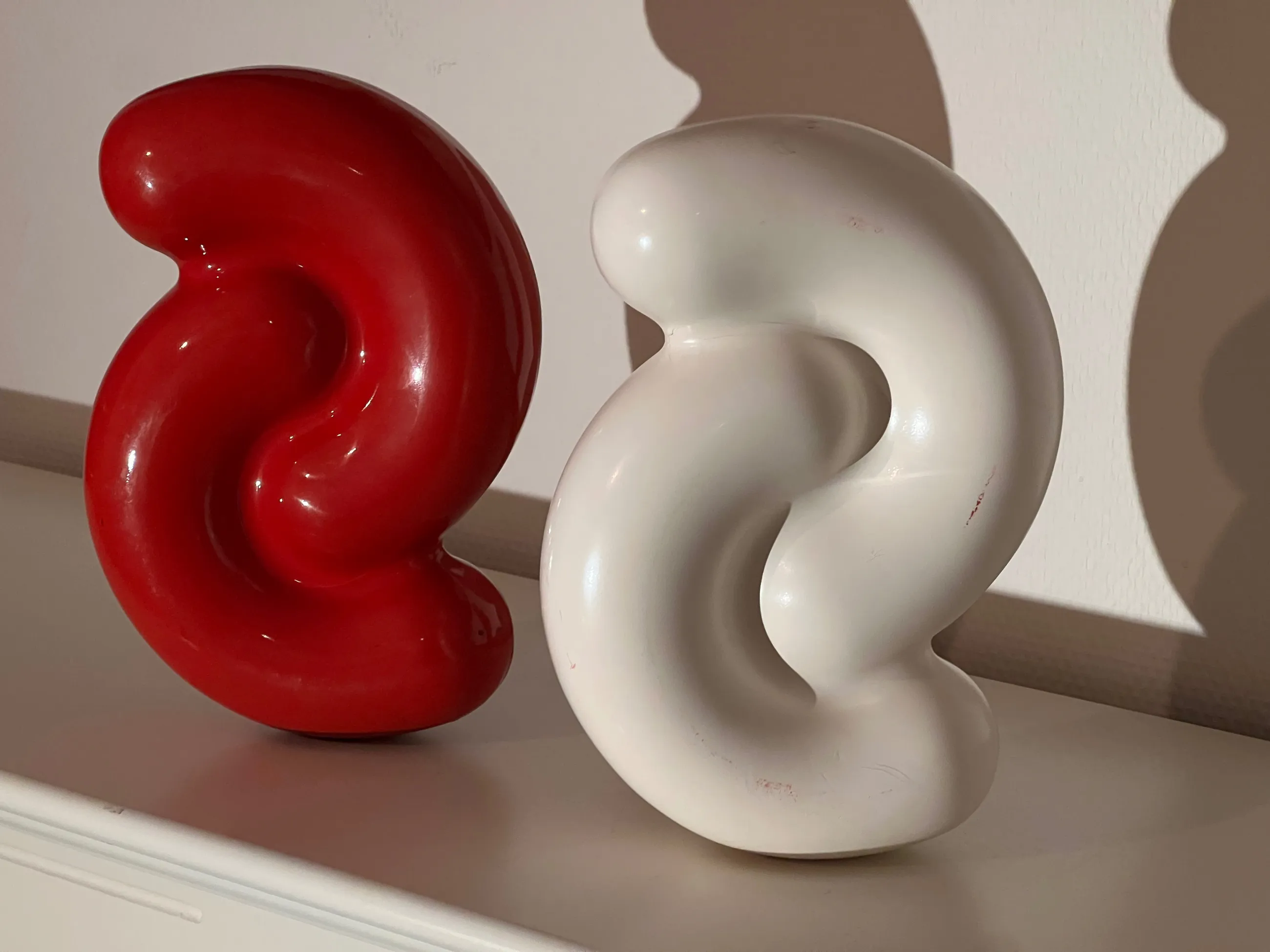
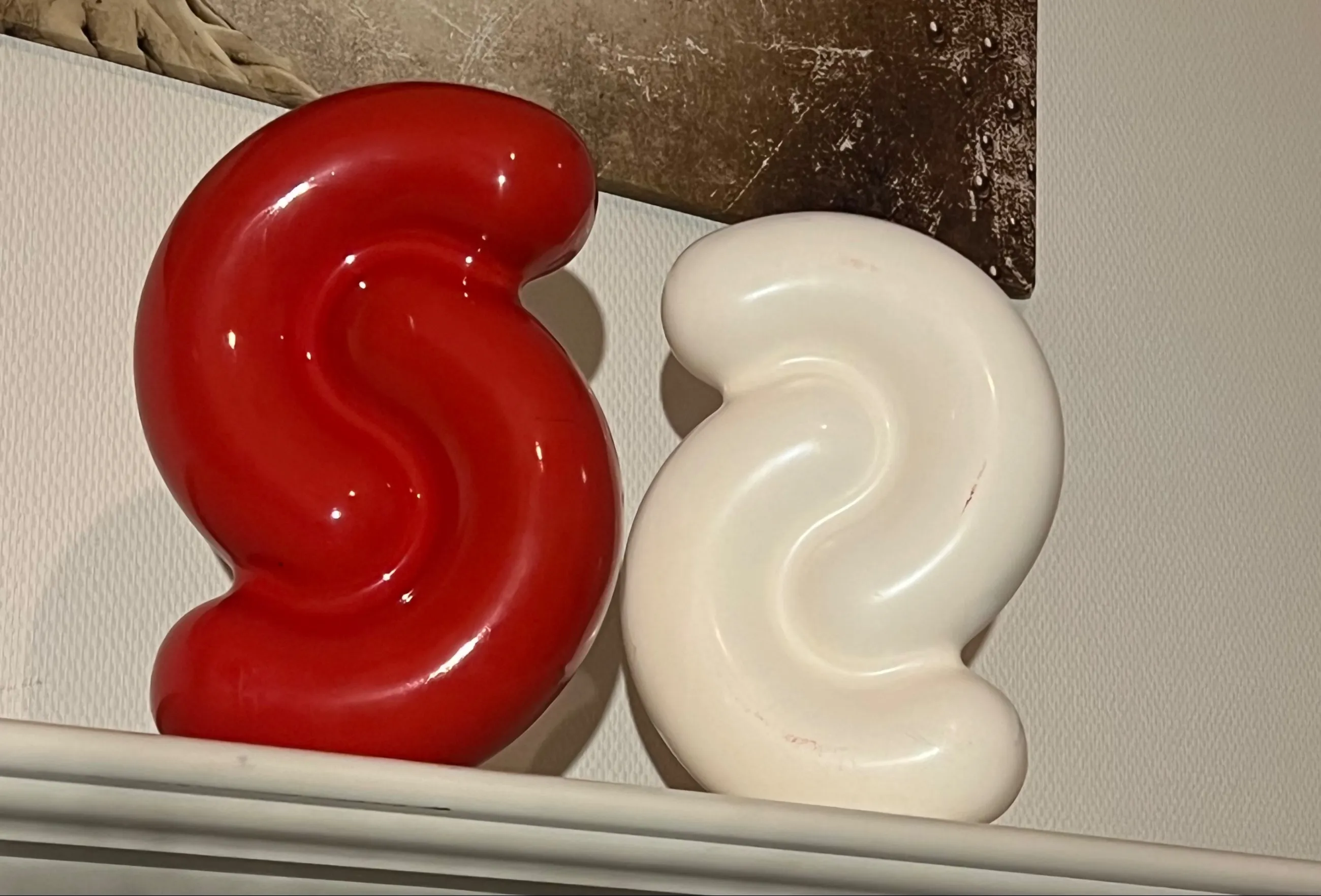
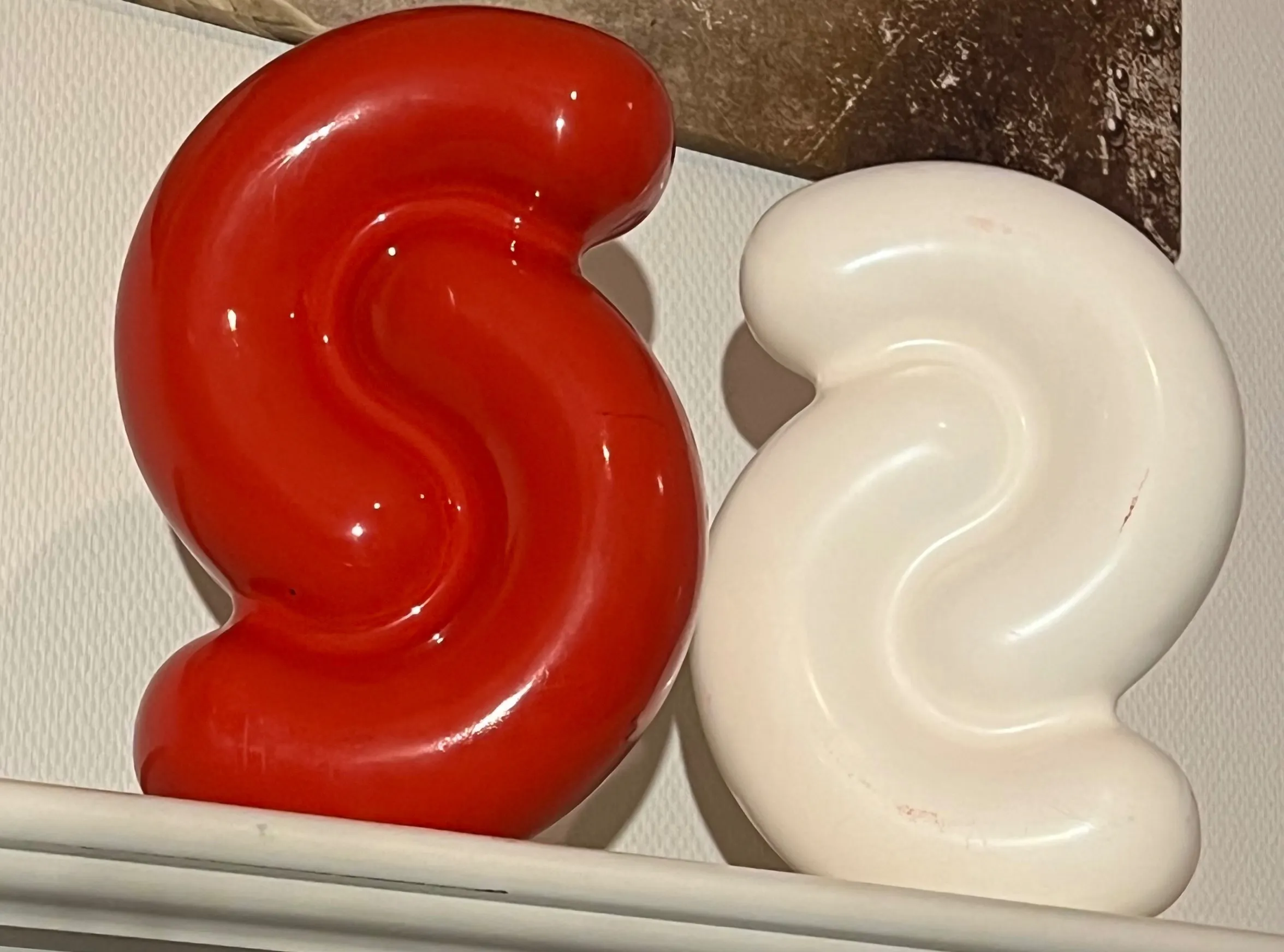
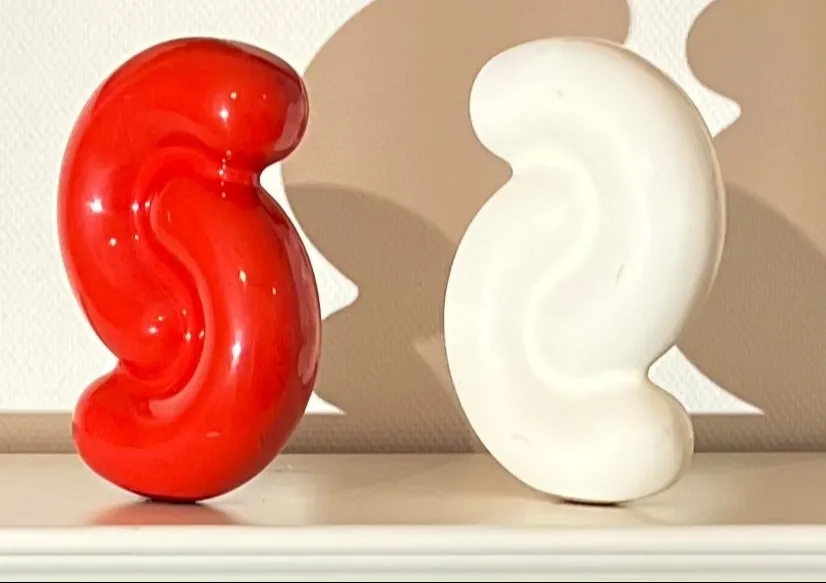
Hans Koetsier - Dynamic Tumbler

 Dutch
Dutch Current bid €150
Buyer's premium : 15%
| Pick up | Yes, possible |
| Location | Helmond, The Netherlands |
Auction details
| Start time | 13-10-2026 at 15:23 |
| End time | 25-10-2026 at 9:07 |
Bids (1)
jeffmoore
today / 08:35
€150
Please note: if a bid is made in the last 5 minutes, the auction will be extended by 5 minutes.
- Description
- Hans Koetsier (1930-1991)
| Type of artwork | Sculpture / Object |
| Year | 1992 |
| Technique | Plastic |
| Style | Classical |
| Subject | Architecture |
| Pedestal | With fixed pedestal |
| Dimensions | 28 x 17 cm (h x w) |
| Weight | 0 grams |
| Signed | Hand signed |
| Edition | 2 |
Translated with Google Translate. Original text show .
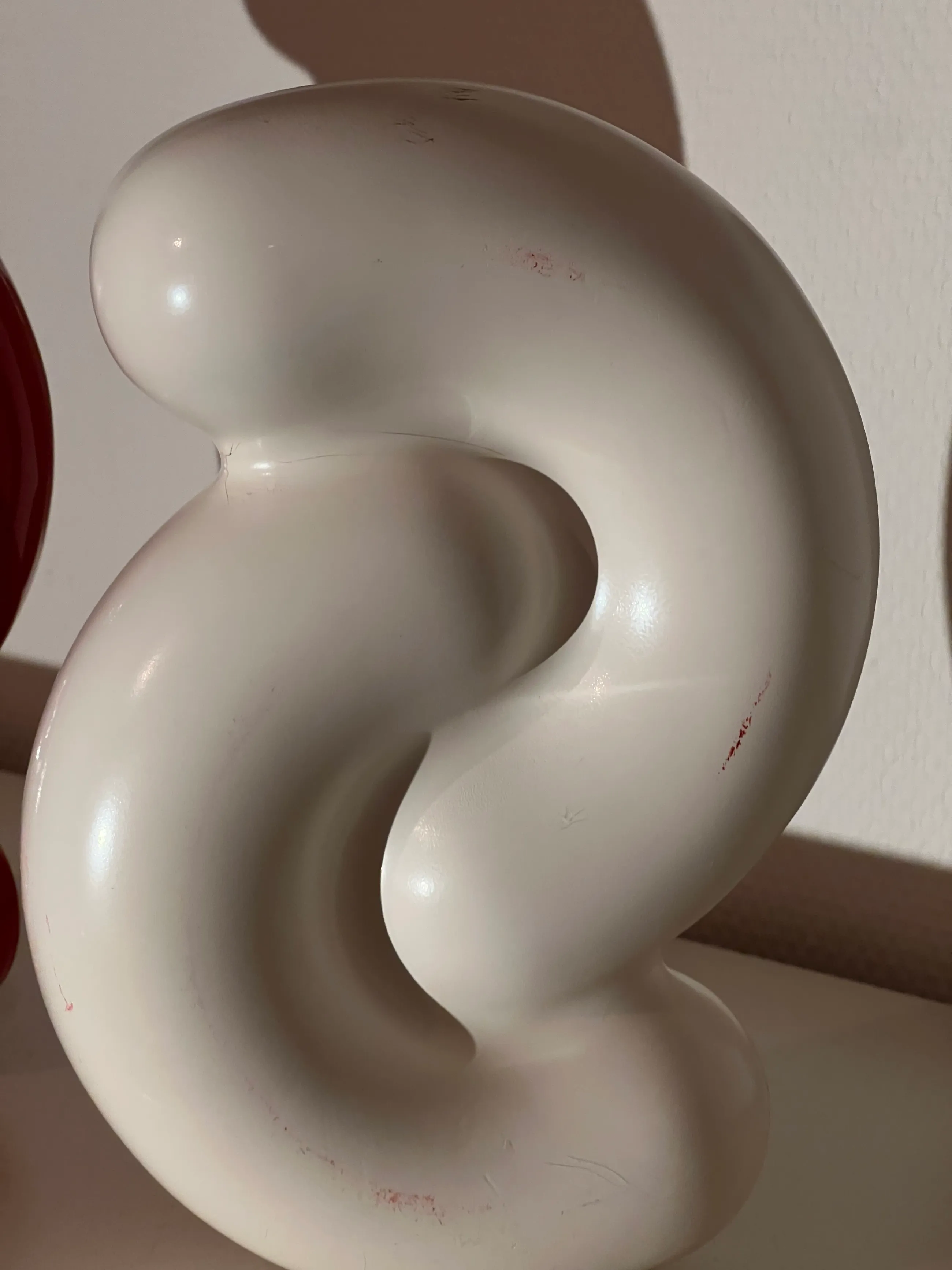
Description Artist: Hans Koetsier (1930-1991) Title: "Dynamic Tumbler" Date: ca. 1980 Medium / Technique: plastic Dimensions: 28 cm high and 17 cm wide (sculpture) Signed: accompanied by signed certificate Condition: good, slightly damaged on the top (see photo) Johannes (Hans) Koetsier (Utrecht, June 12, 1930 – Amsterdam, August 30, 1991) was a Dutch conceptual artist considered part of the Fluxus movement. He was born Johannes van Pieterson and was the son of the unmarried Maria Antoinette van Pieterson. He grew up in the Koetsier family. In 1942, his surname was officially changed. Koetsier initially worked in advertising. He entered into a relationship with Marte Röling, moved in with her, and began painting in 1962. He painted numbers or fragments of numbers and used the same subject for screen prints. In 1967, he designed the floor signs for the Postcheque- en Girodienst office in Arnhem.[7] In the late 1960s, he created his first sculptures. Almost simultaneously, the idea became increasingly important. He developed into a conceptual artist and in 1969 he placed the first of a series of advertisements in Vrij Nederland under the title Random Art / Probability Art. Meanwhile, Röling had met Henk Jurriaans in 1969, after which her marriage to Koetsier was dissolved. Koetsier published the poetry collection *Ik lijd terrific* in 1976. He had a small airplane used to advertise it. Gerrit Komrij gave a scathing review of the collection: "a piece of trash that you have read to the end in exactly forty seconds, leaving you distraught." Koetsier became known for his high-profile plans. In 1979, he proposed the creation of a rock garden in Groningen. Anticipating an impending ban on collecting lapwing eggs, he conceived the idea of placing a natural stone sculpture of a lapwing egg in Leeuwarden. Koetsier also suggested establishing a national holiday, the 'Day of Inspiration', on Whit Monday 1980. Prime Minister Van Agt opposed the idea, arguing that it would suggest there was a "fairly general lethargy" in the Netherlands, which, according to him, was not the case. In Friesland, which Koetsier believed would remain the last oasis amidst industrialization, Koetsier wanted to construct a lookout tower in a location where the surrounding view would remain unspoiled. In the 1980s, Koetsier proposed to the municipality of Almere that large landmarks be placed at five points along the city limits. The first of these was installed in 1986. The Urban Landmarks series was intended to consist of five sculptures, but by the time of Koetsier's death, only two had been realized. Shortly before his death, a mural designed by Koetsier was completed on the facade of the Frisian Agricultural Centre in Leeuwarden. Seventeen years earlier, he had also designed several murals for the centre. Koetsier died at the age of 61. He was buried at Zorgvlied in Amsterdam. He had already had his gravestone placed there in 1982, featuring a mathematical formula he had developed with the mathematician Henk Barendregt. The stone was purchased by the municipality of Amstelveen shortly before Koetsier's death. Works by Koetsier have been acquired by the Stedelijk Museum Schiedam. Sculptures by Koetsier can be found in Almere, Harderwijk, Utrecht, and Weesp, among other places.
| Condition | |||||||||||
| Condition | Good | ||||||||||
| Silvia van Berlo | |||||||||||
| Shipment | |||||||||||
| Pick up | The work can be picked up on location. As a buyer you must bring your own packaging materials. The location is: Helmond, The Netherlands | ||||||||||
| Shipment | Parcel post | ||||||||||
| Price | Up to 5 kg.
| ||||||||||
| Extra | In case of a purchase price above € 500.- you will have to pay an additional fee of (maximum) € 7.50 for extra shipping insurance | ||||||||||
| Guarantee | |||||||||||
| Guarantee | By putting the item up for auction, I agree with the Terms of Guarantee as they are applicable at Kunstveiling regarding the accuracy of the description of the item | ||||||||||
| Consumer law | This seller has indicated that they are a private seller. Therefore, consumer law does not apply. Read more | ||||||||||
The seller takes full responsibility for this item. Kunstveiling only provides the platform to facilitate this transaction, which has to be settled directly with the seller. More information .