Hugo Claus - Abstract composition - Sold
This item has been sold Show item
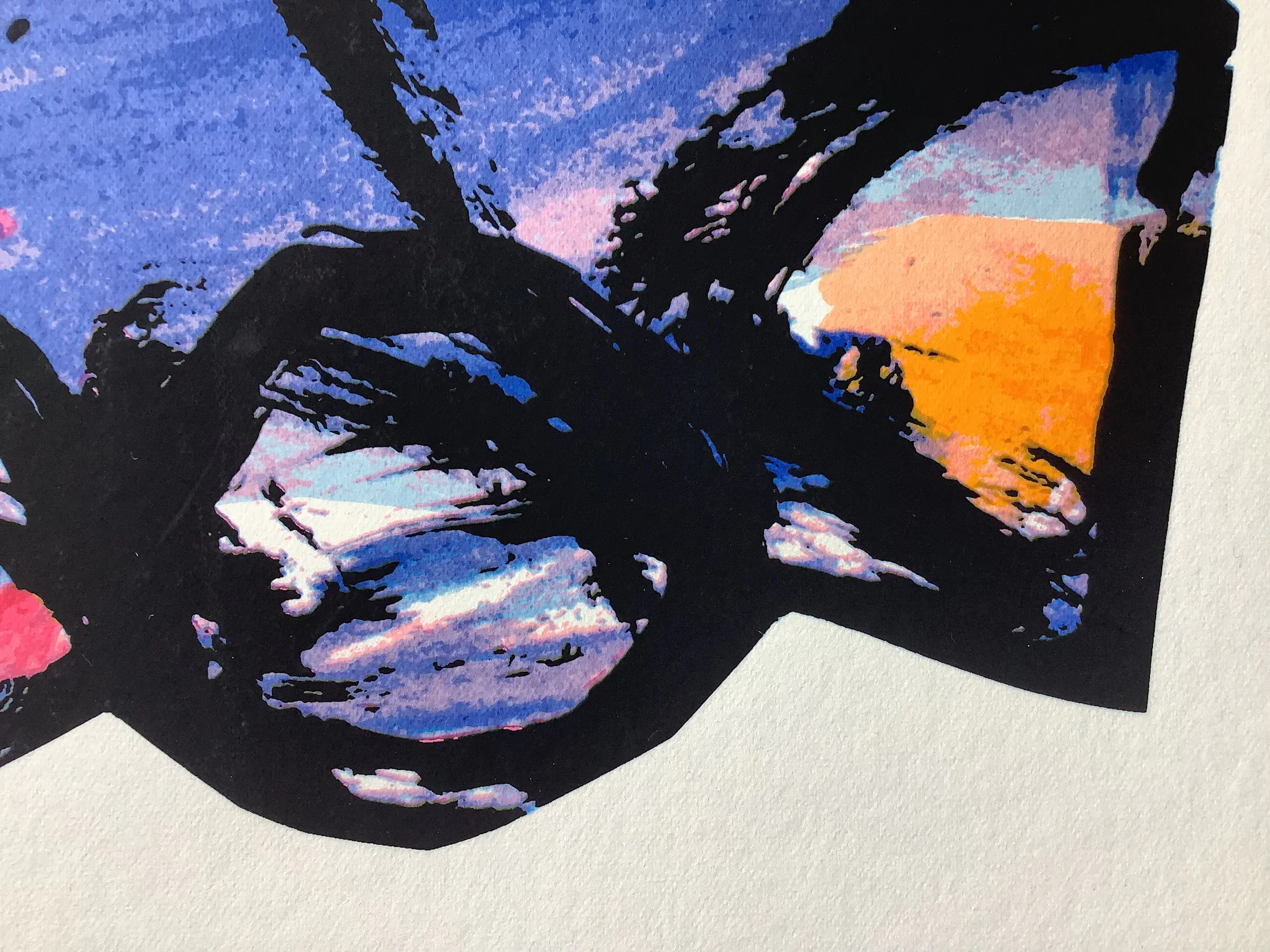
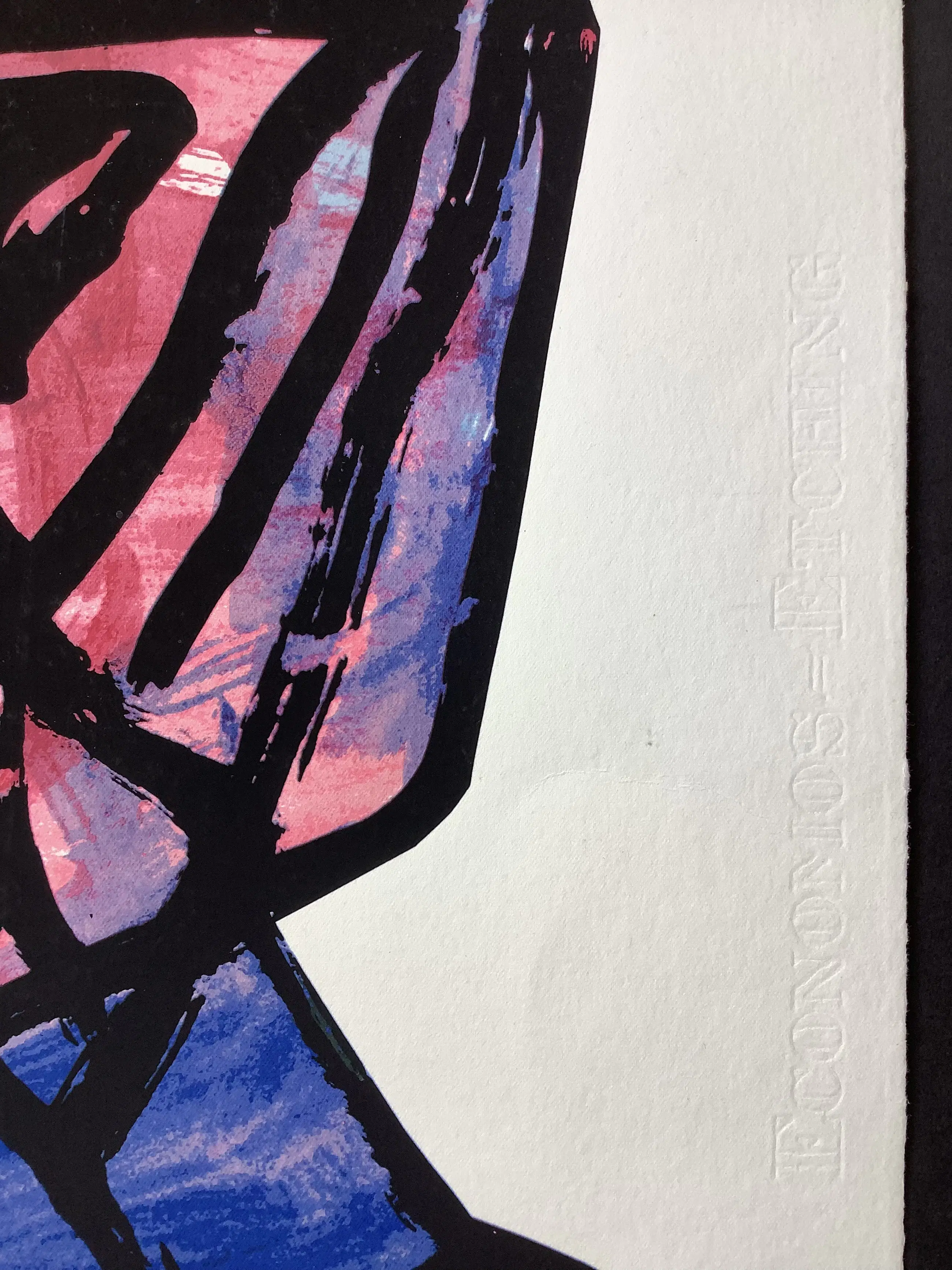
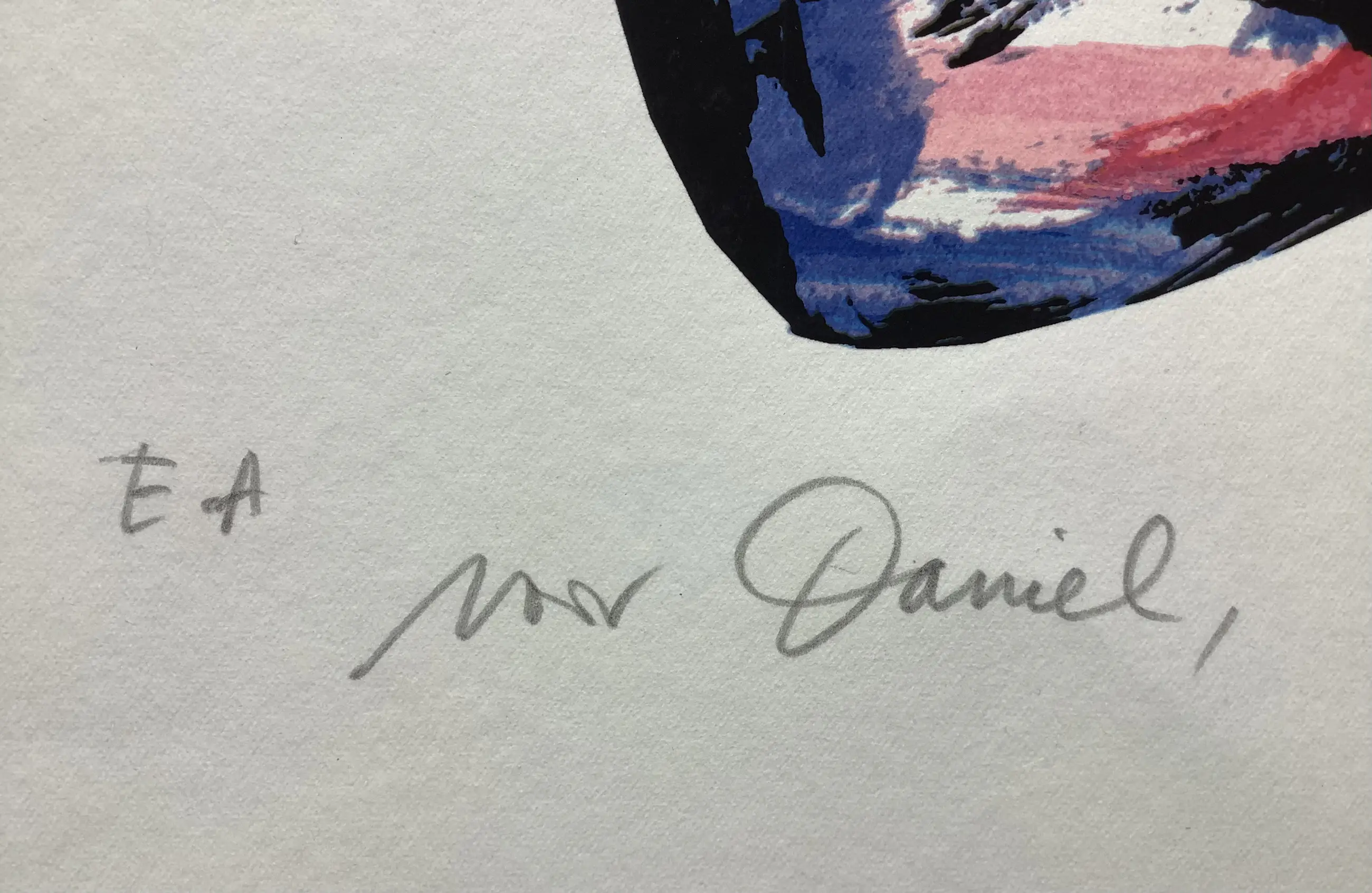
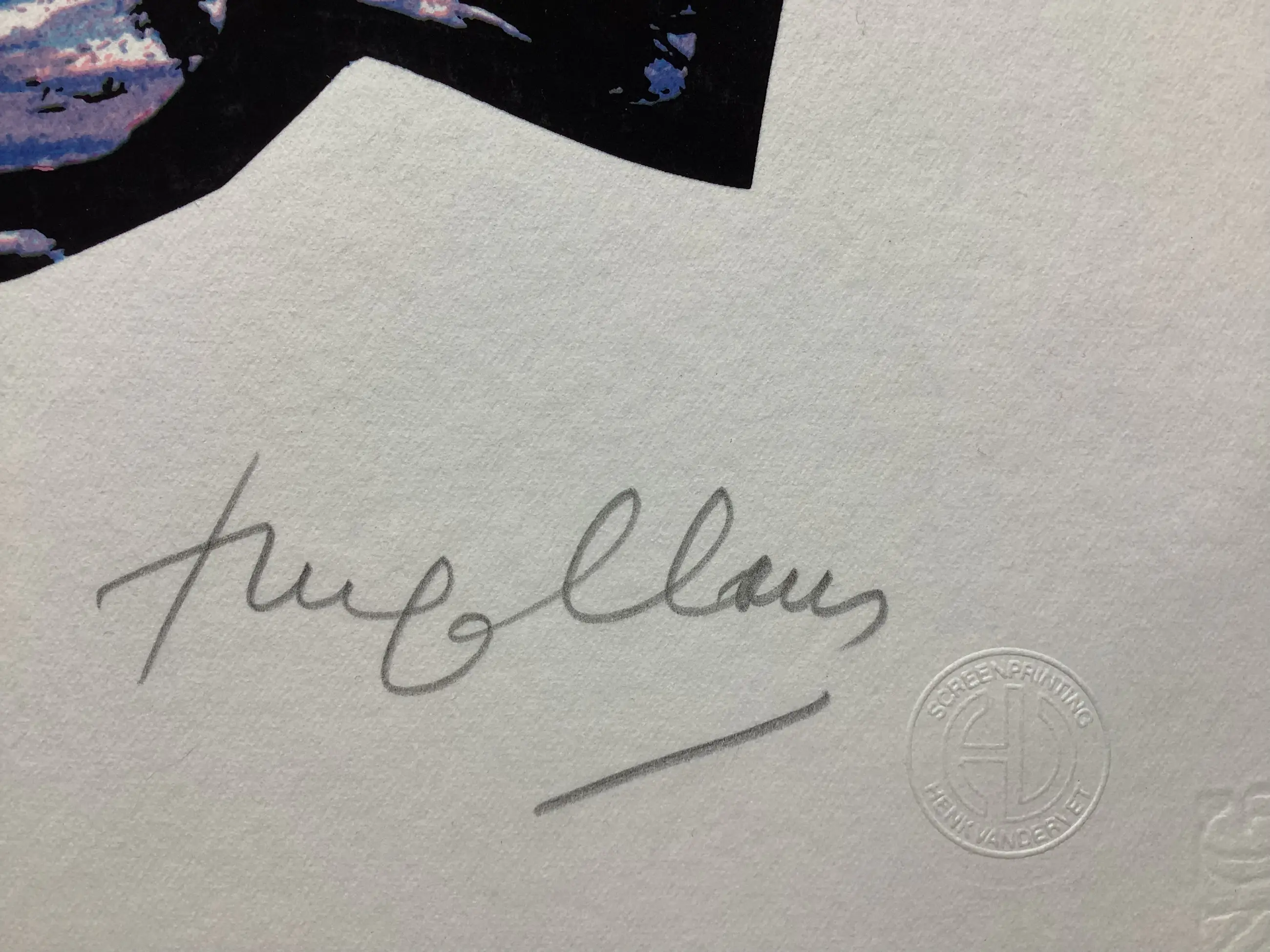

| Pick up | Yes, possible |
| Location | Bergen op Zoom, The Netherlands |
Auction details
| Start time | 24-4-2025 at 12:33 |
| End time | 5-5-2025 at 18:03 |
Bids (1)
Log in or register to view the bidding history N
Niv001 The Netherlands
2020 | |
157 sold | 6 followers |
- Description
- Hugo Claus (1929-2008)
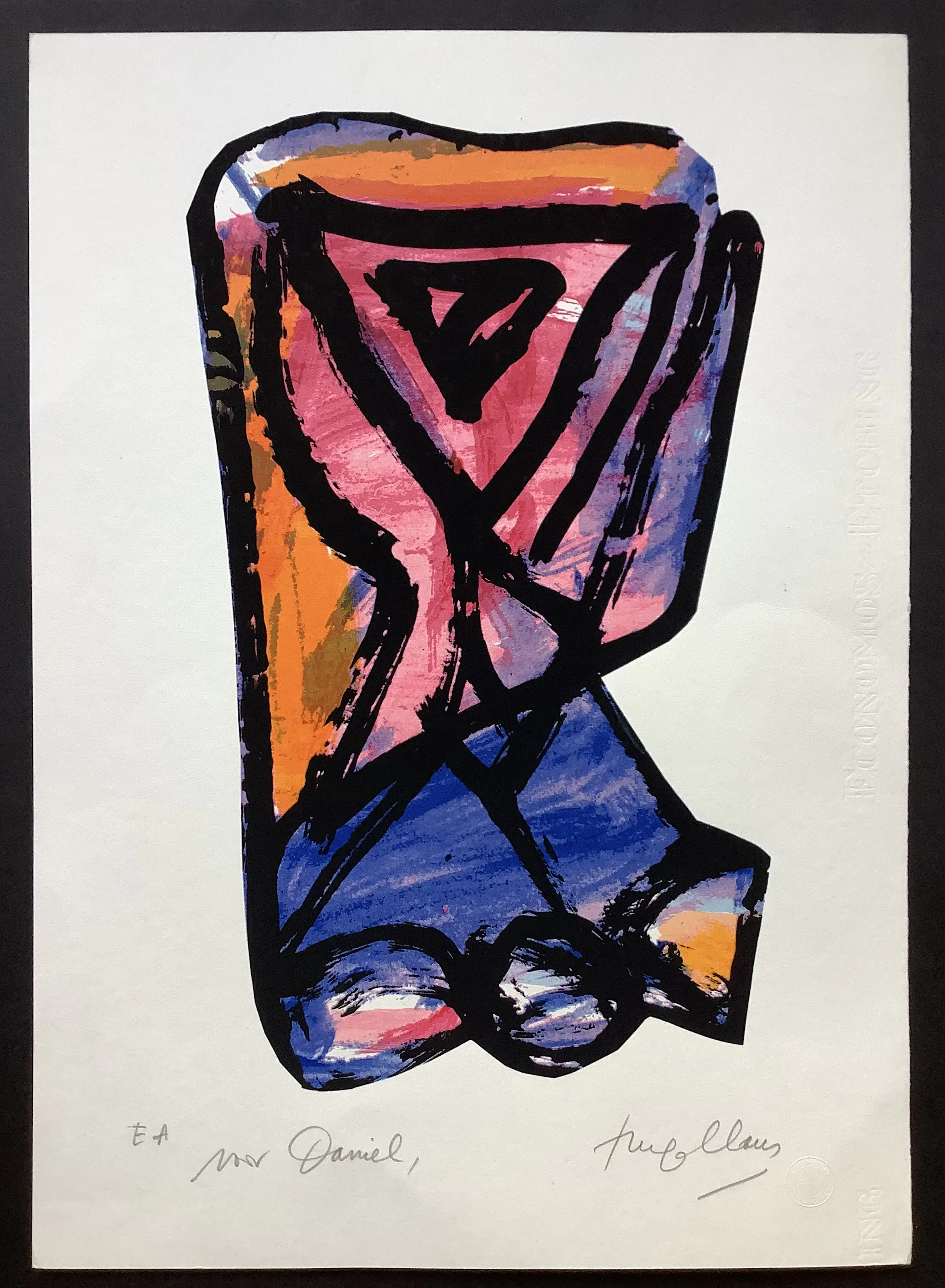
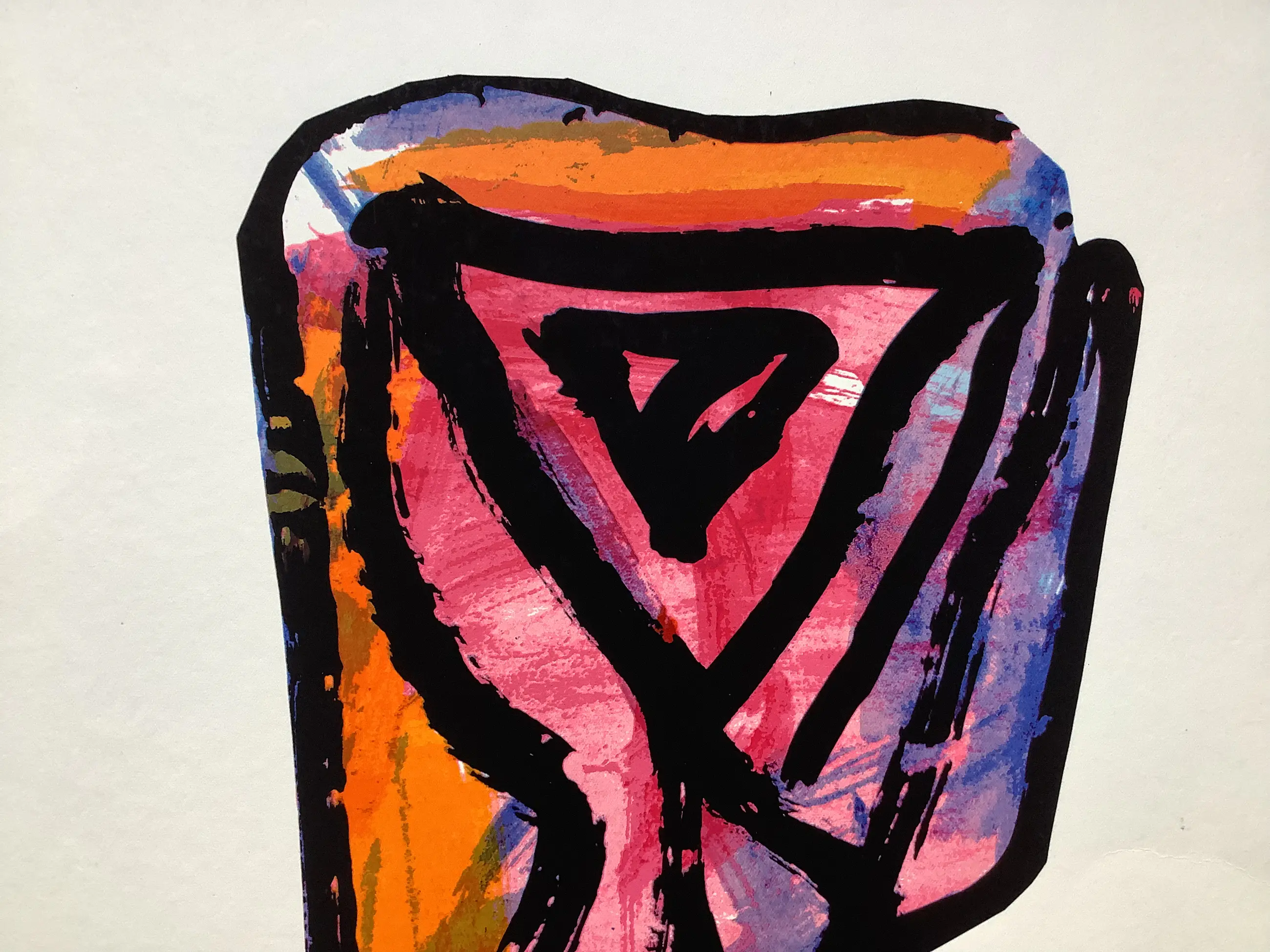
| Type of artwork | Prints (signed) |
| Period | 1945 to 1999 |
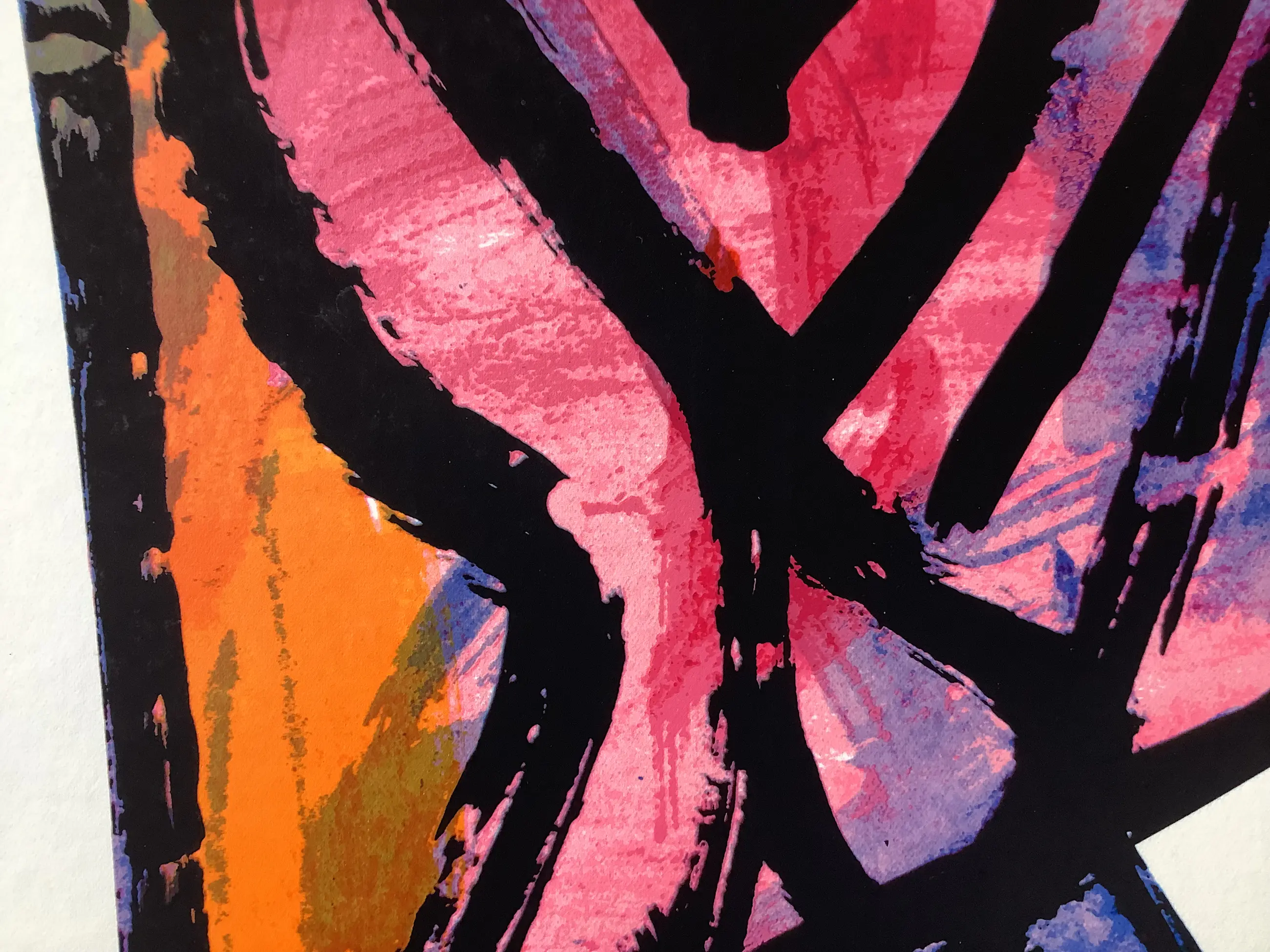
| Technique | Silkscreen |
| Support | Handmade Paper |
| Framed | Not framed |
| Dimensions | 56 x 40 cm (h x w) |
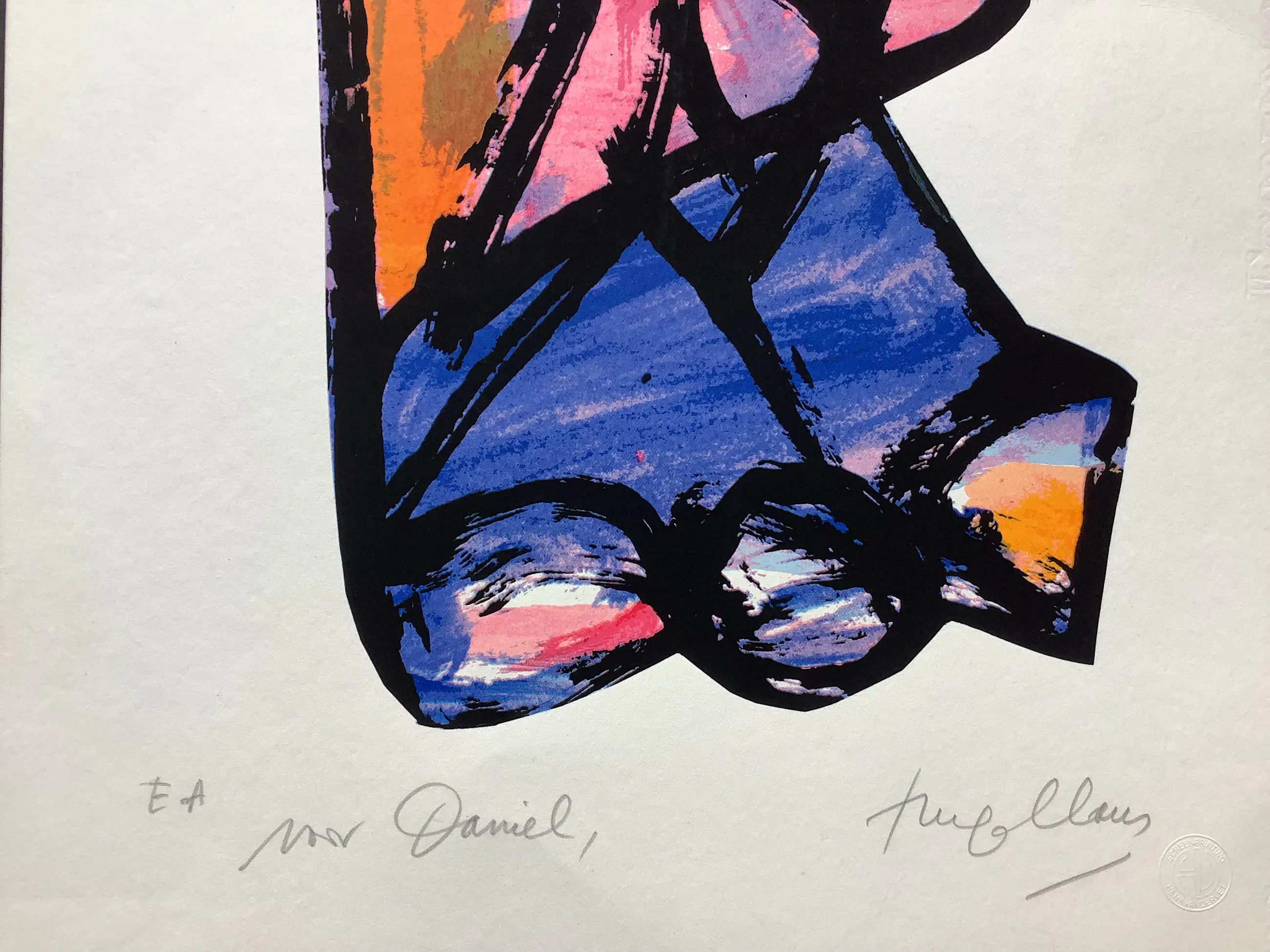
| Signed | Hand signed |
| Edition | E/A oorspronkelijke oplage 60. |
Translated with Google Translate. Original text show .
Technique: Screen printing
Year: 1945-1990
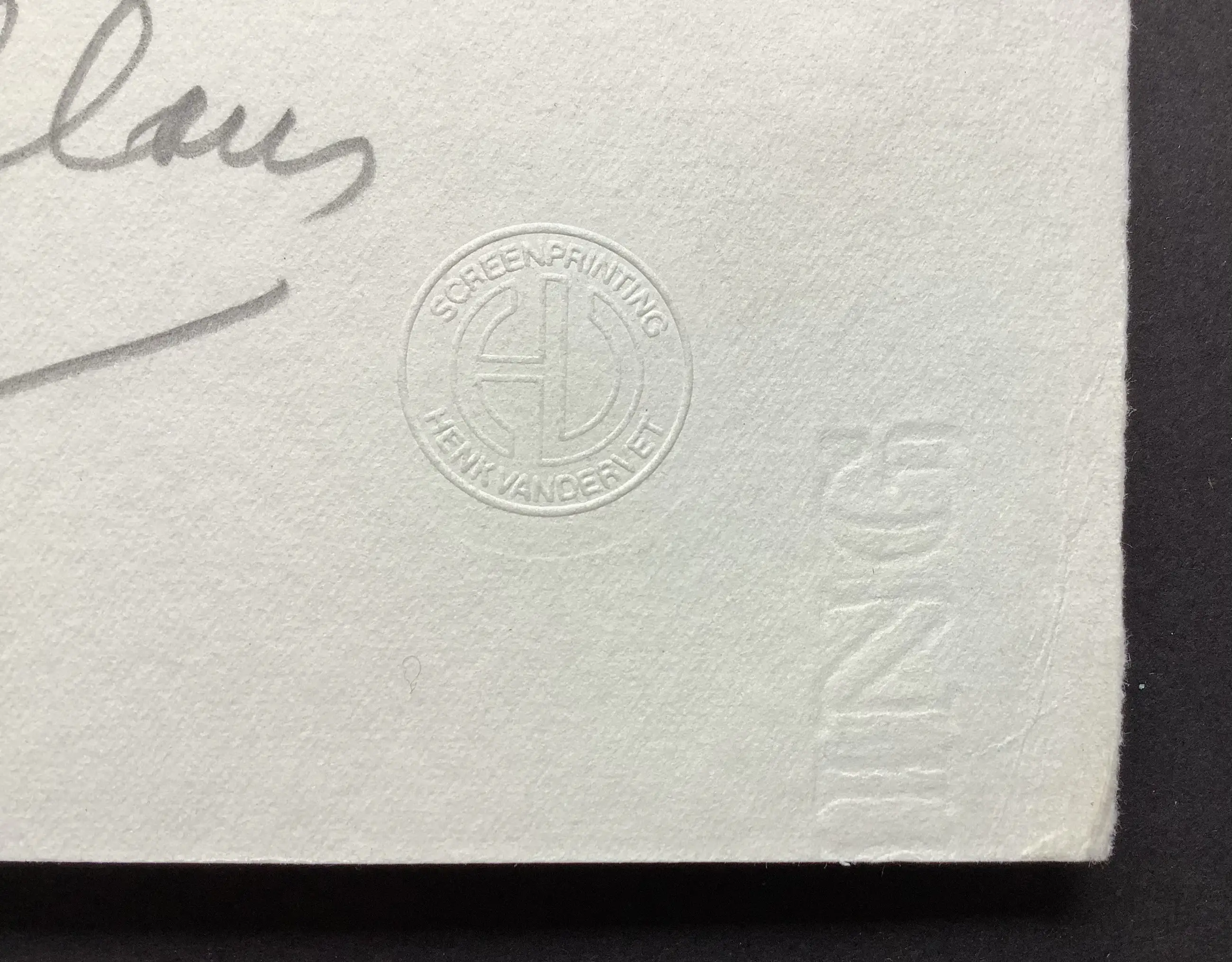
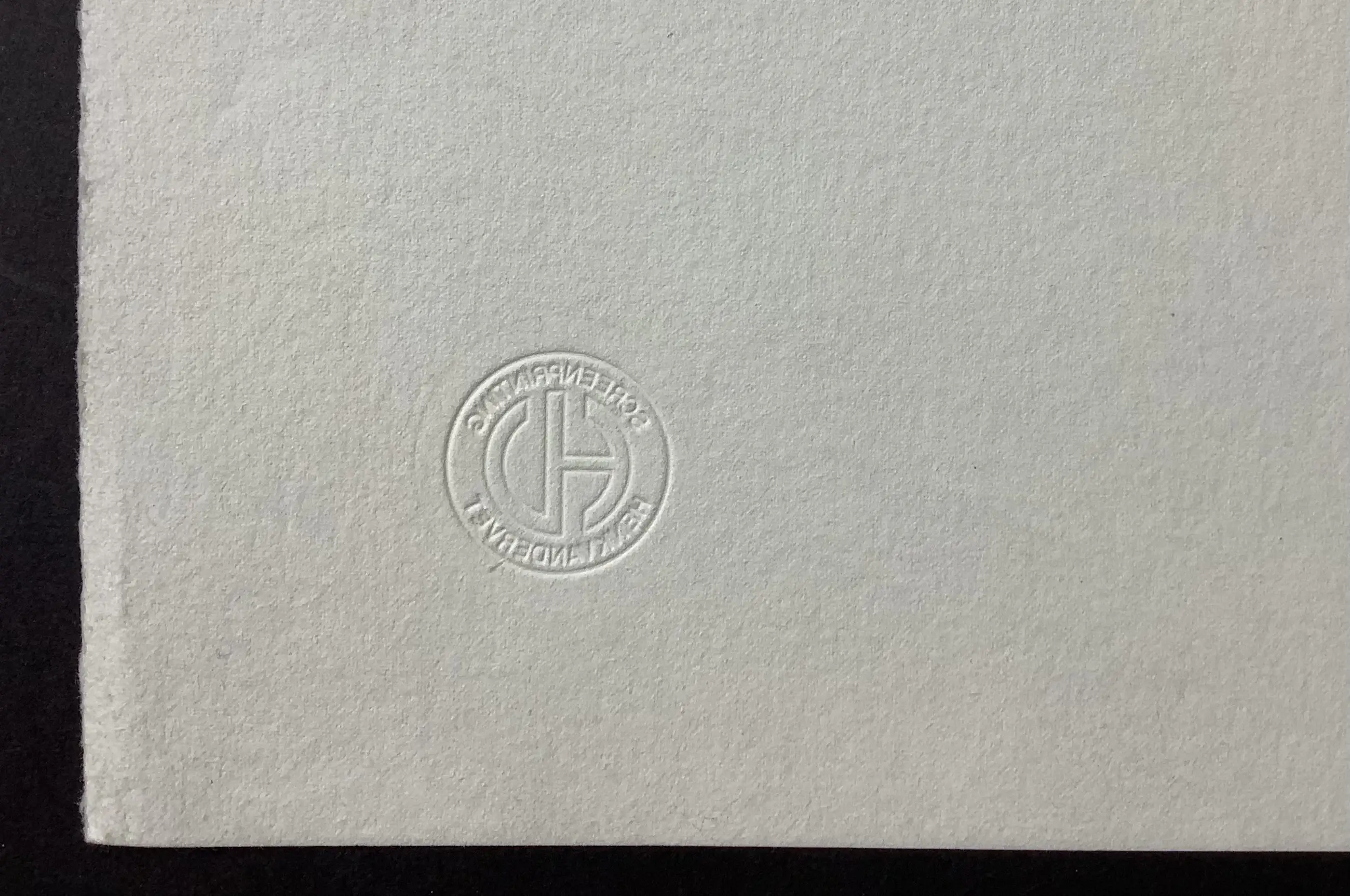
Condition: In excellent condition, considering the age of the work with blind stamp by Henk van der Vet screenprinting.
Edition: EA with addition “for Daniel”. Original edition 60 copies.
Signature: Hand signed with first and last name!
Image dimensions, total sheet: 56 x 40 cm
Background work
Claus gave this silkscreen to his Belgian friend Daniël van Ryssel, poet and essayist. The silkscreen has never been framed and will be shipped flat and insured.
Hugo Claus (1929 – 2008)
Claus was a Flemish poet, writer, painter and filmmaker. He was the most awarded author from the Dutch language area. During his long career, Claus wrote thousands of poems, dozens of plays and several novels, of which the best known is his masterpiece Het verdriet van België from 1983.
Life story.
Hugo was born as the eldest son of printer Jozef (Joseph) Claus and Germaine Vanderlinden in Bruges. In February 1931 his brother Guido was born (died on 9 November 1991), later followed by Odo (January 1934) and Johan (November 1938, died on 13 February 2009). Three months later - father Claus had also become a dealer in school supplies and was active in amateur theatre - the family moved to Astene (Deinze), the village where mother Germaine grew up. Jozef started the printing company De Lindekens there.
Son Hugo spent most of his youth at boarding school, including in Eke. From 1933 to 1939, Claus stayed with the sisters of the Pensionat Saint-Joseph in Aalbeke. In the school years 1939-1944 he attended lower secondary education at the Sint-Amandscollege in Kortrijk and in the school year 1944-1945 he attended classes at the Sint-Hendrikscollege in Deinze.
In 1946 he left his parental home and went to live in Sint-Martens-Leerne with painter Antoon De Clerck. He reportedly took sculpture lessons at the Royal Academy of Fine Arts in Ghent and wrote poems, painted and had ambitions to become an actor.
He supported himself as a book illustrator and as a painter of landscapes and facades. At the age of eighteen he published his first collection of poems. In 1947, the year in which he made his debut with the collection of experimental poetry Kleine reeks, he worked from October to December as a seasonal worker in a sugar factory in Chevrières in Northern France. In 1948 Claus spent three days in Paris; in the Bar Vert in Saint-Germain-des-Prés he quickly spotted the already decrepit author, actor and theatre theoretician Antonin Artaud, whom he would come to regard as his spiritual father. The confrontation with this author of the 'théâtre de la cruauté' would drive him to study Seneca and the Elizabethans.
From 1 April 1949 he fulfilled his military service, partly as editor of the magazine Soldatenpost (his sergeant was Herman Liebaers). In the meantime he had founded the avant-garde magazine Tijd en Mens together with some like-minded people (Jan Walravens, Louis Paul Boon, Tone Brulin, Ben Cami, Marcel Wauters and others) and in 1949 he held his first exhibition as a painter in the bookshop of the French-language poet Henri Vandeputte in Ostend.
From 1950 to 1953 he lived in Paris, where he came into contact with surrealism, existentialism and Cobra modernism. He lived there with Karel Appel, Hans Andreus, Rudy Kousbroek, Simon Vinkenoog and others.
In 1953, Claus established his name as a prose writer with the book De Hondsdagen (The Dog Days) and wrote his first full-length play, Een bruid in de morgen (A Bride in the Morning), which focuses on the incestuous relationship between brother and sister. The play was first performed in 1955; in the Netherlands under the direction of Ton Lutz, the beginning of a collaboration and friendship that lasted for years. Opinions about the play were divided. Some found it vulgar, others acknowledged his mastery.
From February 1953 to early 1955 he lived in Italy, where his girlfriend Elly Overzier (1928-2010) tried to become an actress and model under the pseudonym Elly Norden.[11] She was the daughter of a Dutch ship owner. He lived in Rome for two years and through her made contacts in the film world. He married her on 26 May 1955 in Ghent; the wedding was celebrated five days later in the Brussels café La Fleur en Papier Doré, Het Goudblommeke in Papier by surrealist-painter-poet-gallerist Gerard (Geert) van Bruaene, once a friend of Paul van Ostaijen, in the presence of art friends such as Jan Walravens, the painters Roger Raveel and Jan Saverijs, brother Guido, Simon Vinkenoog and Louis Paul Boon. The surrealist tribute to Jan Walravens was interrupted by Elly with the legendary words: "Assez de méchancetés".
From April 1955 to November 1964 he lived with Overzier in Ghent, where he had once attended classes at the Royal Academy of Fine Arts and the Royal Theatre School. In 1959 a Ford Foundation grant took him to the United States together with Fernando Arrabal, Claude Simon and Italo Calvino, among others.
In 1962 De Verwondering was published, a complex novel about the aftermath of the collaboration.
On 7 October 1963, their only son, Thomas Pieter Achilles, was born. Early in 1964, Claus applied in vain for the position of director of the soon-to-be-established Nederlands Toneel Gent. Offended by the rejection of the Board of Directors, which included a playwright, he forbade his plays to be performed in Ghent. Later, with a new management, the conflict would be smoothed over; and later still, through the mediation of friend and actor Hugo Van den Berghe, he would become the NTG's house author for a few years. At the end of 1964, he moved with Elly and Thomas to the rural Nukerke, to a farm restored by poet-architect Albert Bontridder.
In the following years, Claus made himself heard. As a socially engaged man, political themes were more evident in his work, such as in the opera Morituri in which he opposed American imperialism, or in the multimedia opera Reconstructie about the liberation struggle in South America, in which a statue of Che Guevara is erected during the performance. He wrote novels, stories, poems and plays. He also enjoyed fame as a film director, screenwriter and visual artist. In 1965, he directed his first film, De buren: about the friendship forced by circumstances between an American GI (Del Negro), a German Wehrmacht soldier (his old friend Fons Rademakers) and an Antwerp PIOT (Robbe De Hert). In 1966, the artistically shocking stage direction of his Thyestes followed, in co-direction with old friend and actor Ton Lutz, according to the theatre credo of Antonin Artaud and Jerzy Grotowski, which earned him an invitation to Jean Louis Barrault at the Festival du Thèâtre des Nations in Paris. In 1969, his play Vrijdag with Kitty Courbois in the leading role premiered in Amsterdam. This was the first play in which his mixed language of dialect and Standard Dutch came to the fore. It was as if Claus wanted to affirm a Flemish identity to his Dutch fans. And in his direction, the 'Dutchmen' spoke impeccably 'Flemish'.
In between he travelled to Italy, Greece, Spain, Turkey, the United States (from November 1959 to April 1960), Mexico and with Harry Mulisch to Fidel Castro's Cuba, among others. Back in Belgium, a court (with separation of powers under socialist Minister of Justice Alfons Vranckx) ruled that his theatre production Masscheroen was contrary to public morals and sentenced him to four months in prison. After public protest (the 'Anti-Censorship Protest Read-in'), the sentence was converted into a suspended prison sentence and an unconditional fine. He had presented his poet friends Hugues C. Pernath, Bob Cobbing and bosom friend Freddy de Vree naked as the Holy Trinity, which for the Catholic judge of Bruges would not have been so much indecent as irregularly blasphemous. The poet later dedicated a pointed poem to his persecutor.
After living for five years on a 250-year-old farm in Tenhole, Nukerke (Flemish Ardennes) and briefly in Knokke, Claus moved to Amsterdam in March 1970, where he met actress Kitty Courbois in 1971. Their relationship inspired him to write the novel The Year of Cancer.
The resilience of his lifestyle paralleled the mobility of his artistic output. A relationship led to a collection of poems, Dag, jij (1971), which was full of sexually explicit scenes and emotional intensity.
From 1974 to 1978, Claus lived in Paris with actress Sylvia Kristel. They had a son, Arthur, on 10 February 1975. He eventually moved back to Ghent on his own in 1977, where his brother Guido, together with his wife Motte Claus, had been running 'Hotsy Totsy' since 1973, the private artistic club where Claus and his brother were regulars. With his friend Freddy de Vree, producer of BRT 3, he undertook a trip to Mexico in 1981, reported in 'Mexico vandaag, land van Posada'. He made his film Vrijdag based on his play, after which he worked on his novel Het verdriet van België, which was published in 1983. It was filmed in 1994, not entirely according to his expectations, by Swiss director Claude Goretta.
His mother and father died in Ghent in 1984 and 1986 respectively. On 12 June 1993, Claus married his girlfriend Veerle de Wit for the second time in Antwerp. They lived for a while in Cavaillon (Southern France), Caromb and Croagnes, among other places. In 1996, the 'Hugo Claus Study and Documentation Centre' was founded at the University of Antwerp. It was the first study and documentation centre dedicated to a living writer.
His first wife and mother of their son Thomas, Elly Overzier, died on December 26, 2010 at the age of 82 from heart problems. Sylvia Kristel, his former lover and mother of their son Arthur Kristel, died on October 17, 2012 from complications of esophageal cancer.
Claus as an artist
Claus' work as a painter is less well known. He was friends with several visual artists, including the Cobra group, of which he was a member, and painters such as Roger Raveel, who illustrated several of Claus' literary works. He himself regularly took up the brush in a personal way. In 2005, Hugo Claus gave his very last interview ever to his friend radio journalist Jef Lambrecht. At that time, an exhibition of his visual work was running in the Cobra Museum in Amstelveen. In 1956, Claus held his first one-man exhibition in Galerie Taptoe in Brussels. In March 1959, he had his second solo exhibition in the Centre for Fine Arts in Brussels.
Year: 1945-1990
Condition: In excellent condition, considering the age of the work with blind stamp by Henk van der Vet screenprinting.
Edition: EA with addition “for Daniel”. Original edition 60 copies.
Signature: Hand signed with first and last name!
Image dimensions, total sheet: 56 x 40 cm
Background work
Claus gave this silkscreen to his Belgian friend Daniël van Ryssel, poet and essayist. The silkscreen has never been framed and will be shipped flat and insured.
Hugo Claus (1929 – 2008)
Claus was a Flemish poet, writer, painter and filmmaker. He was the most awarded author from the Dutch language area. During his long career, Claus wrote thousands of poems, dozens of plays and several novels, of which the best known is his masterpiece Het verdriet van België from 1983.
Life story.
Hugo was born as the eldest son of printer Jozef (Joseph) Claus and Germaine Vanderlinden in Bruges. In February 1931 his brother Guido was born (died on 9 November 1991), later followed by Odo (January 1934) and Johan (November 1938, died on 13 February 2009). Three months later - father Claus had also become a dealer in school supplies and was active in amateur theatre - the family moved to Astene (Deinze), the village where mother Germaine grew up. Jozef started the printing company De Lindekens there.
Son Hugo spent most of his youth at boarding school, including in Eke. From 1933 to 1939, Claus stayed with the sisters of the Pensionat Saint-Joseph in Aalbeke. In the school years 1939-1944 he attended lower secondary education at the Sint-Amandscollege in Kortrijk and in the school year 1944-1945 he attended classes at the Sint-Hendrikscollege in Deinze.
In 1946 he left his parental home and went to live in Sint-Martens-Leerne with painter Antoon De Clerck. He reportedly took sculpture lessons at the Royal Academy of Fine Arts in Ghent and wrote poems, painted and had ambitions to become an actor.
He supported himself as a book illustrator and as a painter of landscapes and facades. At the age of eighteen he published his first collection of poems. In 1947, the year in which he made his debut with the collection of experimental poetry Kleine reeks, he worked from October to December as a seasonal worker in a sugar factory in Chevrières in Northern France. In 1948 Claus spent three days in Paris; in the Bar Vert in Saint-Germain-des-Prés he quickly spotted the already decrepit author, actor and theatre theoretician Antonin Artaud, whom he would come to regard as his spiritual father. The confrontation with this author of the 'théâtre de la cruauté' would drive him to study Seneca and the Elizabethans.
From 1 April 1949 he fulfilled his military service, partly as editor of the magazine Soldatenpost (his sergeant was Herman Liebaers). In the meantime he had founded the avant-garde magazine Tijd en Mens together with some like-minded people (Jan Walravens, Louis Paul Boon, Tone Brulin, Ben Cami, Marcel Wauters and others) and in 1949 he held his first exhibition as a painter in the bookshop of the French-language poet Henri Vandeputte in Ostend.
From 1950 to 1953 he lived in Paris, where he came into contact with surrealism, existentialism and Cobra modernism. He lived there with Karel Appel, Hans Andreus, Rudy Kousbroek, Simon Vinkenoog and others.
In 1953, Claus established his name as a prose writer with the book De Hondsdagen (The Dog Days) and wrote his first full-length play, Een bruid in de morgen (A Bride in the Morning), which focuses on the incestuous relationship between brother and sister. The play was first performed in 1955; in the Netherlands under the direction of Ton Lutz, the beginning of a collaboration and friendship that lasted for years. Opinions about the play were divided. Some found it vulgar, others acknowledged his mastery.
From February 1953 to early 1955 he lived in Italy, where his girlfriend Elly Overzier (1928-2010) tried to become an actress and model under the pseudonym Elly Norden.[11] She was the daughter of a Dutch ship owner. He lived in Rome for two years and through her made contacts in the film world. He married her on 26 May 1955 in Ghent; the wedding was celebrated five days later in the Brussels café La Fleur en Papier Doré, Het Goudblommeke in Papier by surrealist-painter-poet-gallerist Gerard (Geert) van Bruaene, once a friend of Paul van Ostaijen, in the presence of art friends such as Jan Walravens, the painters Roger Raveel and Jan Saverijs, brother Guido, Simon Vinkenoog and Louis Paul Boon. The surrealist tribute to Jan Walravens was interrupted by Elly with the legendary words: "Assez de méchancetés".
From April 1955 to November 1964 he lived with Overzier in Ghent, where he had once attended classes at the Royal Academy of Fine Arts and the Royal Theatre School. In 1959 a Ford Foundation grant took him to the United States together with Fernando Arrabal, Claude Simon and Italo Calvino, among others.
In 1962 De Verwondering was published, a complex novel about the aftermath of the collaboration.
On 7 October 1963, their only son, Thomas Pieter Achilles, was born. Early in 1964, Claus applied in vain for the position of director of the soon-to-be-established Nederlands Toneel Gent. Offended by the rejection of the Board of Directors, which included a playwright, he forbade his plays to be performed in Ghent. Later, with a new management, the conflict would be smoothed over; and later still, through the mediation of friend and actor Hugo Van den Berghe, he would become the NTG's house author for a few years. At the end of 1964, he moved with Elly and Thomas to the rural Nukerke, to a farm restored by poet-architect Albert Bontridder.
In the following years, Claus made himself heard. As a socially engaged man, political themes were more evident in his work, such as in the opera Morituri in which he opposed American imperialism, or in the multimedia opera Reconstructie about the liberation struggle in South America, in which a statue of Che Guevara is erected during the performance. He wrote novels, stories, poems and plays. He also enjoyed fame as a film director, screenwriter and visual artist. In 1965, he directed his first film, De buren: about the friendship forced by circumstances between an American GI (Del Negro), a German Wehrmacht soldier (his old friend Fons Rademakers) and an Antwerp PIOT (Robbe De Hert). In 1966, the artistically shocking stage direction of his Thyestes followed, in co-direction with old friend and actor Ton Lutz, according to the theatre credo of Antonin Artaud and Jerzy Grotowski, which earned him an invitation to Jean Louis Barrault at the Festival du Thèâtre des Nations in Paris. In 1969, his play Vrijdag with Kitty Courbois in the leading role premiered in Amsterdam. This was the first play in which his mixed language of dialect and Standard Dutch came to the fore. It was as if Claus wanted to affirm a Flemish identity to his Dutch fans. And in his direction, the 'Dutchmen' spoke impeccably 'Flemish'.
In between he travelled to Italy, Greece, Spain, Turkey, the United States (from November 1959 to April 1960), Mexico and with Harry Mulisch to Fidel Castro's Cuba, among others. Back in Belgium, a court (with separation of powers under socialist Minister of Justice Alfons Vranckx) ruled that his theatre production Masscheroen was contrary to public morals and sentenced him to four months in prison. After public protest (the 'Anti-Censorship Protest Read-in'), the sentence was converted into a suspended prison sentence and an unconditional fine. He had presented his poet friends Hugues C. Pernath, Bob Cobbing and bosom friend Freddy de Vree naked as the Holy Trinity, which for the Catholic judge of Bruges would not have been so much indecent as irregularly blasphemous. The poet later dedicated a pointed poem to his persecutor.
After living for five years on a 250-year-old farm in Tenhole, Nukerke (Flemish Ardennes) and briefly in Knokke, Claus moved to Amsterdam in March 1970, where he met actress Kitty Courbois in 1971. Their relationship inspired him to write the novel The Year of Cancer.
The resilience of his lifestyle paralleled the mobility of his artistic output. A relationship led to a collection of poems, Dag, jij (1971), which was full of sexually explicit scenes and emotional intensity.
From 1974 to 1978, Claus lived in Paris with actress Sylvia Kristel. They had a son, Arthur, on 10 February 1975. He eventually moved back to Ghent on his own in 1977, where his brother Guido, together with his wife Motte Claus, had been running 'Hotsy Totsy' since 1973, the private artistic club where Claus and his brother were regulars. With his friend Freddy de Vree, producer of BRT 3, he undertook a trip to Mexico in 1981, reported in 'Mexico vandaag, land van Posada'. He made his film Vrijdag based on his play, after which he worked on his novel Het verdriet van België, which was published in 1983. It was filmed in 1994, not entirely according to his expectations, by Swiss director Claude Goretta.
His mother and father died in Ghent in 1984 and 1986 respectively. On 12 June 1993, Claus married his girlfriend Veerle de Wit for the second time in Antwerp. They lived for a while in Cavaillon (Southern France), Caromb and Croagnes, among other places. In 1996, the 'Hugo Claus Study and Documentation Centre' was founded at the University of Antwerp. It was the first study and documentation centre dedicated to a living writer.
His first wife and mother of their son Thomas, Elly Overzier, died on December 26, 2010 at the age of 82 from heart problems. Sylvia Kristel, his former lover and mother of their son Arthur Kristel, died on October 17, 2012 from complications of esophageal cancer.
Claus as an artist
Claus' work as a painter is less well known. He was friends with several visual artists, including the Cobra group, of which he was a member, and painters such as Roger Raveel, who illustrated several of Claus' literary works. He himself regularly took up the brush in a personal way. In 2005, Hugo Claus gave his very last interview ever to his friend radio journalist Jef Lambrecht. At that time, an exhibition of his visual work was running in the Cobra Museum in Amstelveen. In 1956, Claus held his first one-man exhibition in Galerie Taptoe in Brussels. In March 1959, he had his second solo exhibition in the Centre for Fine Arts in Brussels.
| Condition | |||||||||
| Condition | Very good | ||||||||
| No details. | |||||||||
| Shipment | |||||||||
| Pick up | The work can be picked up on location. As a buyer you must bring your own packaging materials. The location is: Bergen op zoom, The Netherlands | ||||||||
| Shipment | Parcel post | ||||||||
| Price | Up to 5 kg.
| ||||||||
| Guarantee | |||||||||
| Guarantee | By putting the item up for auction, I agree with the Terms of Guarantee as they are applicable at Kunstveiling regarding the accuracy of the description of the item | ||||||||
| Consumer law | This seller has indicated that they are a private seller. Therefore, consumer law does not apply. Read more | ||||||||
The seller takes full responsibility for this item. Kunstveiling only provides the platform to facilitate this transaction, which has to be settled directly with the seller. More information .
Hugo Claus (1929-2008)
 Belgian
 N
Niv001 The Netherlands
2020 | |
157 sold | 6 followers |
40 cm
56 cm