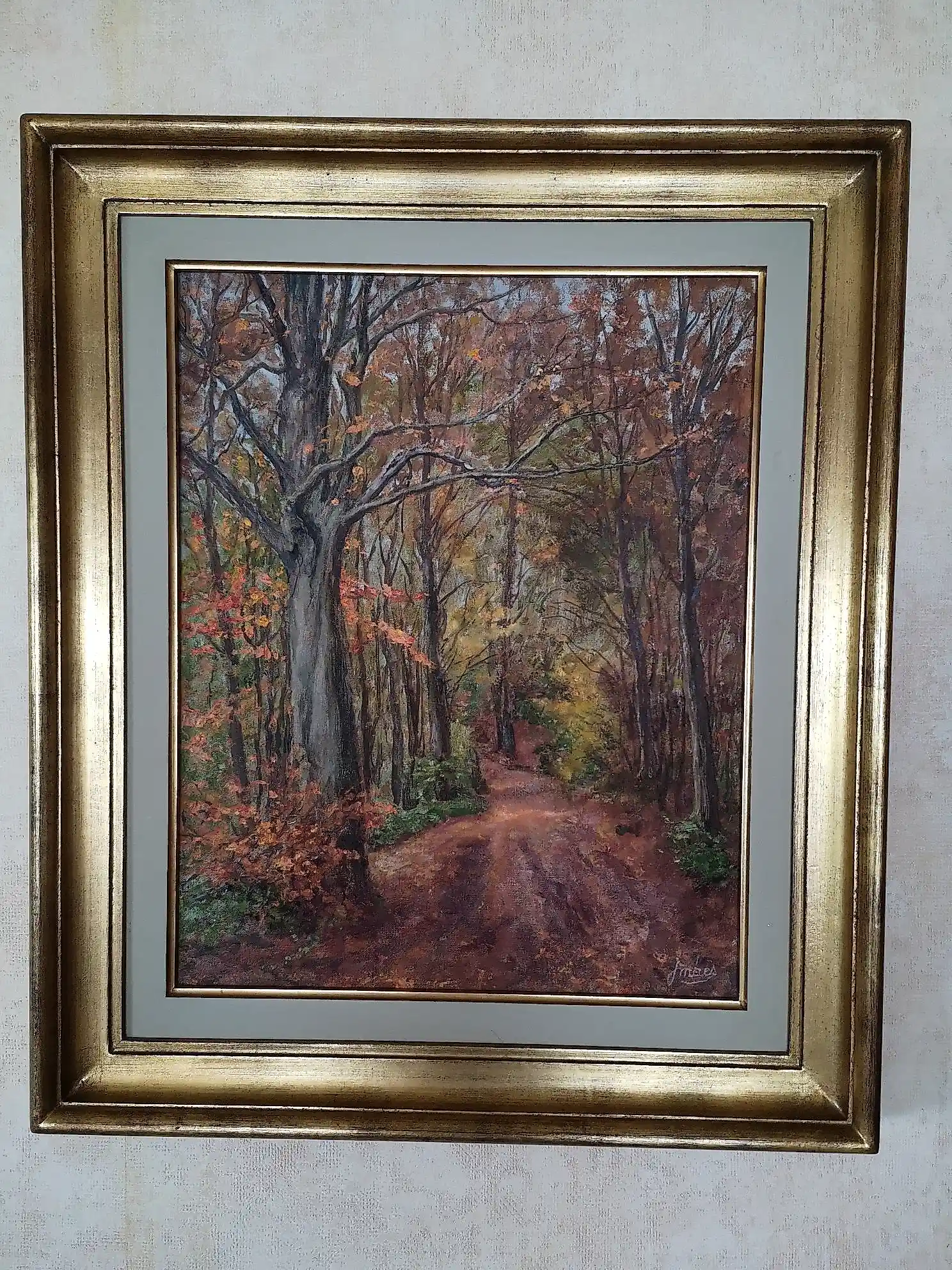
Jacques Maes - Atmospheric Autumn Forest – Oil on canvas in an authentic gold-leaf Schleiper frame

Starting bid €200
Buyer's premium : 15%
| Pick up | Yes, possible |
| Location | Lennik, Belgium |
Auction details
| Start time | 26-10-2026 at 14:19 |
| End time | 3-11-2026 at 19:15 |
Please note: if a bid is made in the last 5 minutes, the auction will be extended by 5 minutes.
 Belgian
- Description
- Jacques Maes (1905-1968)
| Type of artwork | Painting |
| Period | 1900 to 1944 |
| Technique | Oil paint |
| Support | Canvas |
| Style | Impressionist |
| Subject | Landscape |
| Framed | Framed |
| Dimensions | 49 x 39 cm (h x w) |
| Incl. frame | 67.5 x 57.5 cm (h x w) |
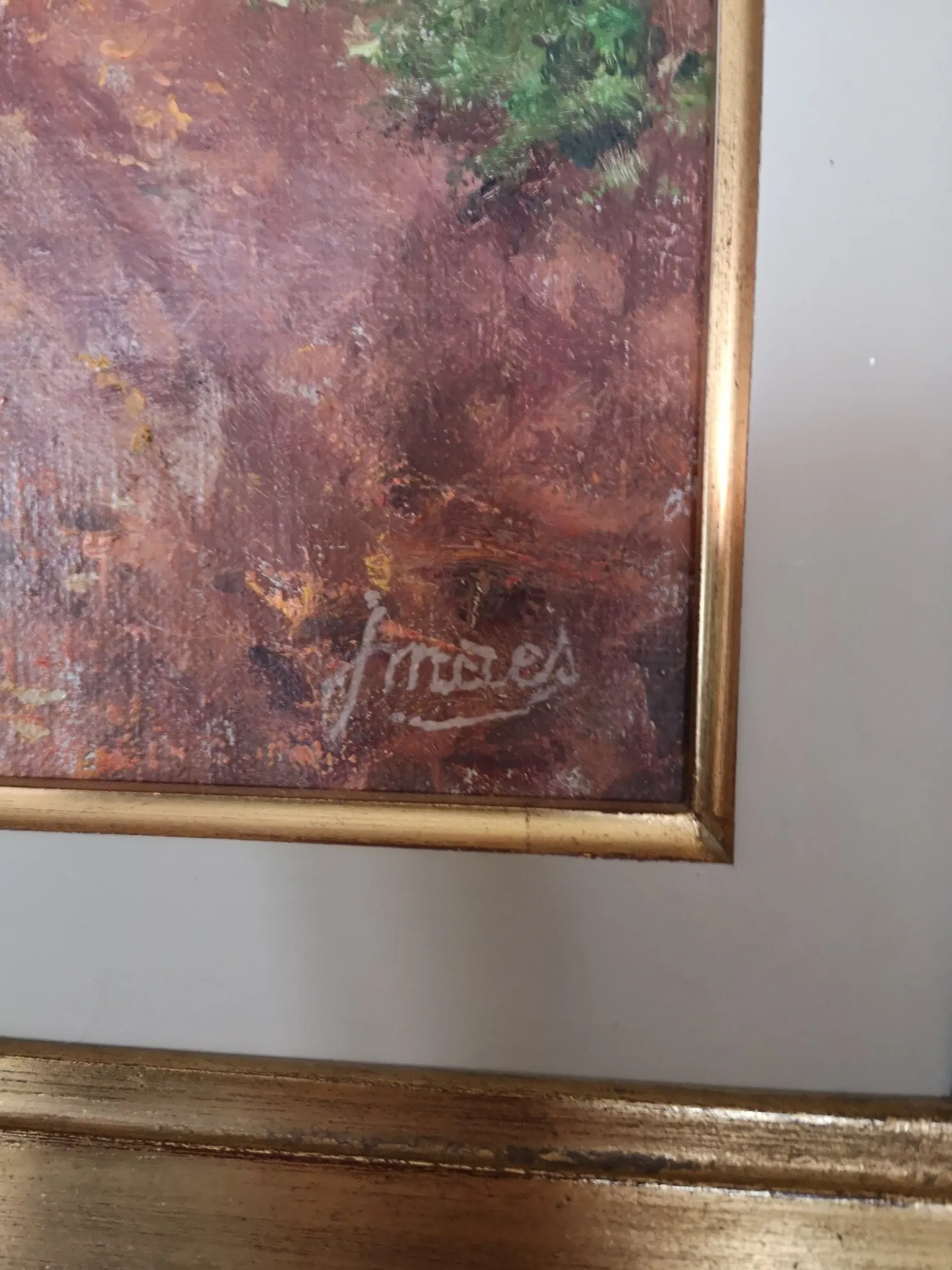
| Signed | Hand signed |
Translated with Google Translate. Original text show .
Atmospheric forest scene in warm autumn tones by the respected Belgian artist Jacques Maes (1905-1968). This oil painting is an excellent example of poetic, moderate Impressionism and Belgian Animism from the mid-20th century (c. 1935-1955).
With a loose, precise brushstroke, Maes masterfully captures the filtered sunlight on the forest path and the melancholic atmosphere of autumn. The work radiates tranquility, intimacy, and a deep connection with nature.
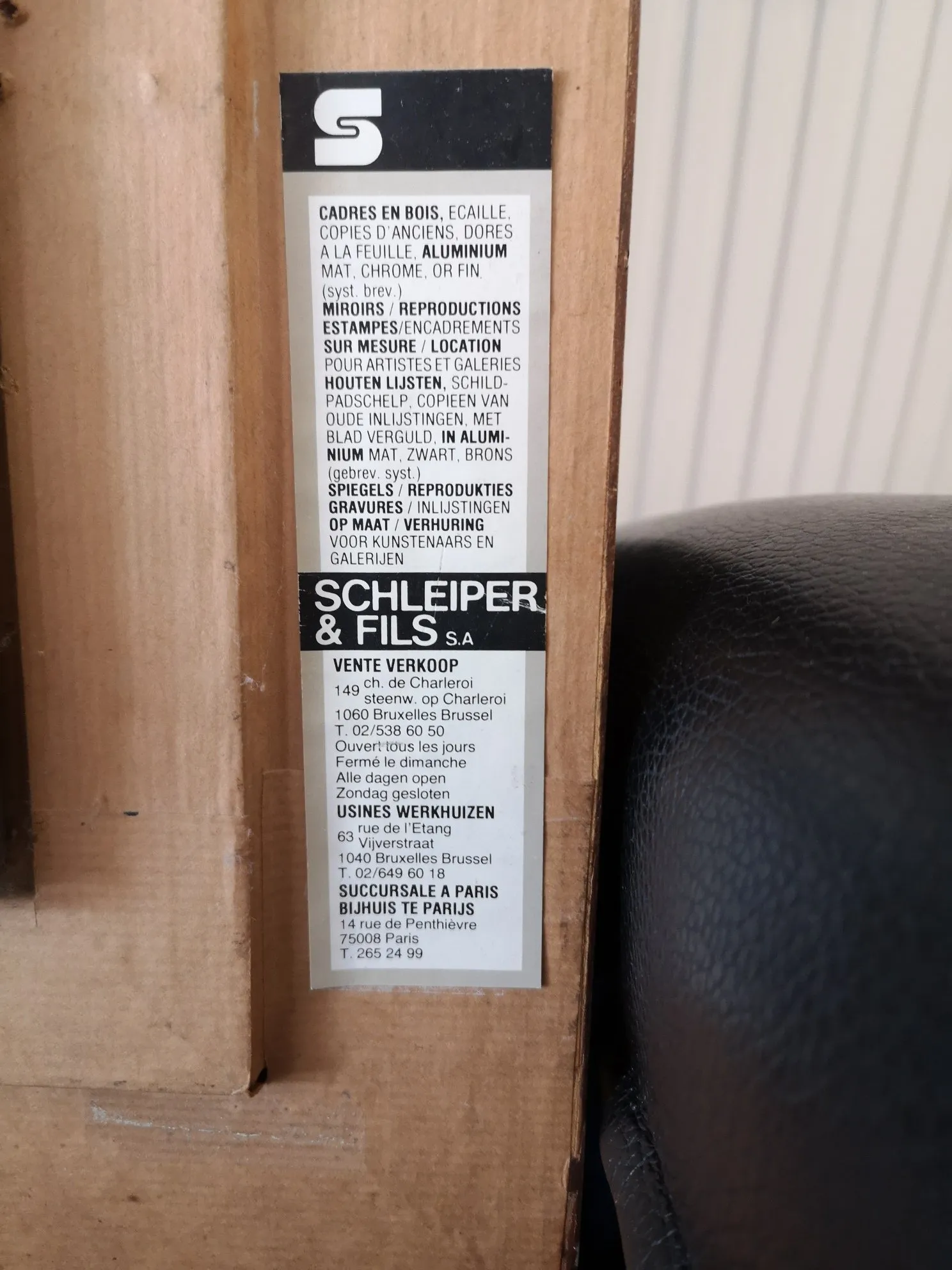
The painting is strikingly housed in a high-quality, handmade gold-leaf frame by the prestigious Brussels frame maker Schleiper & Fils. With its subtle patina, the frame forms the perfect, luxurious framing for the warm autumn colors of the canvas.
Specifications:
Artist: Jacques Maes (Belgium, 1905-1968)
Technique: Oil paint on canvas (marouflage/stretcher)
Painting: Autumn landscape / Forest view with forest path
Signature: Hand-signed in the lower right corner (J. Maes)
Dimensions: 57.5 cm x 67.5 cm (including frame)
Frame: Authentic gold leaf frame by Schleiper & Fils (Brussels)
Style: Moderate Impressionism / Animism (Interwar Period)
Condition: The painting and the valuable frame are in good, original condition (see photos for details).
About the artist (Biography for the buyer): Jacques Maes (Ixelles, 1905 – Brussels, 1968) was a prominent Belgian painter, draftsman, and monumentalist. He received his training at the Royal Academy of Fine Arts in Brussels under renowned names such as Jean Delville and Herman Richir. In 1930, he won the coveted Second Prize of Rome.
Although he was influenced by Expressionism in his early years, from the 1930s onwards he developed into one of the key figures of Animism in Belgium. This art movement distanced itself from the harsh, abstract avant-garde and sought instead the revaluation of the human figure, intimate realism, and the 'soul' (anima) in the everyday landscape.
Maes was a highly respected pedagogue; he was a professor at the Brussels Academy for many years. Between 1946 and 1948, he resided in Peru, where he took charge of the Academy of Fine Arts in Lima. His later work was characterized by the intense South American light, but his European forest and nature landscapes – such as this work – remain sought after for their layered, subdued atmosphere and technical mastery. Works by him can be found in various national and international collections and museums.
| Condition | |
| Condition | Very good |
| Excellent condition of both canvas and frame. | |
| Shipment | |
| Pick up | The work can be picked up on location. As a buyer you must bring your own packaging materials. The location is: Lennik, Belgium |
| courier-service | If you are unable to collect a work yourself, you can engage a courier service to have the work collected. Click here for more information about how this works and view the rates. |
| Shipment | Due to its size or fragility, it is not possible to send this item via regular mail |
| Guarantee | |
| Guarantee | By putting the item up for auction, I agree with the Terms of Guarantee as they are applicable at Kunstveiling regarding the accuracy of the description of the item |
| Consumer law | This seller has indicated that they are a private seller. Therefore, consumer law does not apply. Read more |
The seller takes full responsibility for this item. Kunstveiling only provides the platform to facilitate this transaction, which has to be settled directly with the seller. More information .