Joop van Egmond - Bildtpollen near Ferwerd, Friesland - Sold

This item has been sold Show item
| Pick up | Yes, possible |
| Location | RIJNSBURG, The Netherlands |
Auction details
| Start time | 9-9-2026 at 19:46 |
| End time | 20-9-2026 at 20:01 |
Bids (1)
Log in or register to view the bidding history M
mondart The Netherlands
2024 | |
17 sold | 2 followers |
- Description
- Joop van Egmond (1943-2018)
| Type of artwork | Painting |
| Year | 2014 |
| Technique | Acrylic |
| Support | Board |
| Style | Expressionist |
| Subject | Landscape |
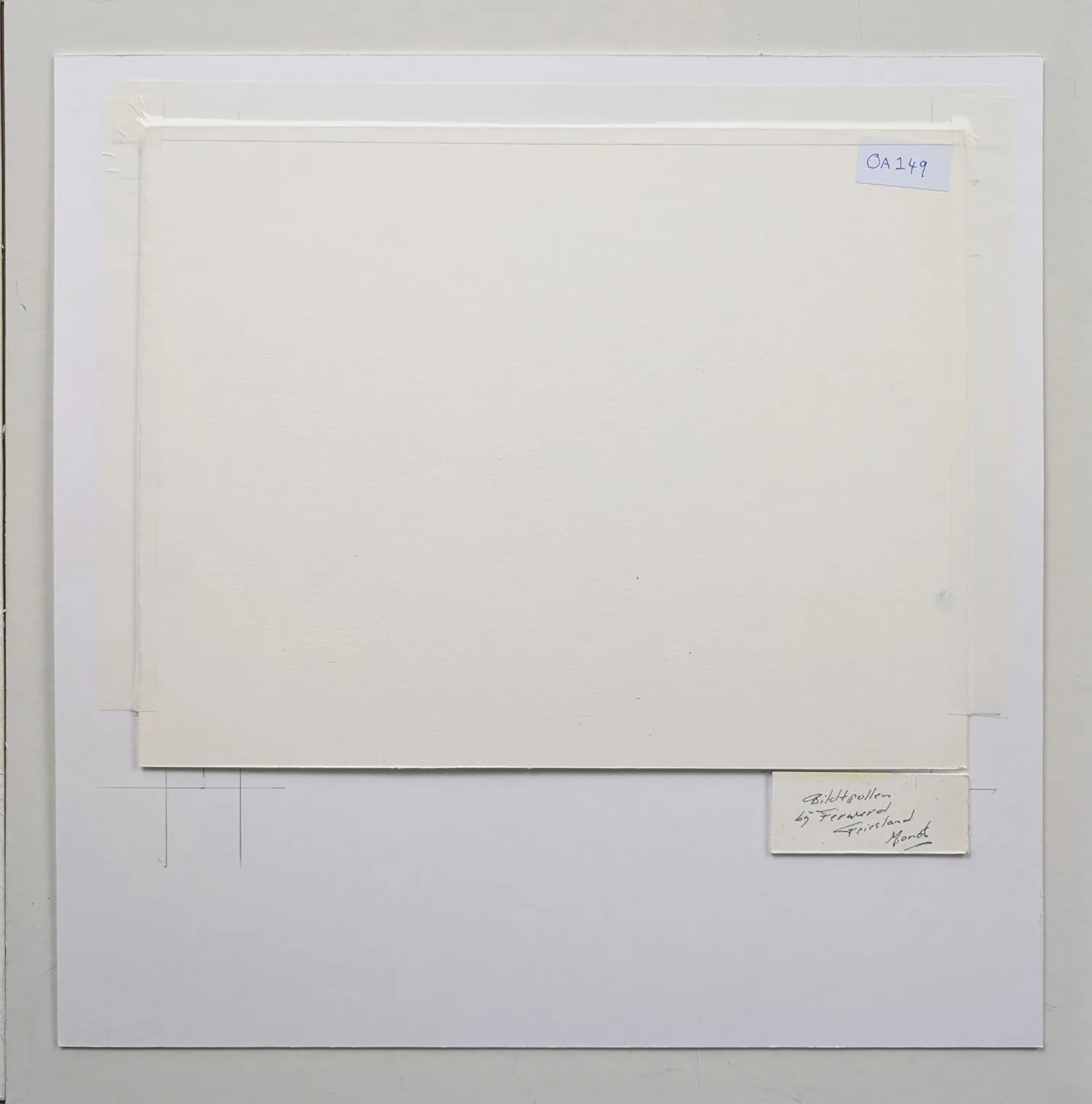
| Framed | Only in Passe-partout |
| Dimensions | 22 x 30 cm (h x w) |
| Passe-partout | 40 x 40 cm (h x w) |
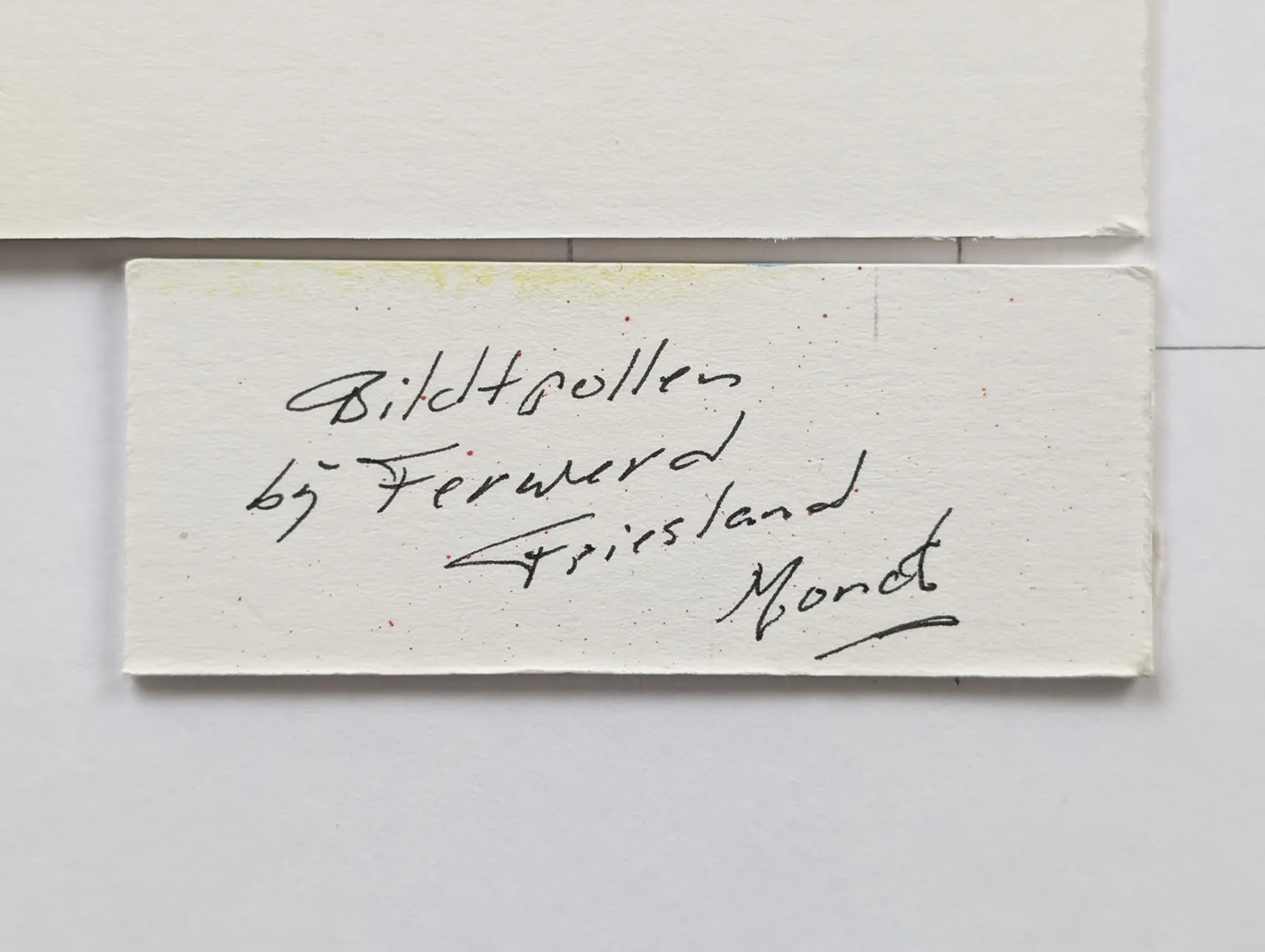
| Signed | Hand signed |
Translated with Google Translate. Original text show .
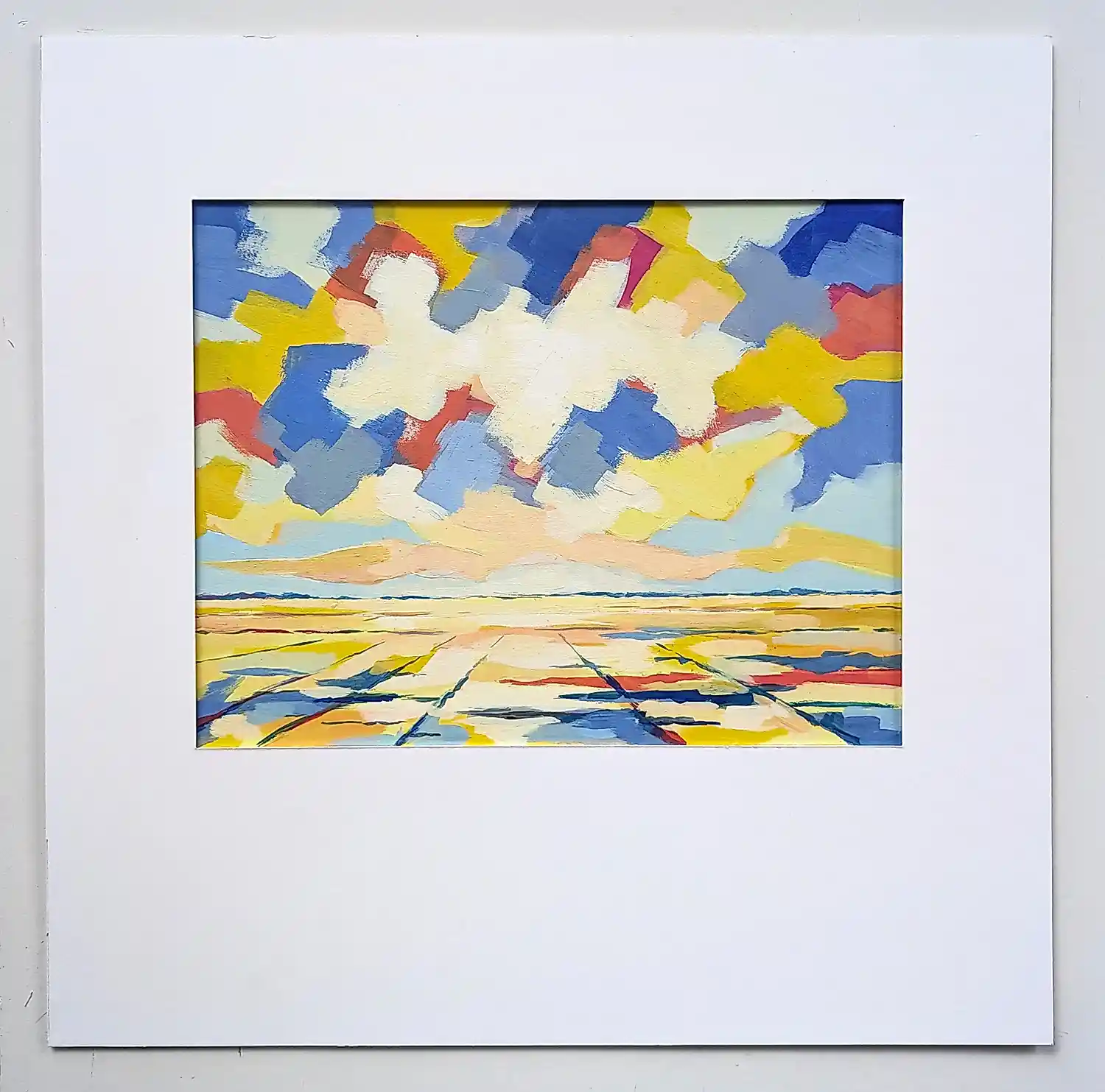
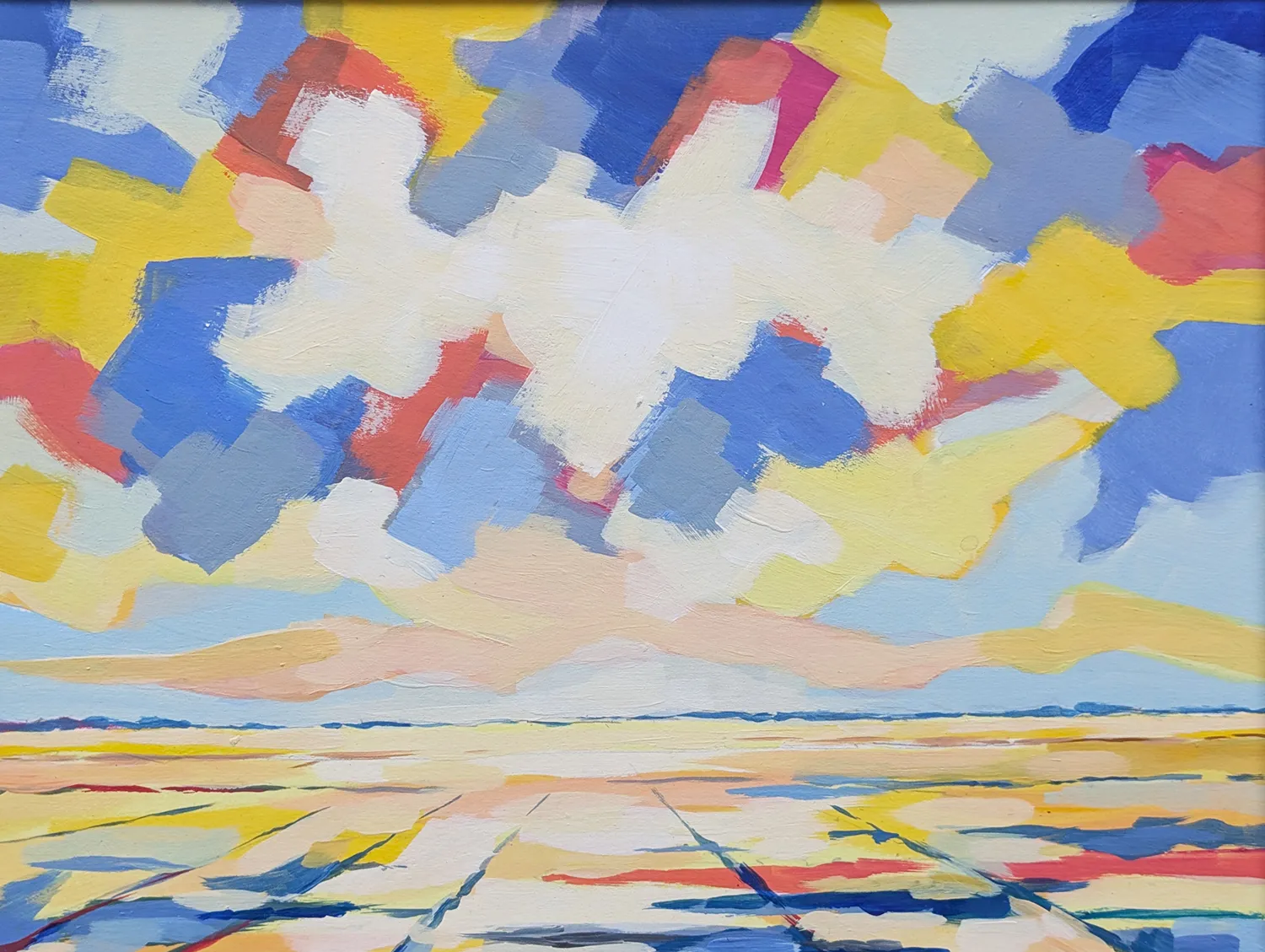
This painting depicts the open coastal landscape of the Bildtpollen in a bright, expressive style. Originally, this area was part of the Middelzee, a sea arm that extended deep into Friesland in the Middle Ages. From the beginning of the 16th century, this coastal area was gradually diked and reclaimed. This is how Het Bildt came into being, the flat polder landscape northwest of Leeuwarden. The name “Bildt” is linked to the idea of silted land.
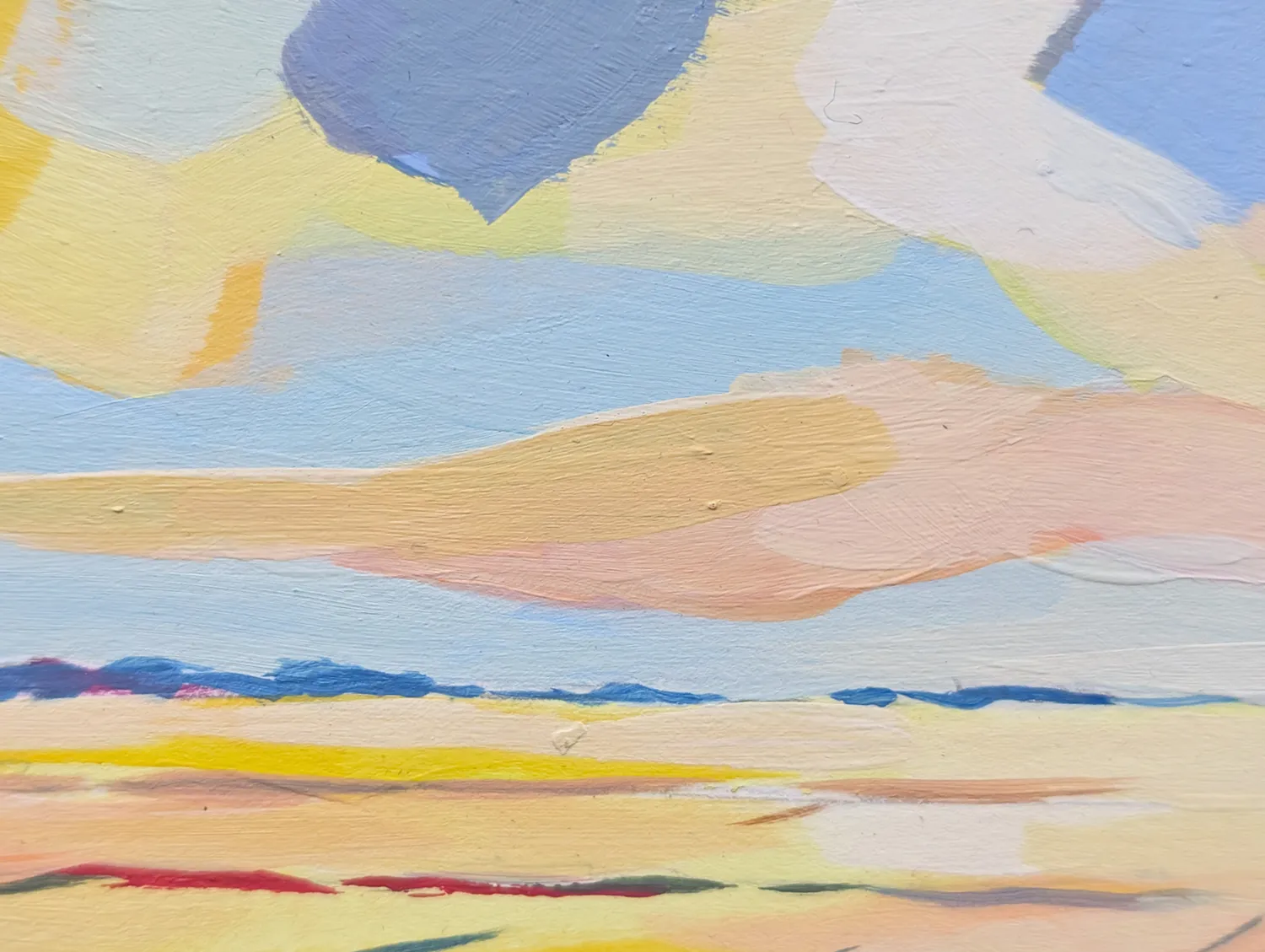
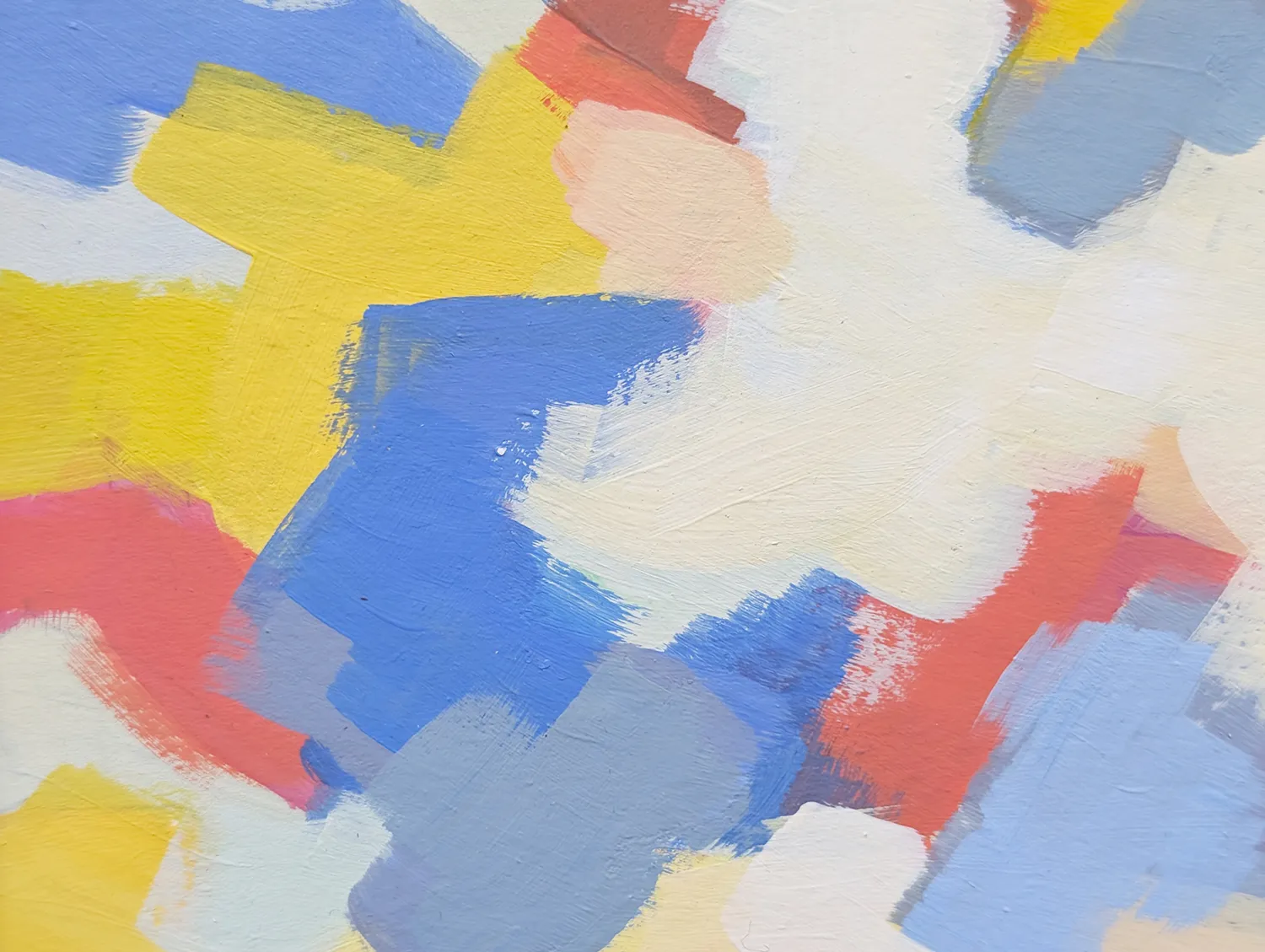
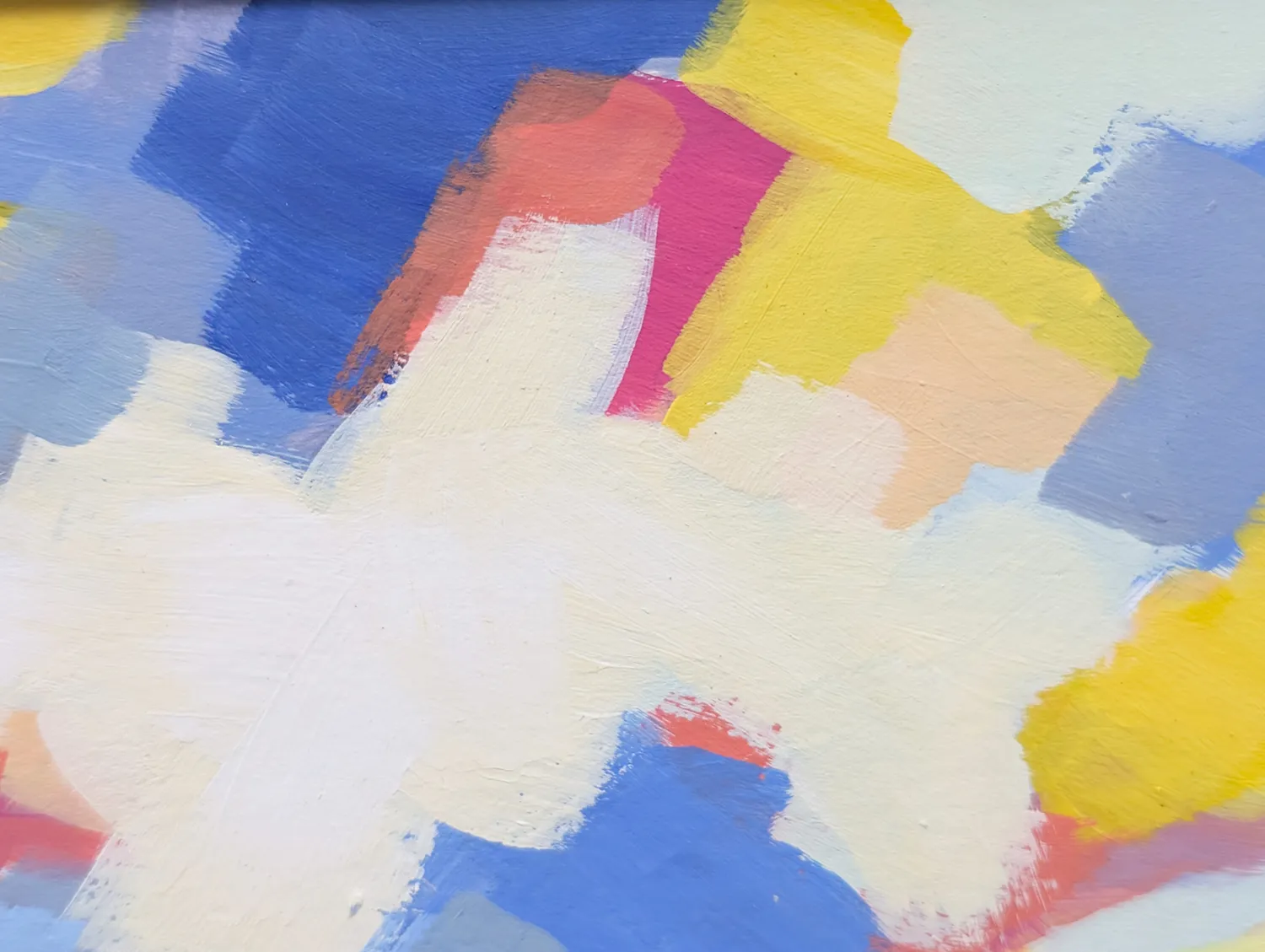
The composition is dominated by a low horizon, giving the sky an overwhelming presence. Large, loosely painted cloud formations in white, blue, and yellow, with accents of red and pink, appear to be in motion and lend the work a dynamic character.
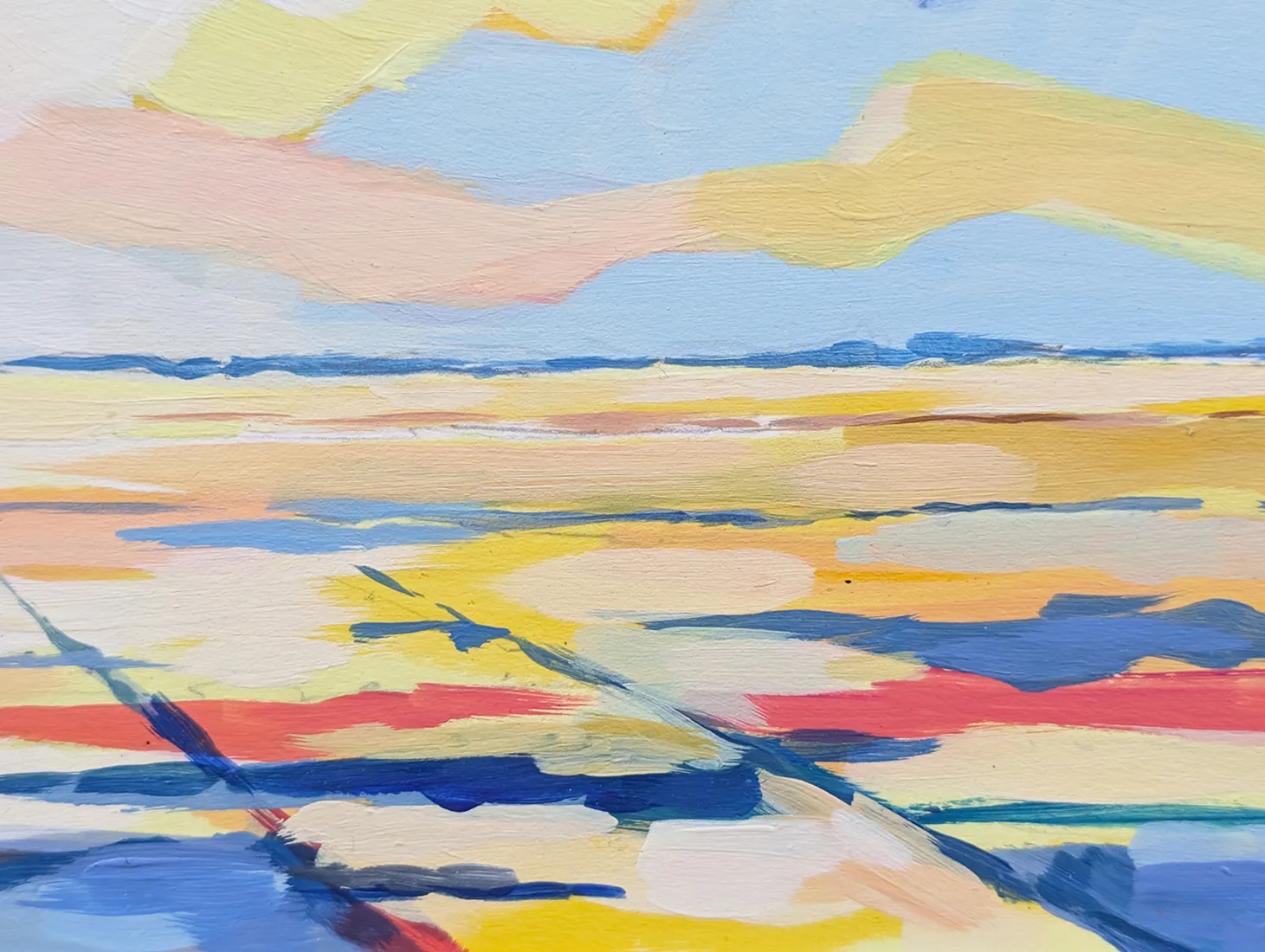
Below the horizon, the mudflats and polder landscape stretch out in broad, light bands. Subtle lines and color variations suggest land division, mudflats, and water currents flowing into the distance. This creates depth, despite the simplified formal language.
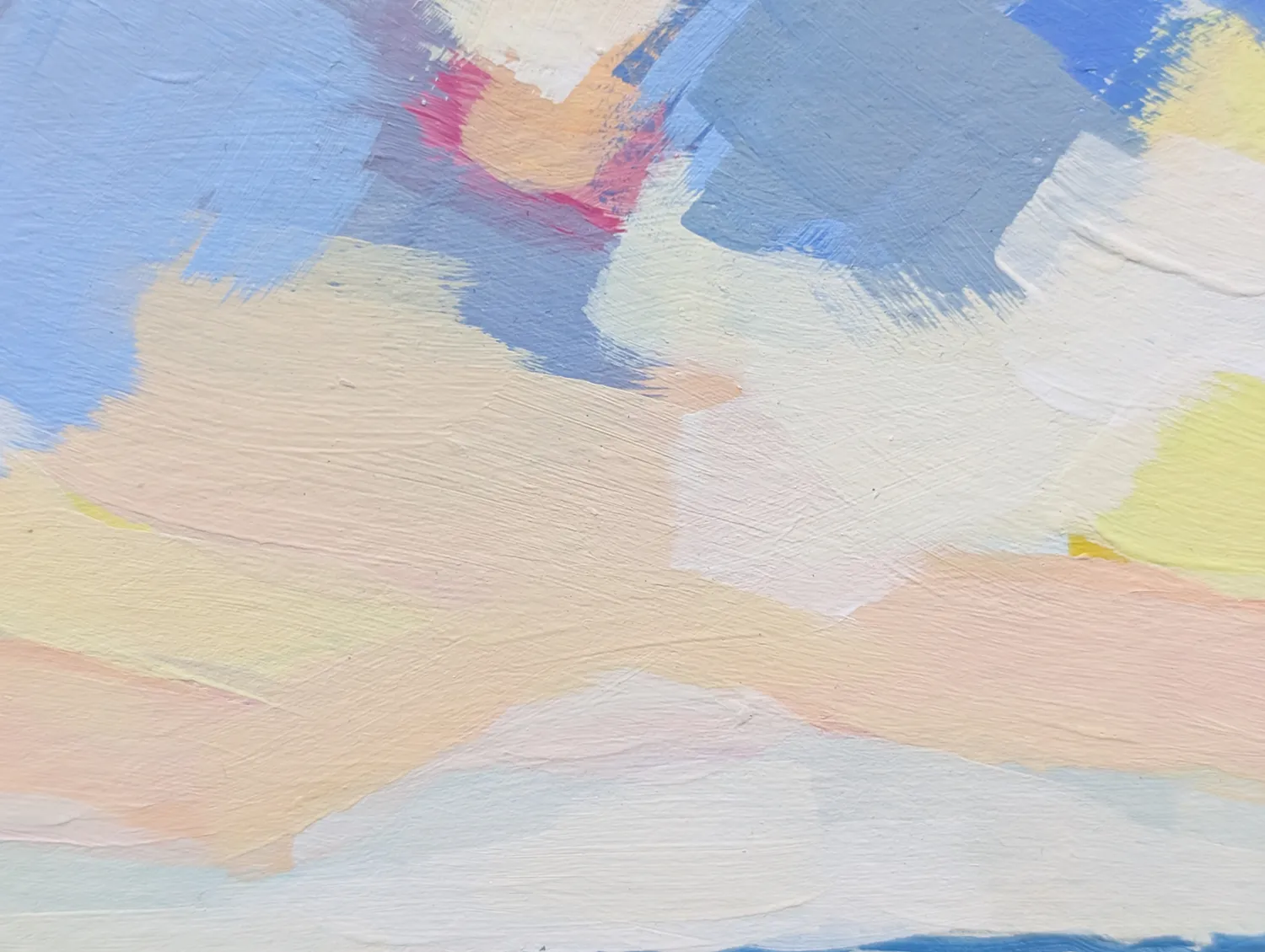
The use of color is fresh and light, with many soft transitions that give the painting an almost transparent quality. The repetition of colors in the sky and land creates cohesion, while the visible brushstrokes keep the work lively.
Joop van Egmond (1943 - 2018) was active as a visual artist in many disciplines, such as drawing, etching, sculpting, and painting in watercolor, acrylic, and oil. He is also known under the pseudonym 'MOND'. His versatility resulted in a diversity of movements and techniques.
In his early years, he worked in a strongly naturalistic style, but in his later work, he continued to seek forms of expression that speak the language of simplicity. Translating various subjects in an almost 'primitive' manner, in which man in his pure form of joy and emotions occupies a central place, was an increasing source of inspiration for him.
His colorful, abstract landscapes were inspired by the work of the Frisian painter Gerrit Benner. Like Benner, he was obsessed with the Frisian landscape. However, the work of the artist collective De Ploeg (Groningen) also had a major influence on Van Egmond. In addition, expressionist influences are visible, such as from the German artist collective Der Blaue Reiter.
Over the last two decades, he painted colorful oil paintings of Italian, French, and Dutch landscapes. The paintings exude a powerful brushstroke and vibrant richness of color. At the same time, he focused on monumental objects carved from stone or cast in bronze. In addition, he continued working on primarily modern objects in stainless steel, in combination with bronze, glass, and stone.
| Condition | |||||||||||
| Condition | Mint condition | ||||||||||
| The work is taut in a clean passe-partout. | |||||||||||
| Shipment | |||||||||||
| Pick up | The work can be picked up on location. As a buyer you must bring your own packaging materials. The location is: Rijnsburg, The Netherlands | ||||||||||
| Shipment | Parcel post | ||||||||||
| Price | Up to 2 kg.
| ||||||||||
| Guarantee | |||||||||||
| Guarantee | By putting the item up for auction, I agree with the Terms of Guarantee as they are applicable at Kunstveiling regarding the accuracy of the description of the item | ||||||||||
| Consumer law | This seller has indicated that they are a private seller. Therefore, consumer law does not apply. Read more | ||||||||||
The seller takes full responsibility for this item. Kunstveiling only provides the platform to facilitate this transaction, which has to be settled directly with the seller. More information .
Joop van Egmond (1943-2018)
 Dutch
M
mondart The Netherlands
2024 | |
17 sold | 2 followers |
40 cm
40 cm
30 cm
22 cm