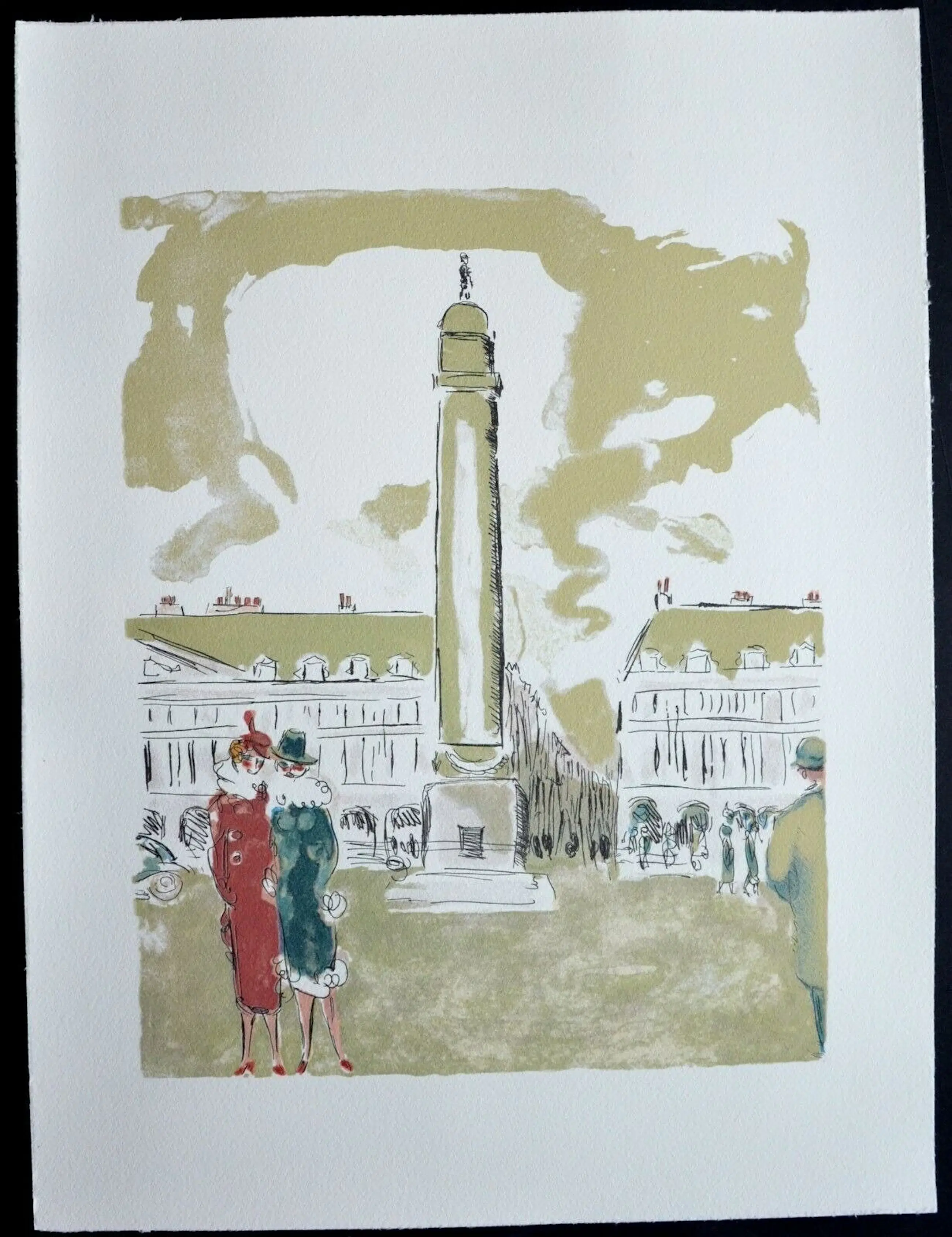
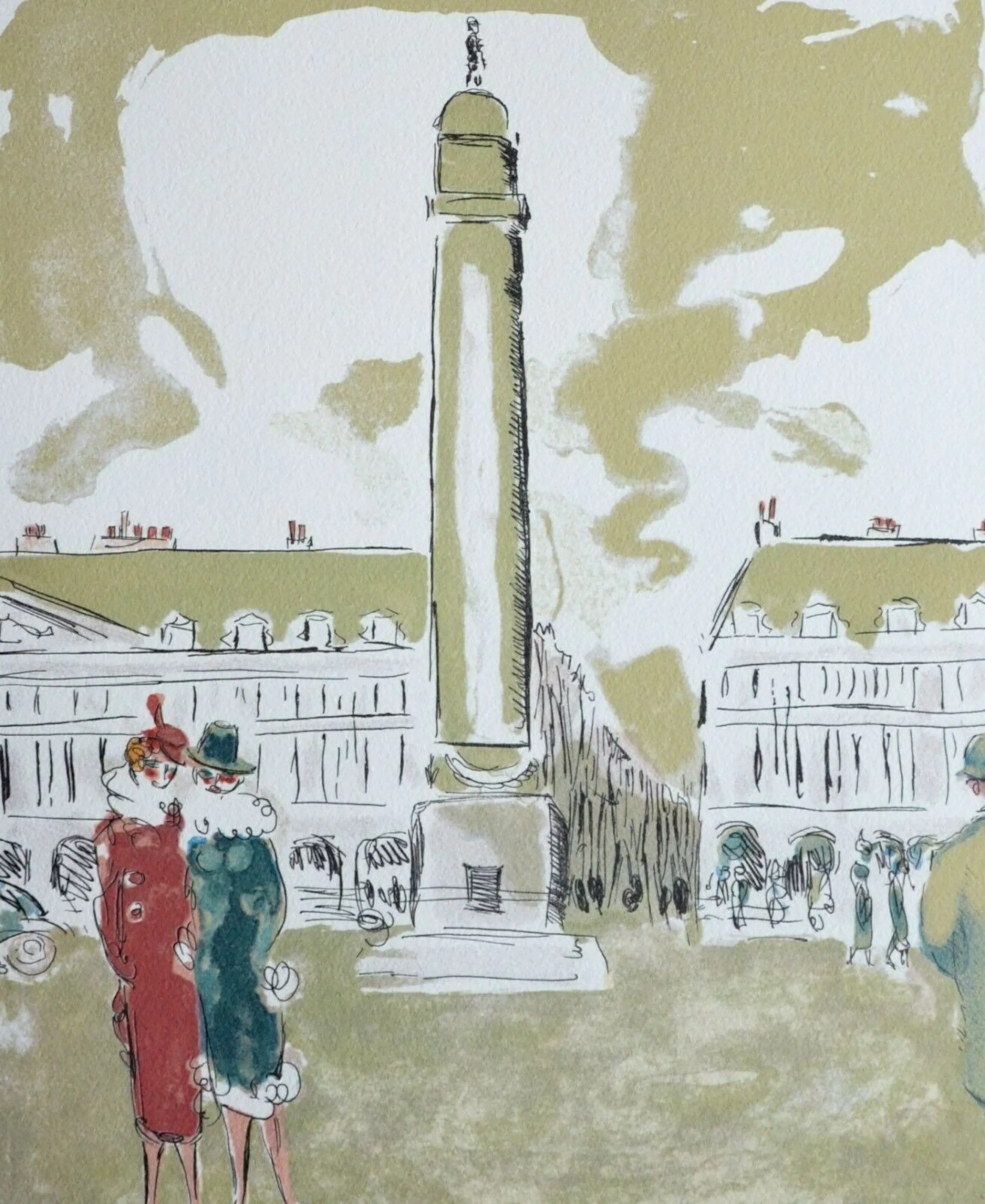
Kees van Dongen - Litho, Titel, Place Vendôme - Sold
This item has been sold Show item
| Pick up | Yes, possible |
| Location | ALKMAAR, The Netherlands |
Auction details
| Start time | 3-6-2026 at 23:31 |
| End time | 14-6-2026 at 19:48 |
Bids (1)
Log in or register to view the bidding history C
CGMKunst The Netherlands
2024 | |
658 sold | 19 followers |
- Description
- Kees van Dongen (1877-1968)
| Type of artwork | Prints & Editions |
| Period | 1945 to 1999 |
| Technique | Lithograph |
| Style | Modern |
| Subject | Cityscape |
| Framed | Not framed |
| Dimensions | 37 x 47 cm (h x w) |
| Signed | Unsigned/Print signed |
Translated with Google Translate. Original text show .
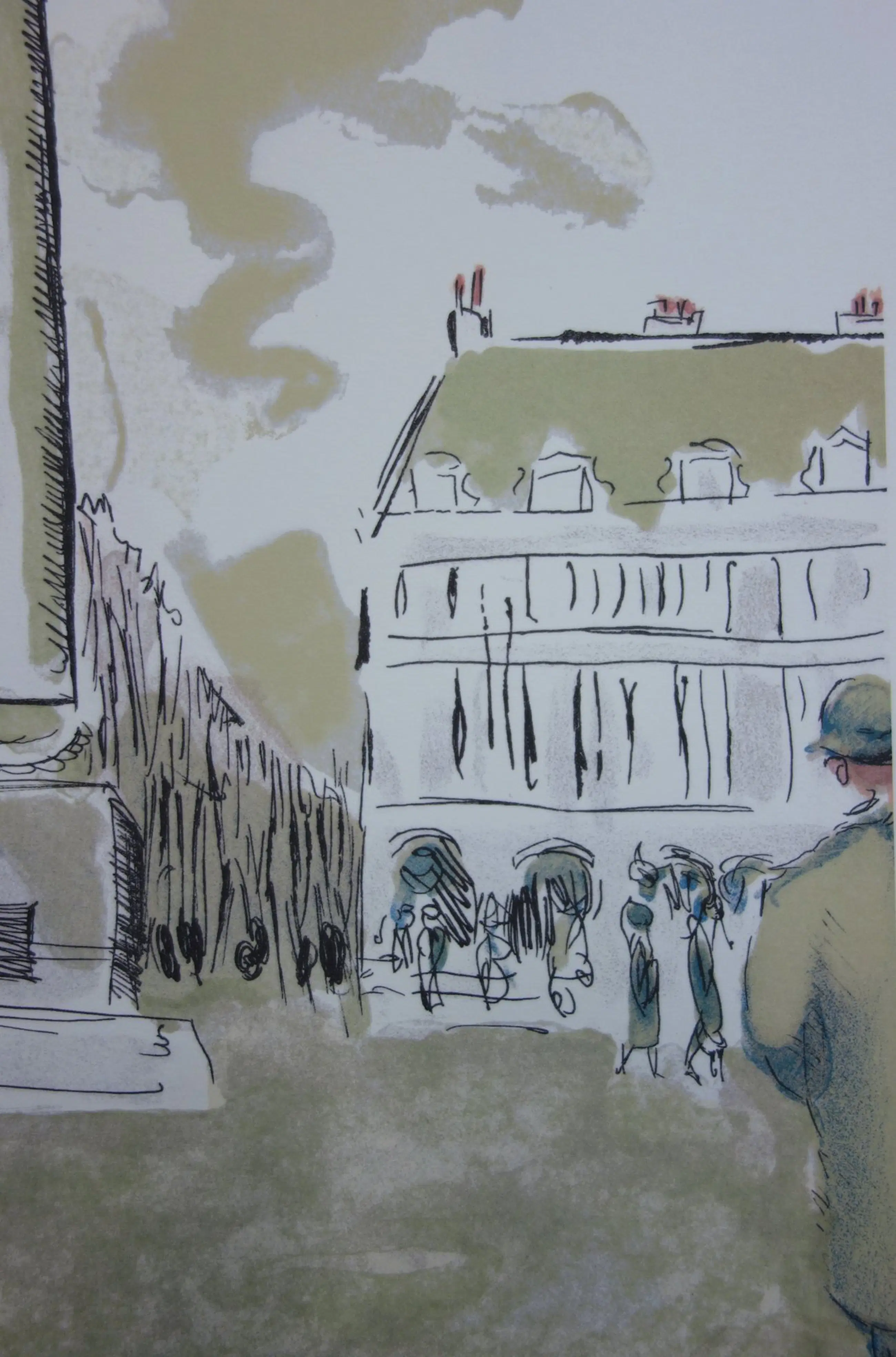
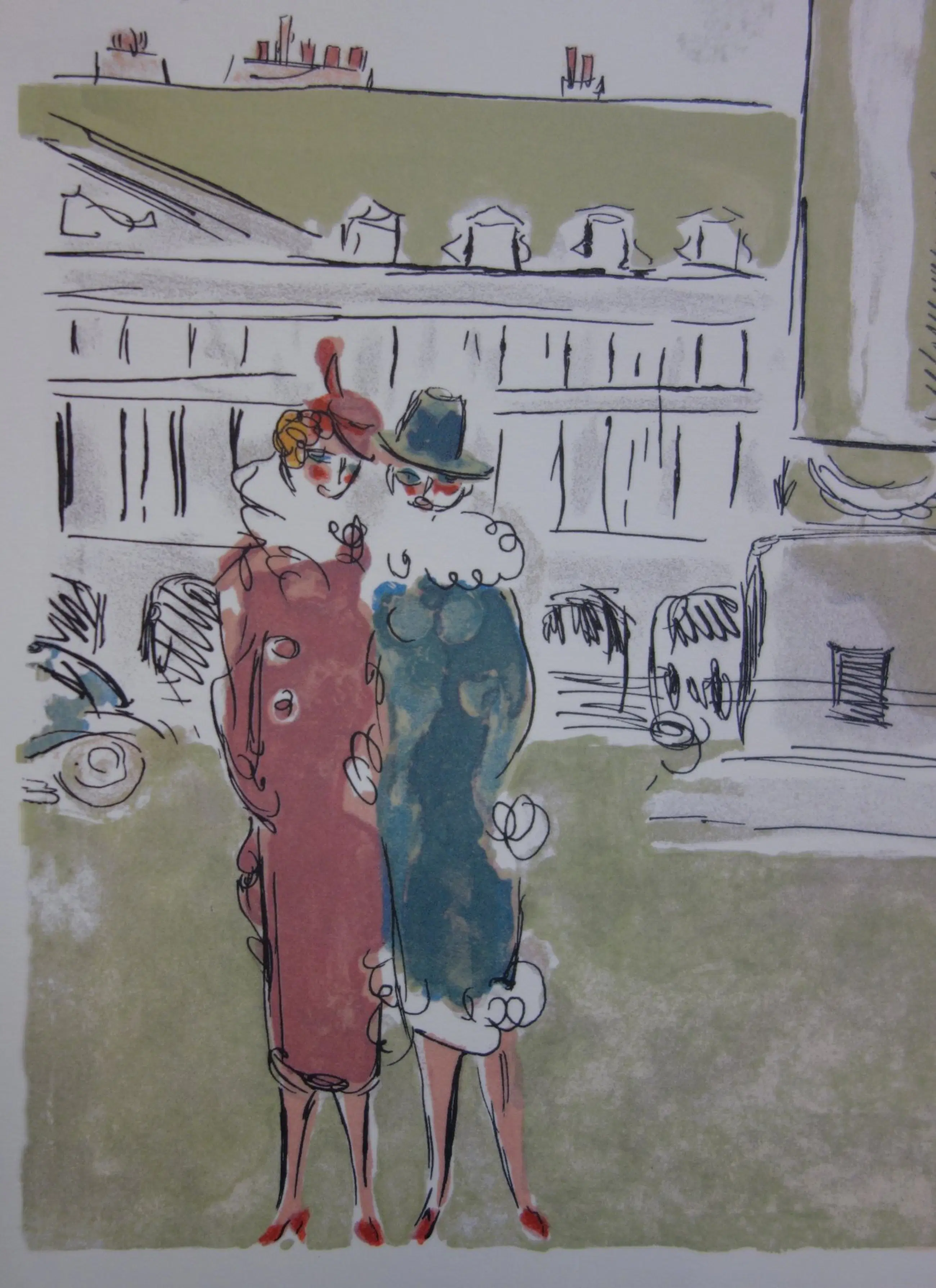
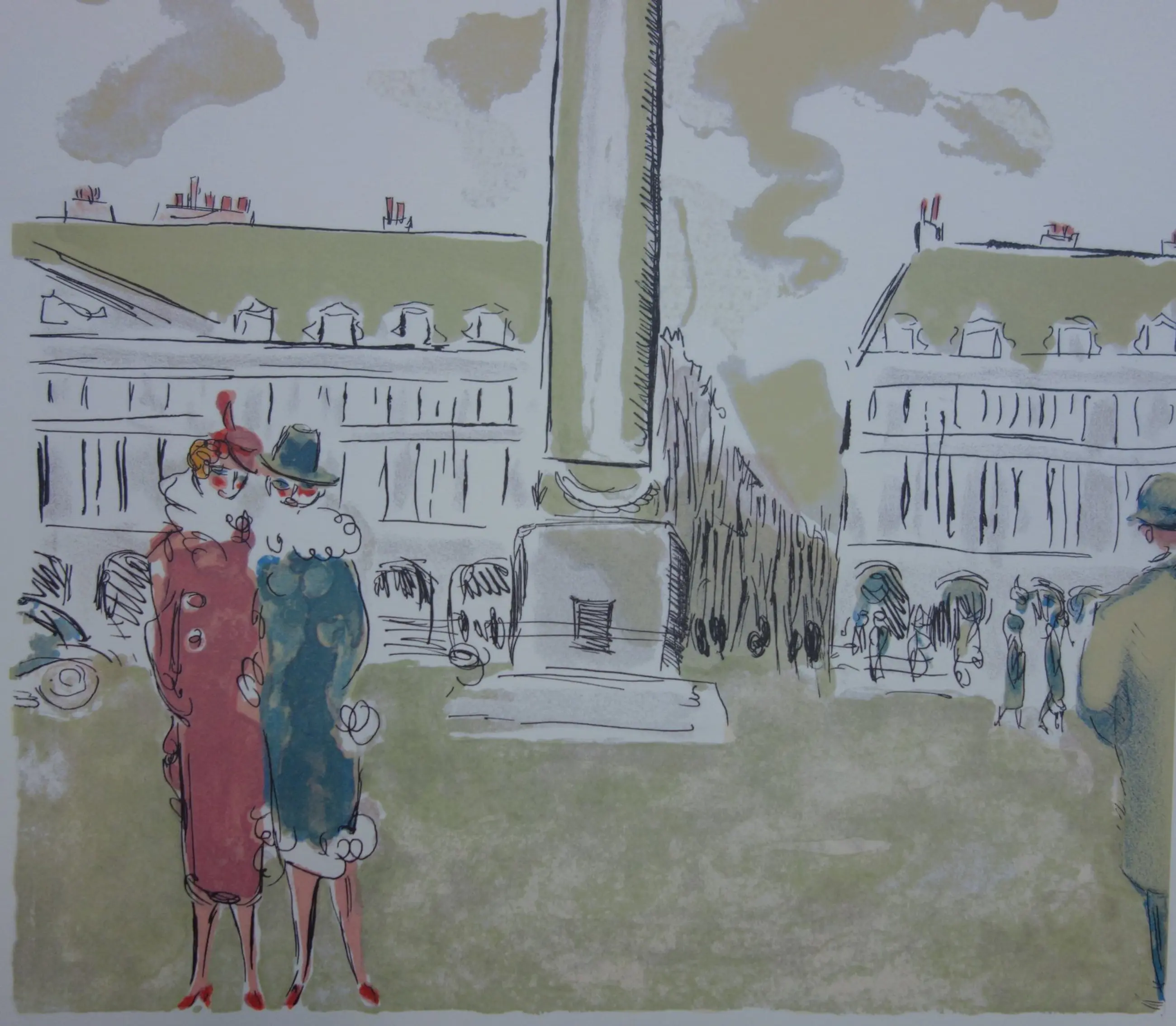
Cornelis Theodorus Maria (Kees) van Dongen Color lithograph on Arches vellum paper after the artist's work. Reference: Juffermans no. L41. Subject dimensions Height 37 cm Width 47 cm Excellent condition Cornelis Theodorus Maria (Kees) van Dongen He began exhibiting his work in Paris, including at the notorious 1905 exhibition at the Salon d'Automne with Henri Matisse, among others. The bright colors employed by this group of artists earned them the nickname Les Fauves ('Wild Beasts'). Van Dongen was also briefly a member of the German Expressionist group Die Brücke. Among the Fauves, Van Dongen himself, Henri Matisse, André Derain, Maurice de Vlaminck, and Albert Marquet were the leading figures. Characteristic of his work are the seemingly primitive forms and the bright, unmixed colors. Van Dongen's Fauvist period (approximately from 1906 to 1913) is regarded by many as his artistic peak. Van Dongen is known for his many paintings of the female nude. The painting Torse (1905), for which his wife posed, marked the beginning of a series of provocative, sensual works. Not only did his wife and Fernande Olivier pose for him, but his mistresses Nini (a saleswoman from the Folies Bergère) and Anita (a Gypsy) also posed for nudes in daring, voluptuous poses. To him, the woman was 'the most beautiful landscape': the woman was his muse. Later in his career (after 1918, during his fashionable period), he focused primarily on painting portraits of Parisian society. The turbulent 1920s constituted Van Dongen's peak period commercially. The economic crisis had a negative impact on sales. The years 1939–1949 marked a low point in Van Dongen's career. During the war, he painted little and occupied himself primarily with his young son. His relationship with Marie-Claire was stormy, and in 1944 she left him for a time, causing his production to halt completely. Moreover, the sale of his work proceeded much less smoothly. His trip to Germany during the war was held against the painter, and critics pointed out the inferior quality of some of the paintings offered for sale. Between 1953 and 1959, he experienced a final golden age as a portraitist, although his production gradually declined. By then, Van Dongen was already past his peak. Most experts judge that his social and commercial activities came at the expense of the artistic level he had achieved in his younger years. Due to his declining health, his works became smaller in size.
| Condition | |||||||||
| Condition | Very good | ||||||||
| Shipment | |||||||||
| Pick up | The work can be picked up on location. As a buyer you must bring your own packaging materials. The location is: Alkmaar, The Netherlands | ||||||||
| Shipment | Parcel post | ||||||||
| Price | Up to 5 kg.
| ||||||||
| Guarantee | |||||||||
| Guarantee | By putting the item up for auction, I agree with the Terms of Guarantee as they are applicable at Kunstveiling regarding the accuracy of the description of the item | ||||||||
| Consumer law | This seller has indicated that they are a private seller. Therefore, consumer law does not apply. Read more | ||||||||
The seller takes full responsibility for this item. Kunstveiling only provides the platform to facilitate this transaction, which has to be settled directly with the seller. More information .
Kees van Dongen (1877-1968)
 Dutch
 French
C
CGMKunst The Netherlands
2024 | |
658 sold | 19 followers |
47 cm
37 cm