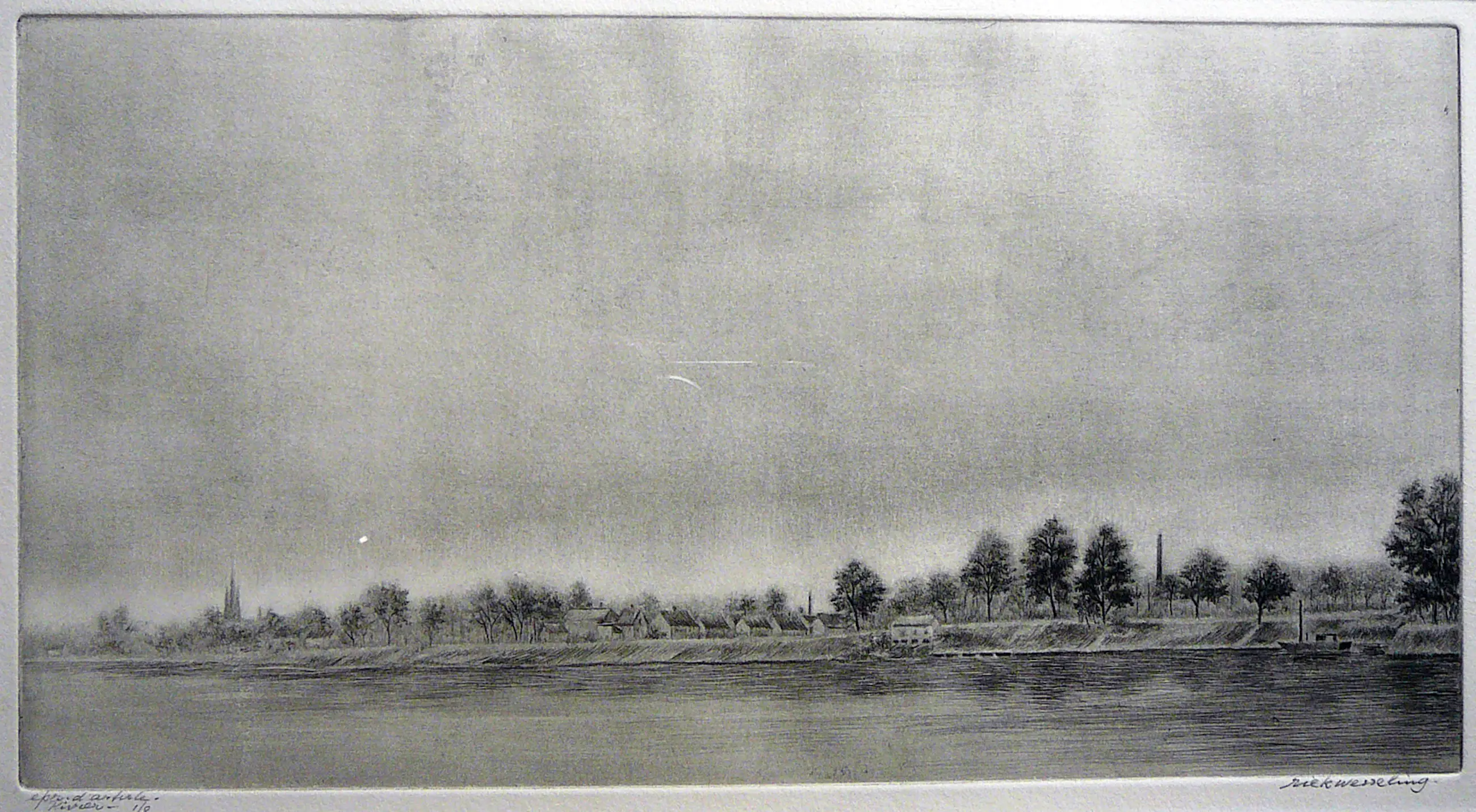
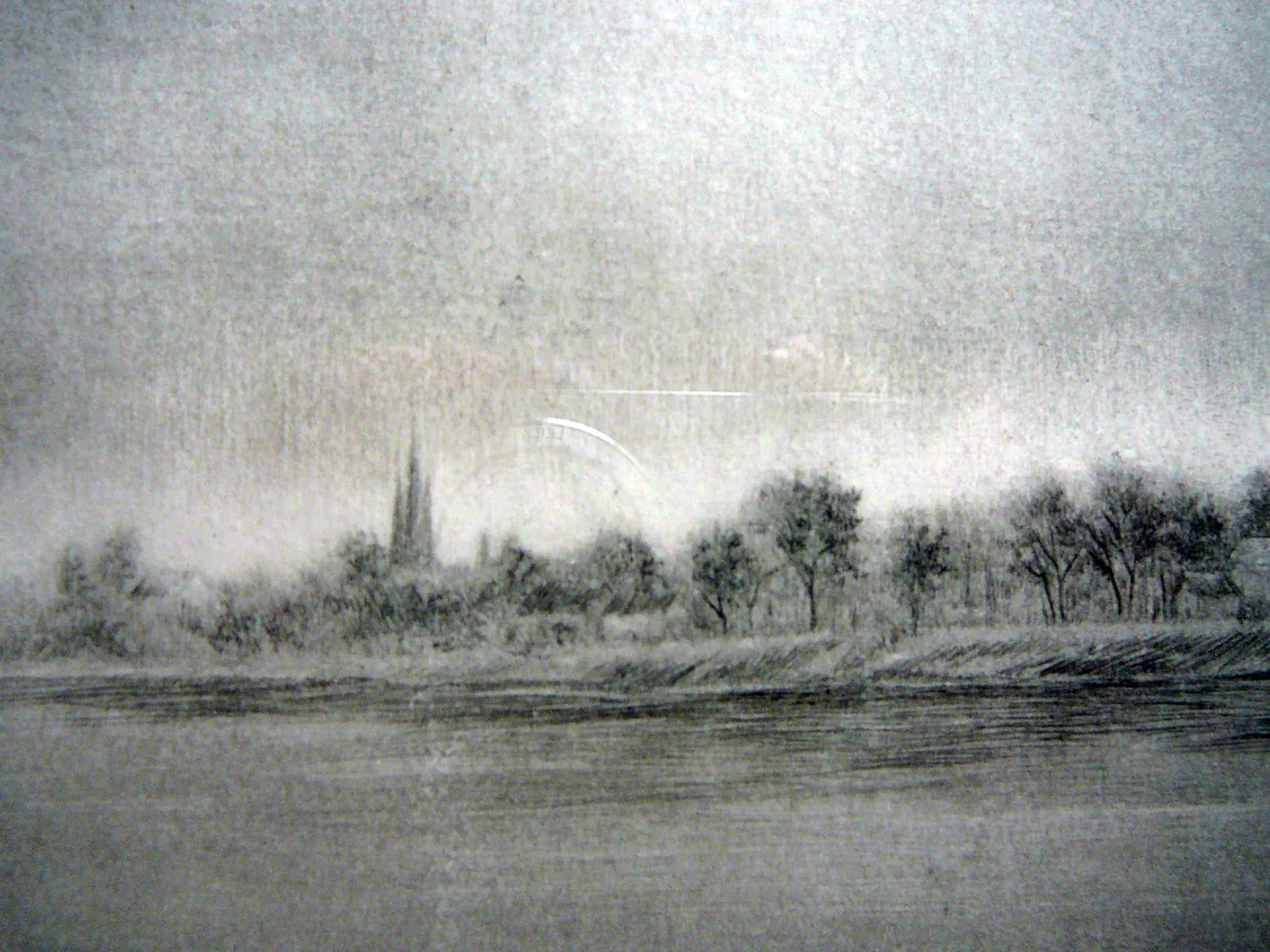
Riek Wesseling - River -drypoint engraving- - Sold
This item has been sold Show item
| Pick up | Yes, possible |
| Location | Utrecht, The Netherlands |
Auction details
| Start time | 23-1-2024 at 19:55 |
| End time | 19-3-2024 at 16:25 |
Bids (1)
Log in or register to view the bidding history K
kunstmest The Netherlands
2014 | |
581 sold | 6 followers |
- Description
- Riek Wesseling (1914-1995)
| Type of artwork | Prints (signed) |
| Period | 1945 to 1999 |
| Technique | Drypoint |
| Support | Handmade Paper |
| Style | Impressionist |
| Subject | Landscape |
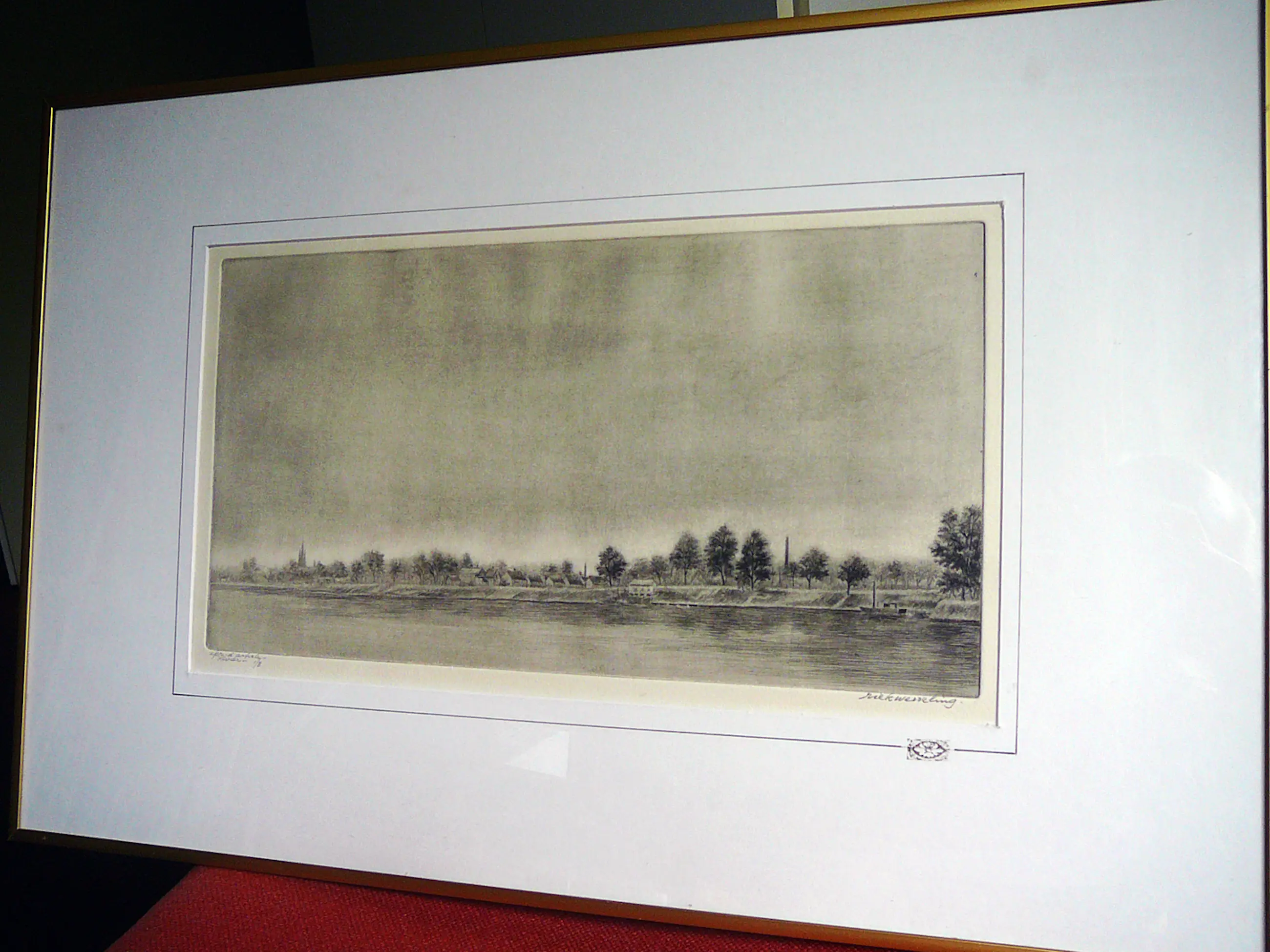
| Framed | Framed |
| Dimensions | 22 x 39 cm (h x w) |
| Incl. frame | 40 x 61 cm (h x w) |
| Signed | Hand signed |
| Edition | 1/8 |
Translated with Google Translate. Original text show .
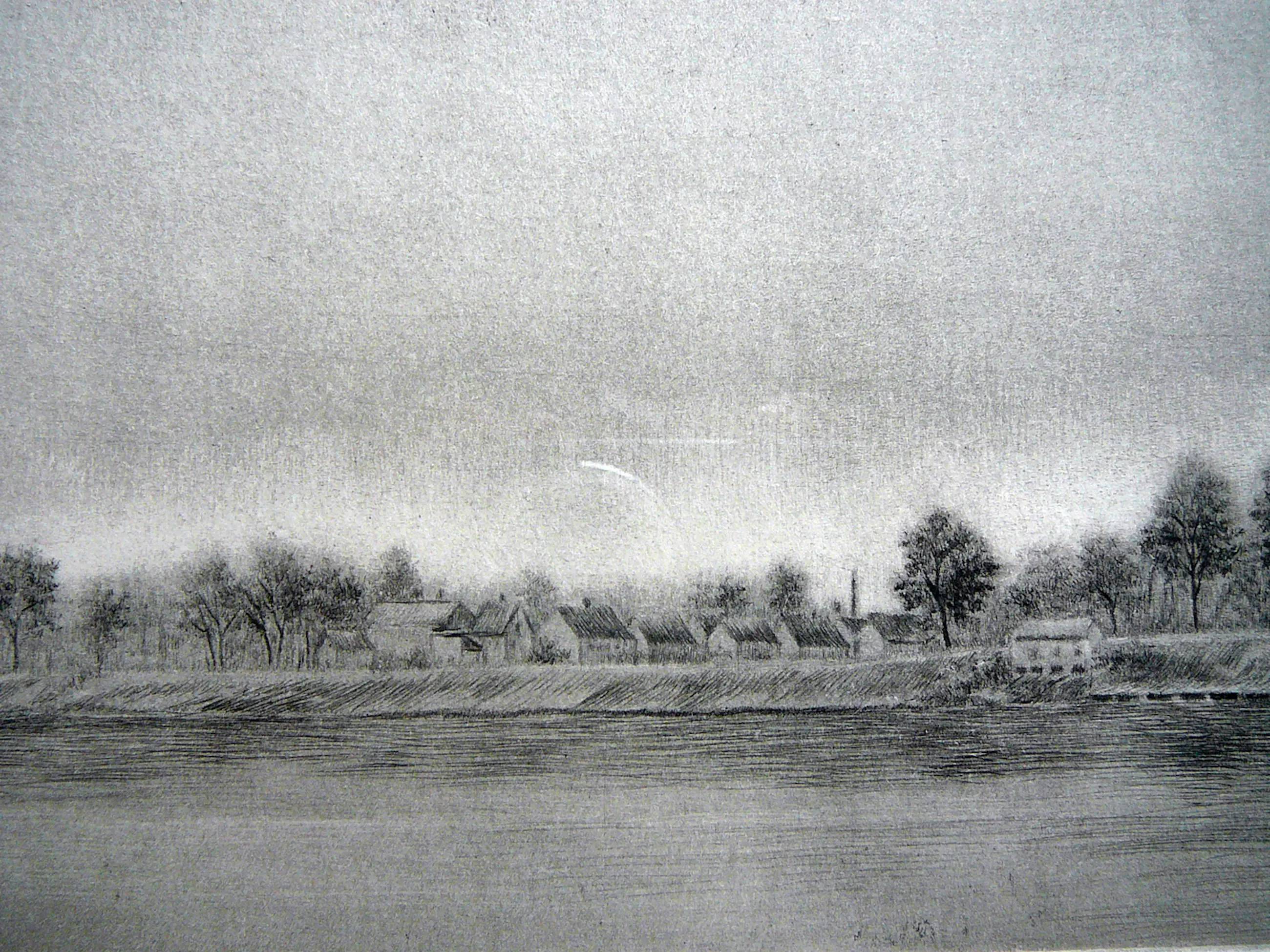
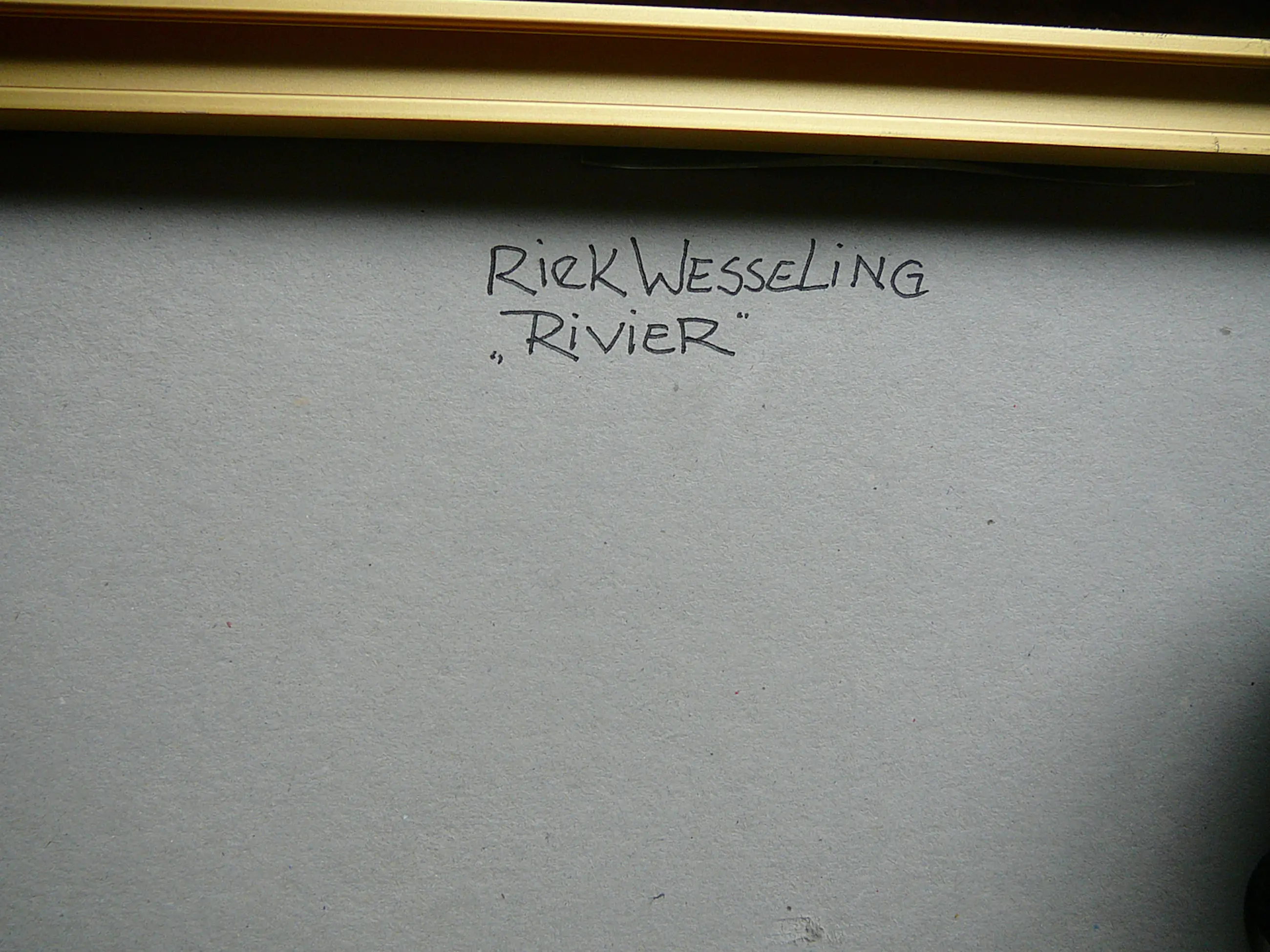
Beautiful, panoramic drypoint engraving in mint condition. Signed lower right, titled lower left. Number 1 of only 8 copies ea. Riek Wesseling's work is currently very popular with collectors.
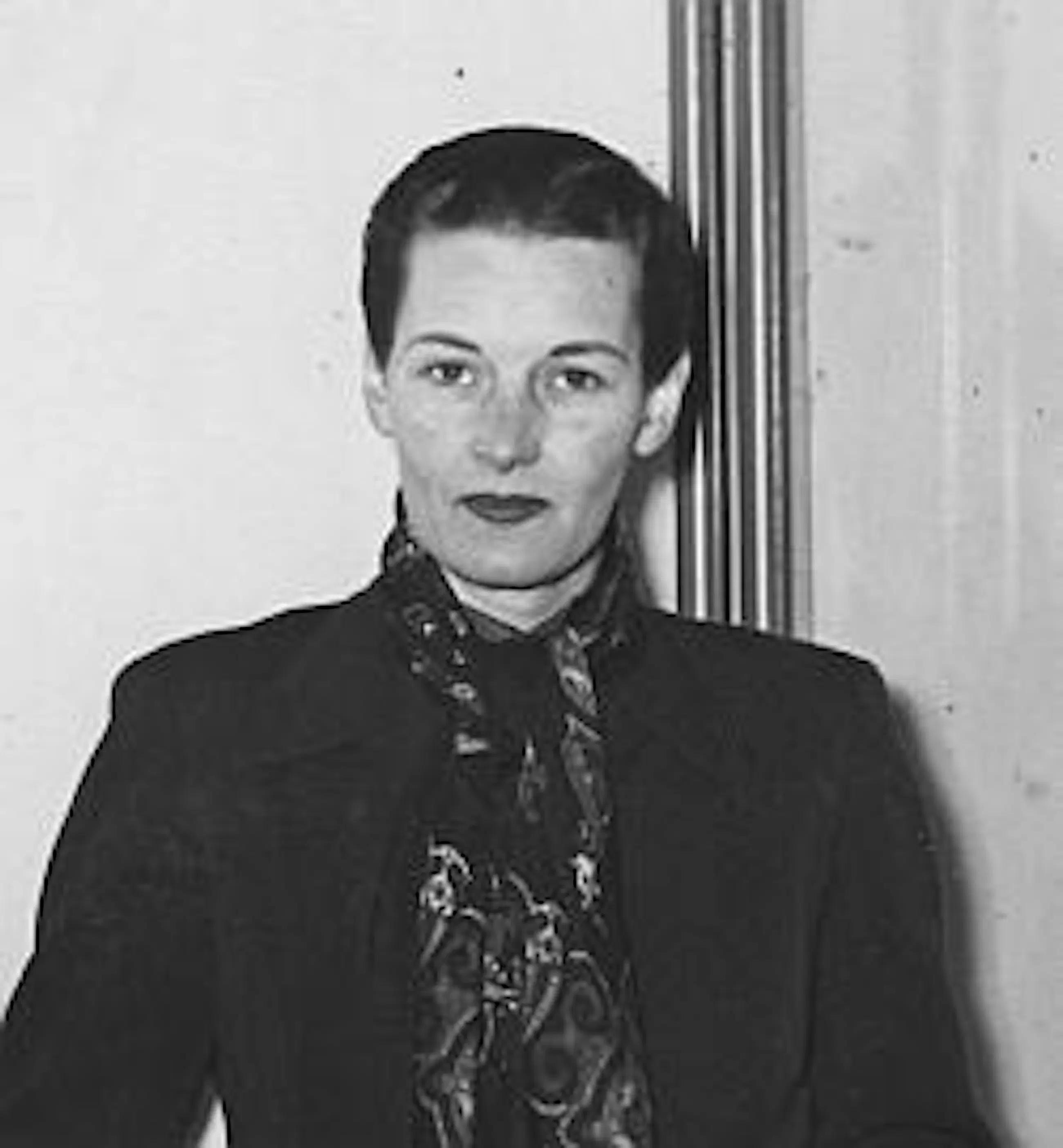
Riek Wesseling was born on November 25, 1914 in Banjoe Biroe in central Java, where her father was stationed as an officer in the Dutch East Indies army. Her mother died a month after she was born. Her father put her in the house of an uncle and aunt, where he soon took her away. This pattern repeated itself over and over. From birth to the age of six, Riek lived in seven foster homes. She never felt at home anywhere and when she had played with a ball she would wash it clean after the game and put it with her suitcase: can I take it back with me in a bit, she thought. Keeping it all together has been her whole life. She never wanted a separate studio. Everything had to be in one room: living, working, sleeping. Riek drew from her earliest childhood. Especially to nature. When she was six years old, her father remarried a pianist. From her Riek learned to read music and whenever she could she sat behind the piano. Rick loved her second mother. Because she had to go to the HBS, she traveled with her parents to the Netherlands at the age of twelve and came to live with her grandfather Wesseling in Amersfoort. Riek wanted to become a pianist and she was allowed to go to music school in addition to the HBS. There she received piano lessons and solfeggio. She studied a lot, improvised and composed small pieces. Then the biggest trauma in her life happened: her second mother also passed away. Rick was 16 years old. It was no longer possible at school; she played truant, stayed put, and became totally unmanageable. Her grandfather thought she was too busy with music and took her out of music school. At home, the piano was locked. To be able to express himself, Riek started drawing.
With the help of Prof. dr. Roland Holst she was admitted to the Rijksakademie voor Beeldende Kunst in Amsterdam. Her teachers were the draftsman Prof. Jurres and the graphic artist Jessurun de Mesquita, with whom Esscher also took his first graphic steps. She then studied at the graphic school in Vienna. Riek Wesseling's work is distinguished by a flawless sense of detail, precision and light. She puts her subjects on paper with a great love for every part.
Riek worked exclusively in black and white. For her, black and white was more color than color. “You can suggest all the other colors with that. You translate everything into grays, blacks and whites. If the tension between all those greys, blacks and whites is right, a piece of work can suddenly start to sound”, she always said. In her portraits, the underlying 'inner image' of the person portrayed is particularly striking. She tries to fathom his longing for life; to define its essential characteristics. Her free work: animals - cats in particular - birds and images of tranquil inner worlds excel through the same sense of detail and light, sometimes with surrealistic, sometimes symbolic elements. Besides drawing, neither lithography nor dry point work held any secrets for her. Riek hated exhibiting and – perhaps because of this – remained an artist far too little known. Only in the last few years before her death did she become more public.
| Condition | |||||||||
| Condition | Mint condition | ||||||||
| Shipment | |||||||||
| Pick up | The work can be picked up on location. As a buyer you must bring your own packaging materials. The location is: Utrecht, The Netherlands | ||||||||
| Shipment | Parcel post Please note: When shipping via parcel post, glass breakage is at the buyer's risk. | ||||||||
| Price | Up to 10 kg.
| ||||||||
| Guarantee | |||||||||
| Guarantee | By putting the item up for auction, I agree with the Terms of Guarantee as they are applicable at Kunstveiling regarding the accuracy of the description of the item | ||||||||
| Consumer law | This seller has indicated that they are a private seller. Therefore, consumer law does not apply. Read more | ||||||||
The seller takes full responsibility for this item. Kunstveiling only provides the platform to facilitate this transaction, which has to be settled directly with the seller. More information .
Riek Wesseling (1914-1995)
 Dutch
K
kunstmest The Netherlands
2014 | |
581 sold | 6 followers |
61 cm
40 cm
39 cm
22 cm