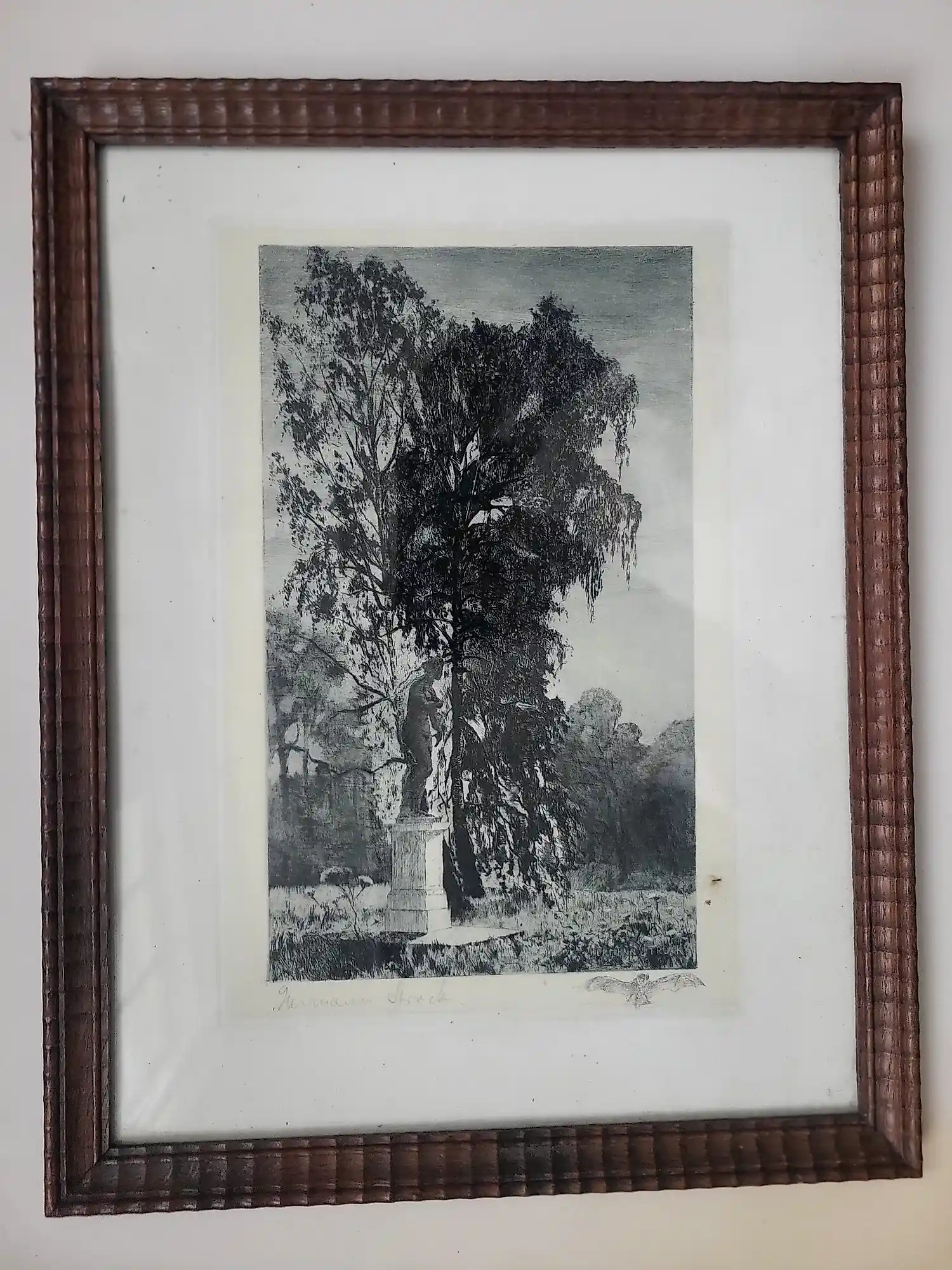
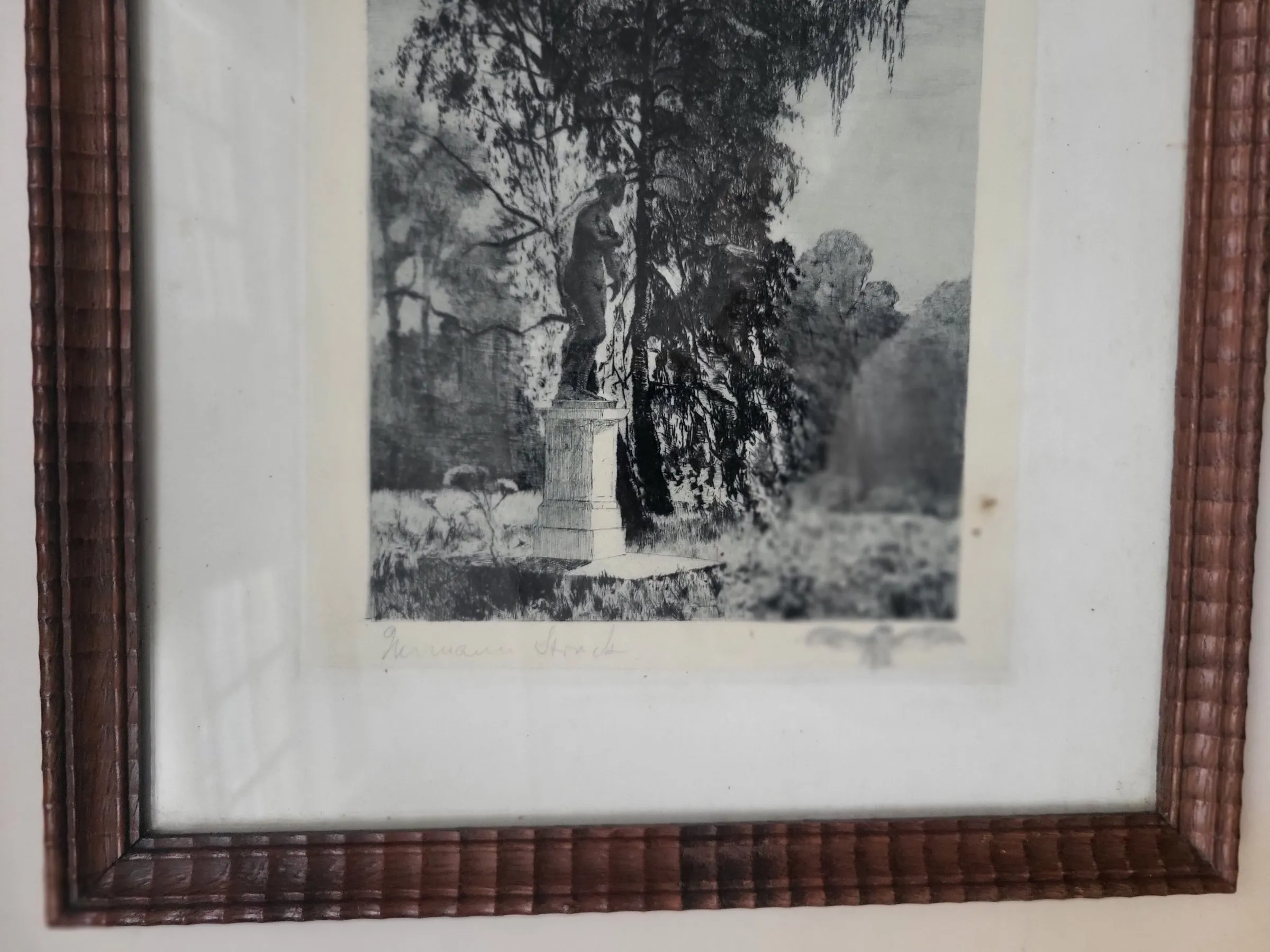
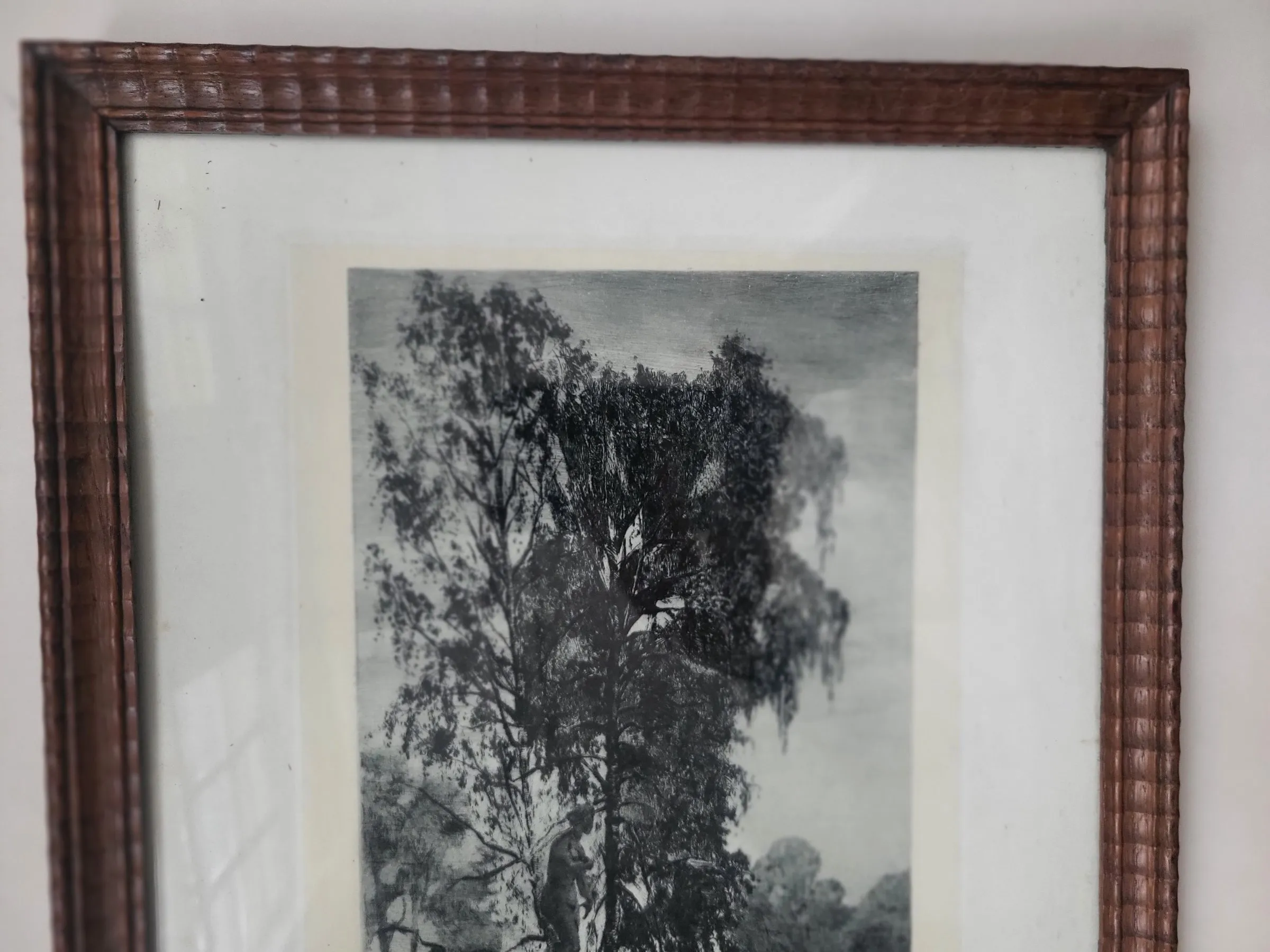
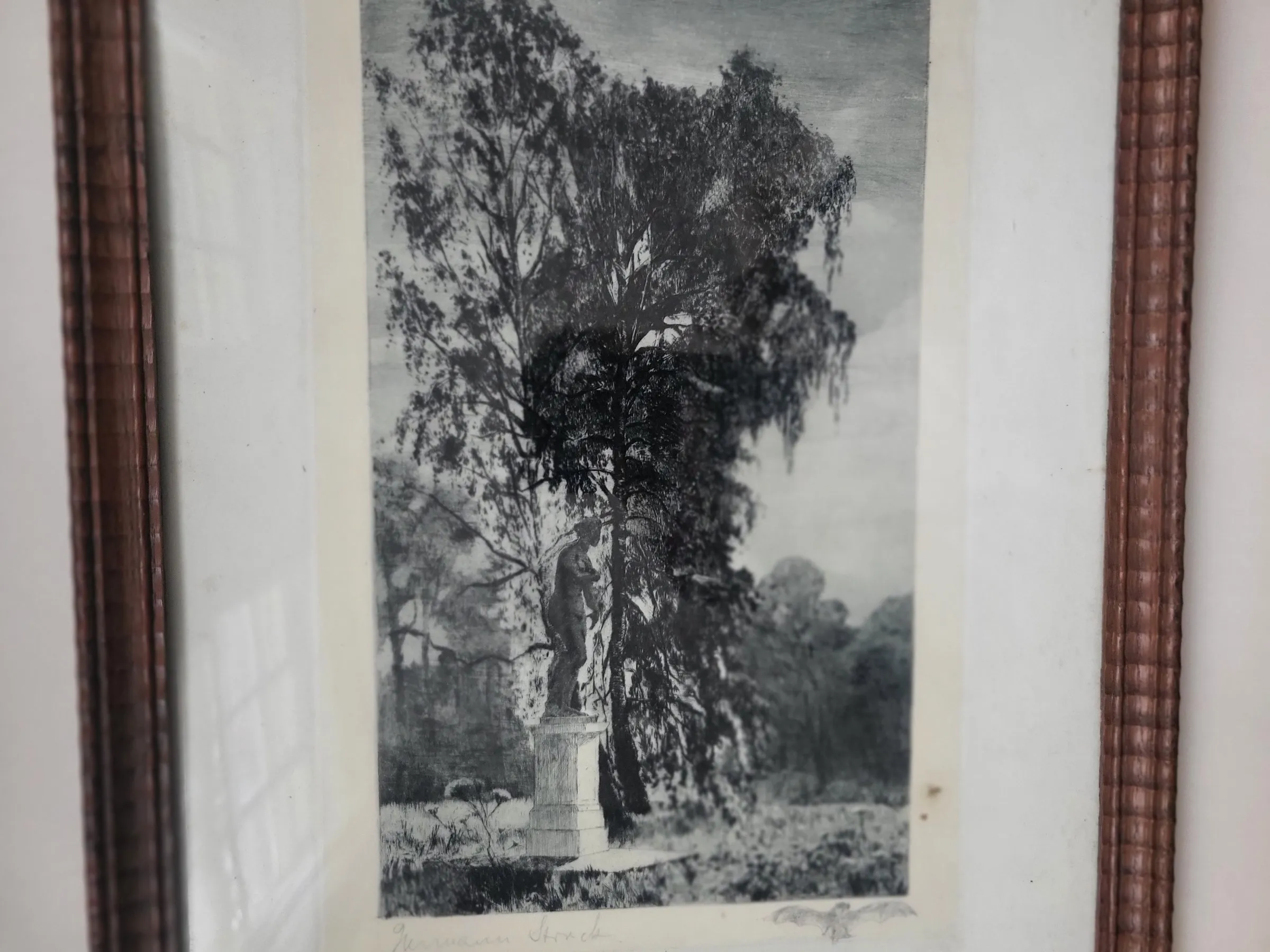
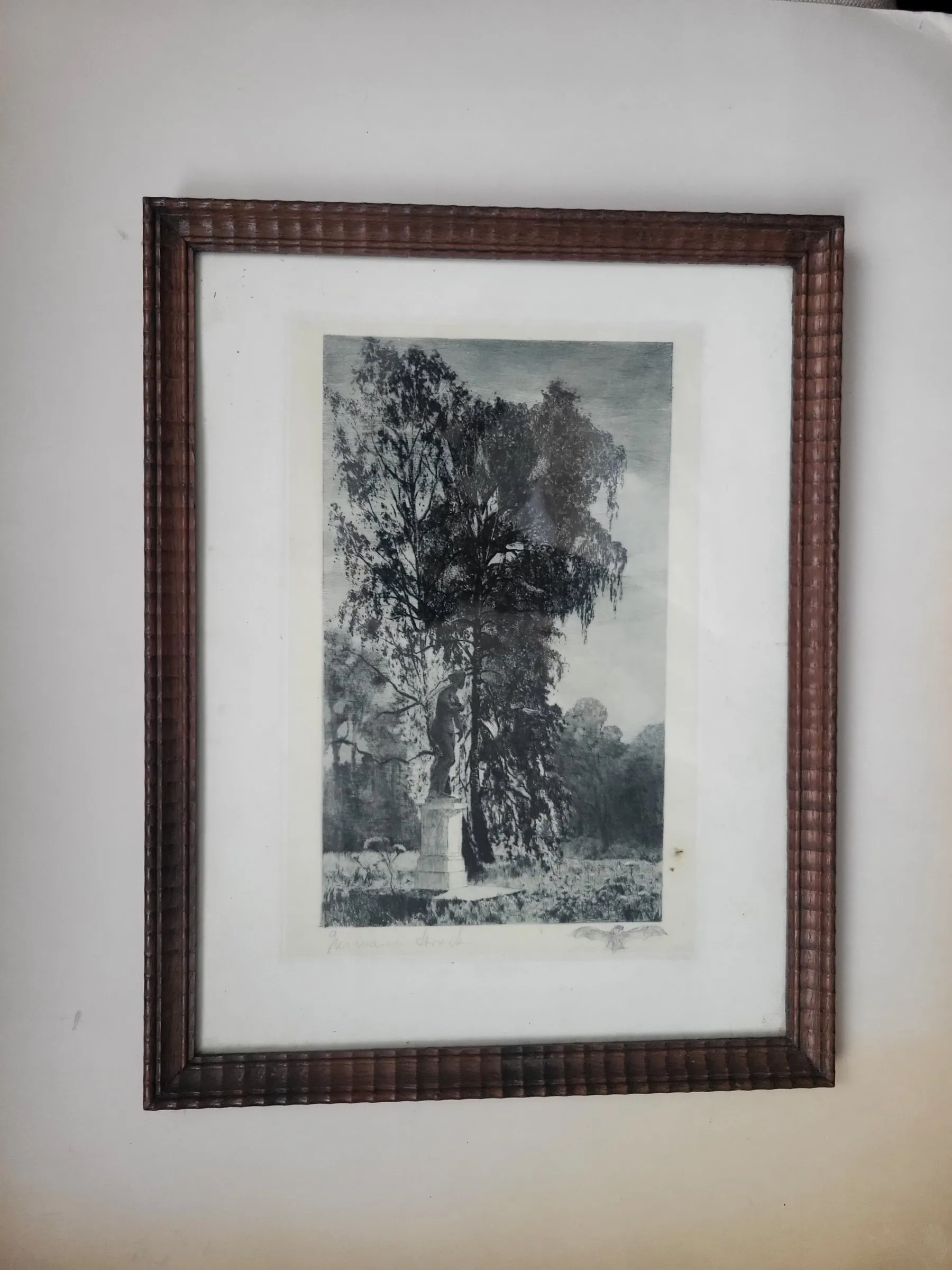
Hermann Struck - Garden landscape with statue of a nude lady - circa 1920

Starting bid €125
Buyer's premium : 15%
| Pick up | Yes, possible |
| Location | Amsterdam, The Netherlands |
Auction details
| Start time | 23-10-2026 at 11:16 |
| End time | 6-11-2026 at 19:22 |
Please note: if a bid is made in the last 5 minutes, the auction will be extended by 5 minutes.
G
Grafilia The Netherlands
2015 | |
30 sold | 1 follower |
- Description
- Hermann Struck (1876-1944)
| Type of artwork | Prints (signed) |
| Period | 1900 to 1944 |
| Technique | Etching |
| Support | Handmade Paper |
| Style | Realistic |
| Subject | Landscape |
| Framed | Framed |
| Dimensions | 30 x 19.5 cm (h x w) |
| Incl. frame | 41.5 x 32.5 cm (h x w) |
| Signed | Hand signed |
Translated with Google Translate. Original text show .
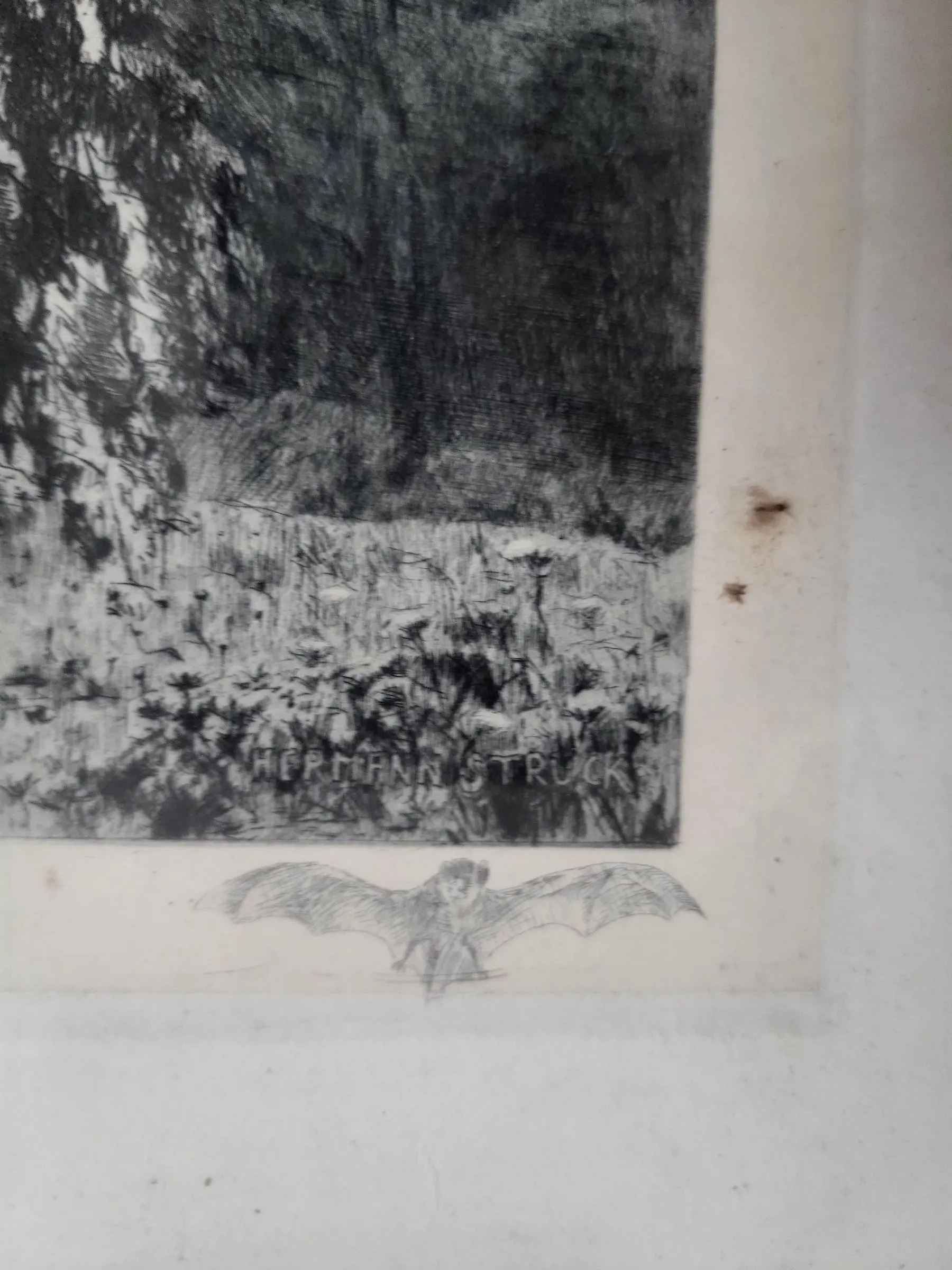
Signed in pencil lower left: Hermann Struck.
Also signed in print at the bottom right.
With a bat mark in the lower right, which Struck used more frequently around 1920.
In good condition.
In original wooden frame.
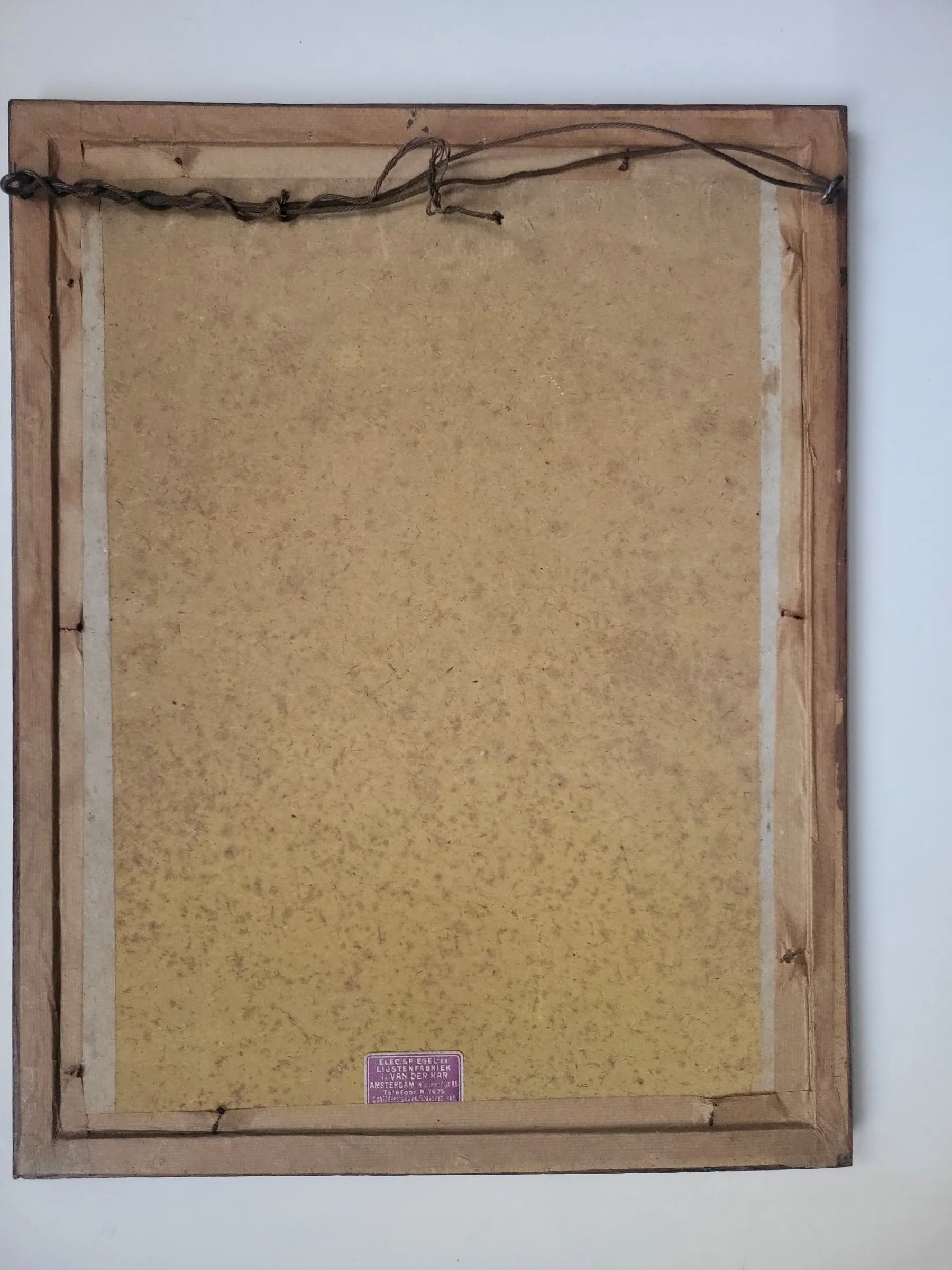
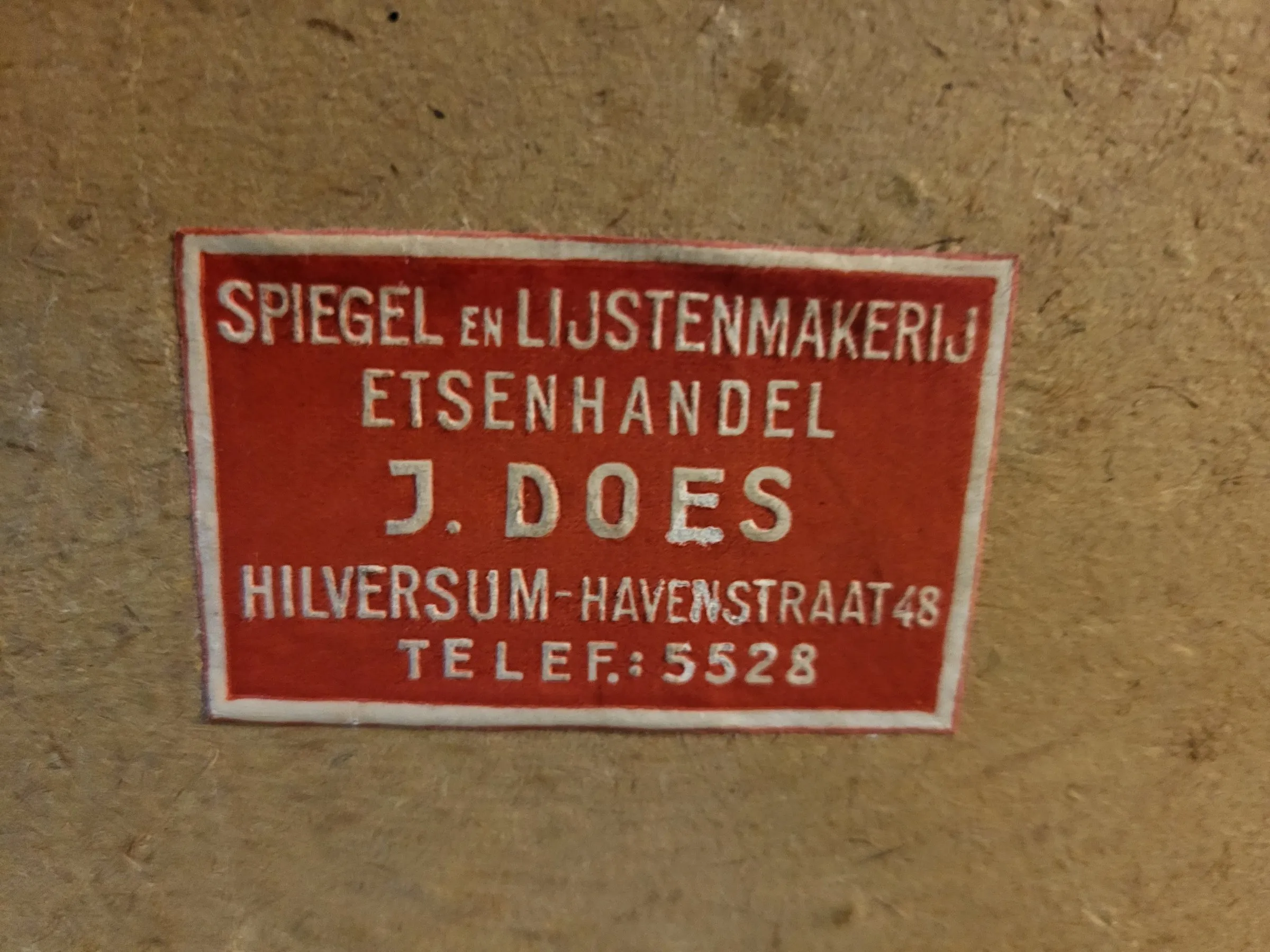
See also the sticker on the back.
Hermann Struck (Germany, Berlin 1876 – 1944 Haifa, Israel) was a German-Jewish artist known for his etchings.
Struck studied at the Berlin Academy of Fine Arts. In 1899, after completing his studies at the Berlin Academy, he was forbidden to teach there because he was Jewish.
In 1900, Struck met Jozef Israëls, a Dutch artist, who became his mentor. Both were leading artists of their time. Struck created commissioned portraits of Ibsen, Nietzsche, Freud, Albert Einstein, Herzl, Oscar Wilde, and other important figures of that period. Struck's students included Marc Chagall, Lovis Corinth, Jacob Steinhardt, Lesser Ury, and Max Liebermann. During his Berlin period, Chagall apprenticed with Struck in etching. Just as Israels was important to Struck, Struck must in turn have been formative for Chagall in every respect.
Struck was a fervent Zionist and Jewish activist. He visited the Land of Israel in 1903, exhibited his art at the Fifth Zionist Congress, and was one of the founders of the religious-Zionist movement Mizrachi.
In 1904 he joined the modern art movement known as the Berlin Secession. 'The Art of Etching' In 1908 Struck published 'Die Kunst des Radierens' ('The Art of Etching'), which became a groundbreaking work on the subject. It was a textbook that offered both theory and practical instruction 1). The book was printed on smooth paper but bound in original etchings by Max Liebermann, Paul Baum, Edvard Munch, Anders Zorn and Herman Struck himself, on laid paper and provided with endpapers.
Struck was a German patriot, and he volunteered for military service in the First World War as a translator, liaison officer, and military artist. He received the Iron Cross 1st Class and was promoted to Officer of the Valkyries. In 1917, he became the Head of Jewish Affairs at the German Eastern Front High Command.
The writer Stefan Zweig (1887-1968) spent the final year of the First World War in Lithuania, which was part of the so-called Ober-Ost, the eastern front where the Germans were in control at the time. Here, Zweig met the visual artist Hermann Struck. A lifelong friendship developed between them. Together they created the book 'Das ostjüdische Antlitz' (The Eastern Jewish Outlook) because Zweig became acquainted with Eastern European Judaism in Lithuania and discovered an 'authentic' Judaism that the Jews in the West had increasingly lost. He wanted to illustrate this through Struck's drawings. 'Das ostjüdische Antlitz' is a book that Arnold Zweig wrote to accompany over 50 drawings by Hermann Struck. The book is a hymn of praise to the Eastern Jews, which is notable because when the book was published in 1920, many Jews in the West looked down on the Eastern Jews. A few years later, 'Das neue Kanaan' (The New Canaan) was also published, in which they collaborated once again.
Struck emigrated to Palestine in 1922 and taught at the Bezalel Academy. He helped found the Tel Aviv Museum of Art. He visited Berlin every summer until the Nazis came to power.
Herman Struck passed away in Haifa at the age of 68. Since 2013, the Hermann Struck Museum has been located in Struck's former home in Haifa.
Source: Jewish Historical Museum Amsterdam
| Condition | |||||||||||
| Condition | Very good | ||||||||||
| Shipment | |||||||||||
| Pick up | The work can be picked up on location. As a buyer you must bring your own packaging materials. The location is: Amsterdam, The Netherlands | ||||||||||
| Shipment | Parcel post Please note: When shipping via parcel post, glass breakage is at the buyer's risk. | ||||||||||
| Price | Up to 5 kg.
| ||||||||||
| Guarantee | |||||||||||
| Guarantee | By putting the item up for auction, I agree with the Terms of Guarantee as they are applicable at Kunstveiling regarding the accuracy of the description of the item | ||||||||||
| Consumer law | This seller has indicated that they are a private seller. Therefore, consumer law does not apply. Read more | ||||||||||
The seller takes full responsibility for this item. Kunstveiling only provides the platform to facilitate this transaction, which has to be settled directly with the seller. More information .
Hermann Struck (1876-1944)
 German
G
Grafilia The Netherlands
2015 | |
30 sold | 1 follower |
32.5 cm
41.5 cm
19.5 cm
30 cm