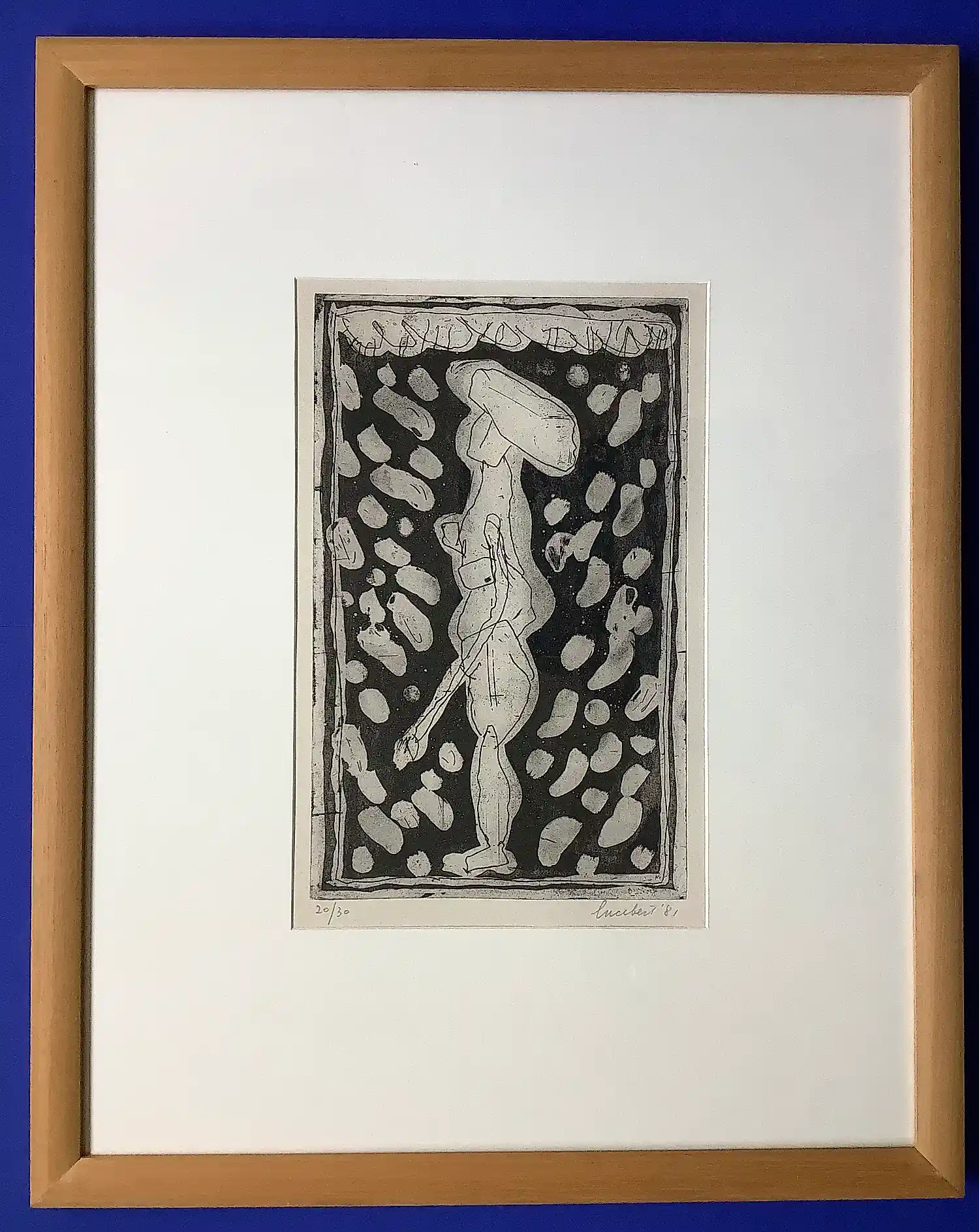
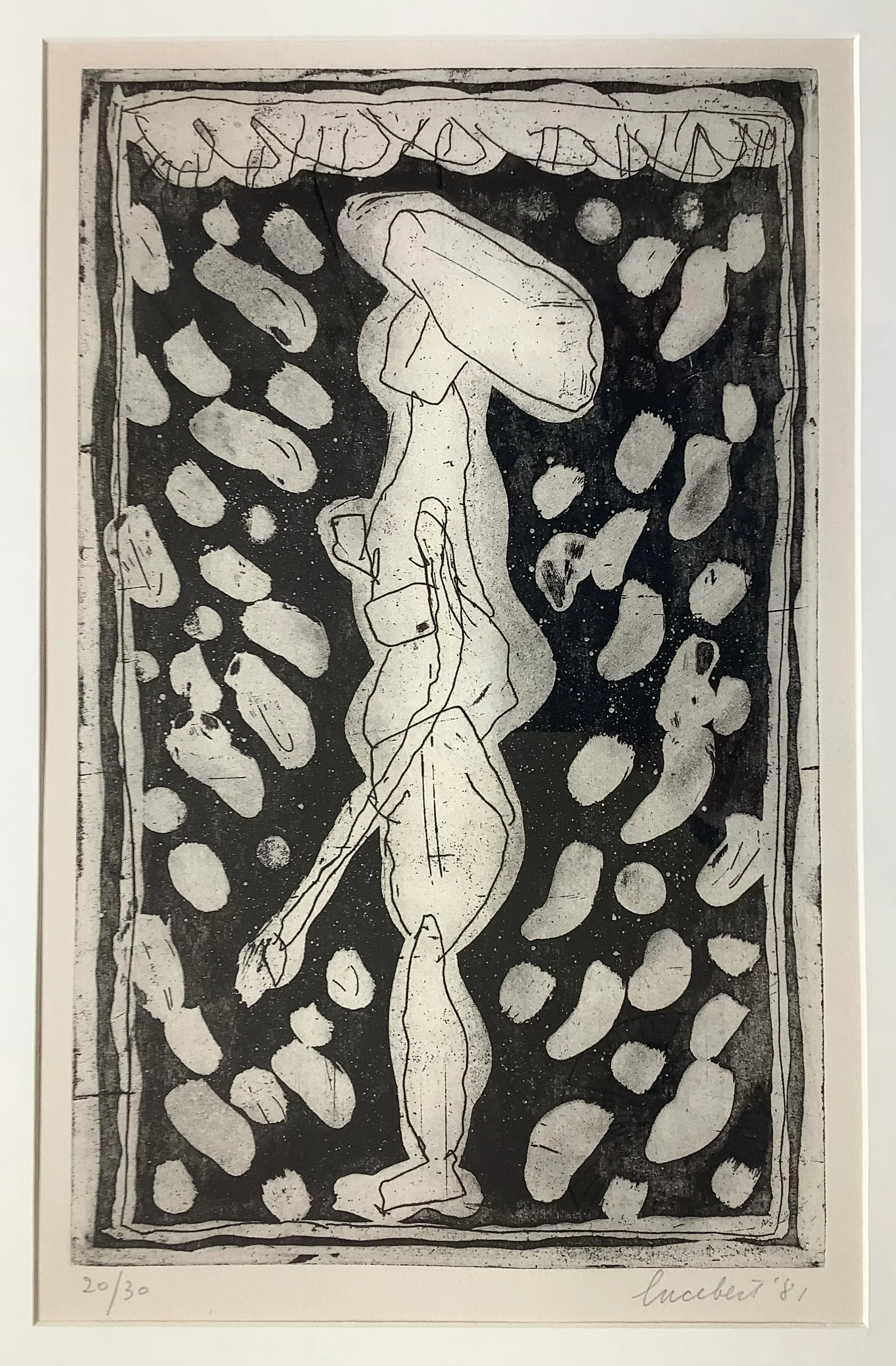
Lucebert - Paradise

Starting bid €220
Buyer's premium : 15%
| Pick up | Yes, possible |
| Location | Bergen op Zoom, The Netherlands |
Auction details
| Start time | 4-11-2026 at 12:21 |
| End time | 15-11-2026 at 19:42 |
Please note: if a bid is made in the last 5 minutes, the auction will be extended by 5 minutes.
N
Niv001 The Netherlands
2020 | |
157 sold | 6 followers |
- Description
- Lucebert (1924-1994)
| Type of artwork | Prints (signed) |
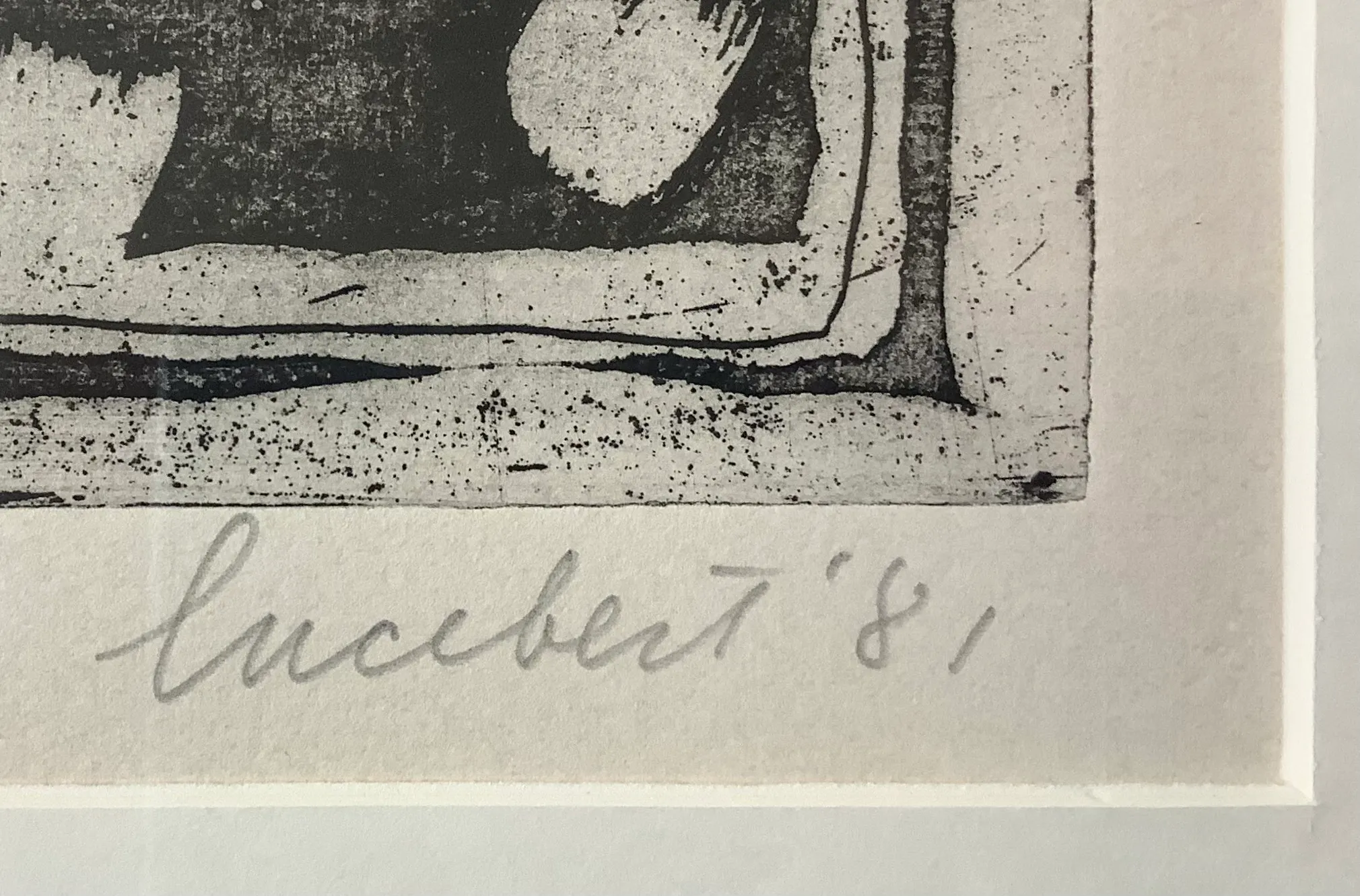
| Year | 1981 |
| Technique | Etching |
| Support | Paper |
| Style | Expressionist |
| Subject | Figures |
| Framed | Framed |
| Dimensions | 42 x 27 cm (h x w) |
| Incl. frame | 74 x 60 cm (h x w) |
| Signed | Hand signed |
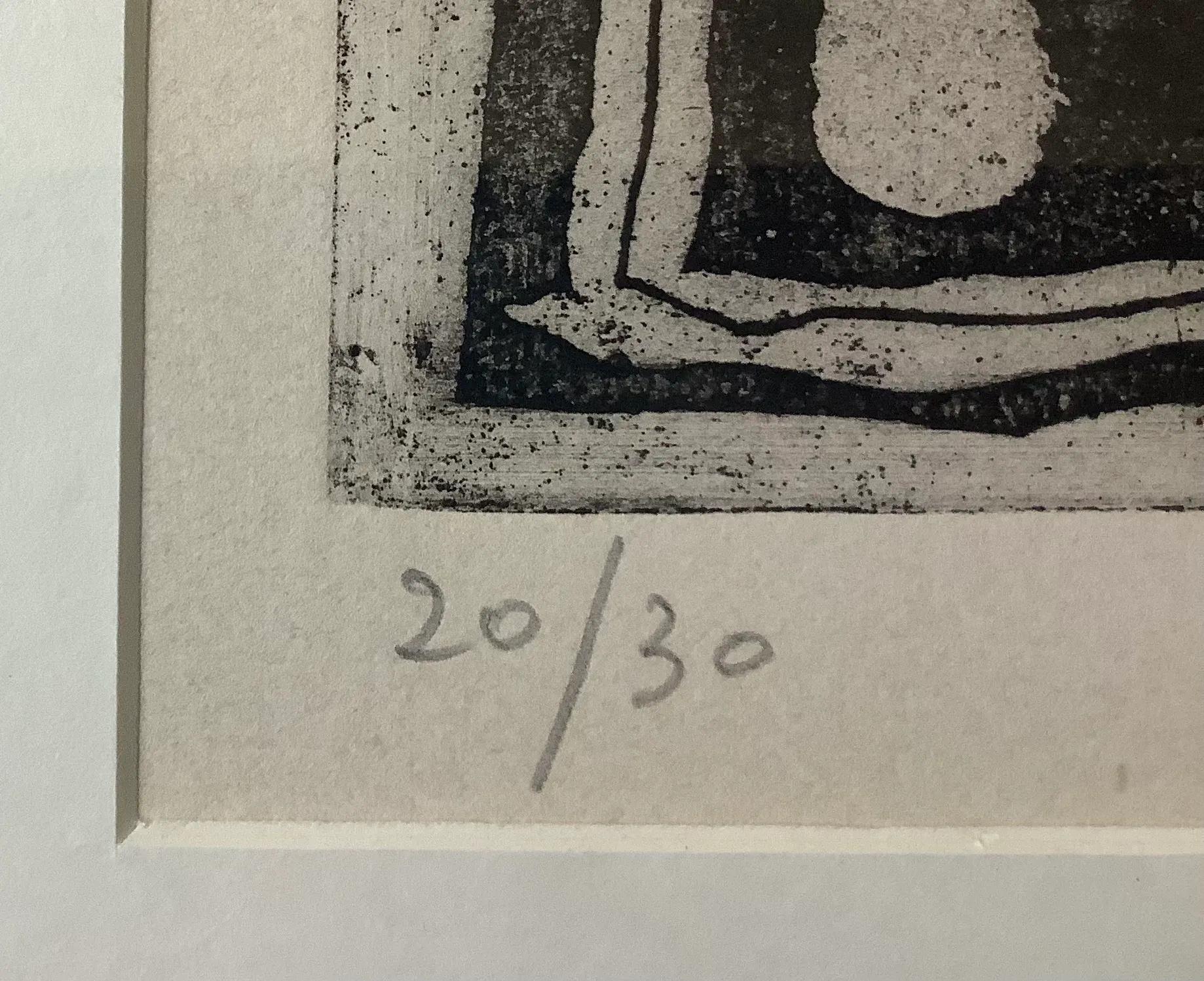
| Edition | 20/30 (beperkte oplage) |
Translated with Google Translate. Original text show .
Technique: Etching.
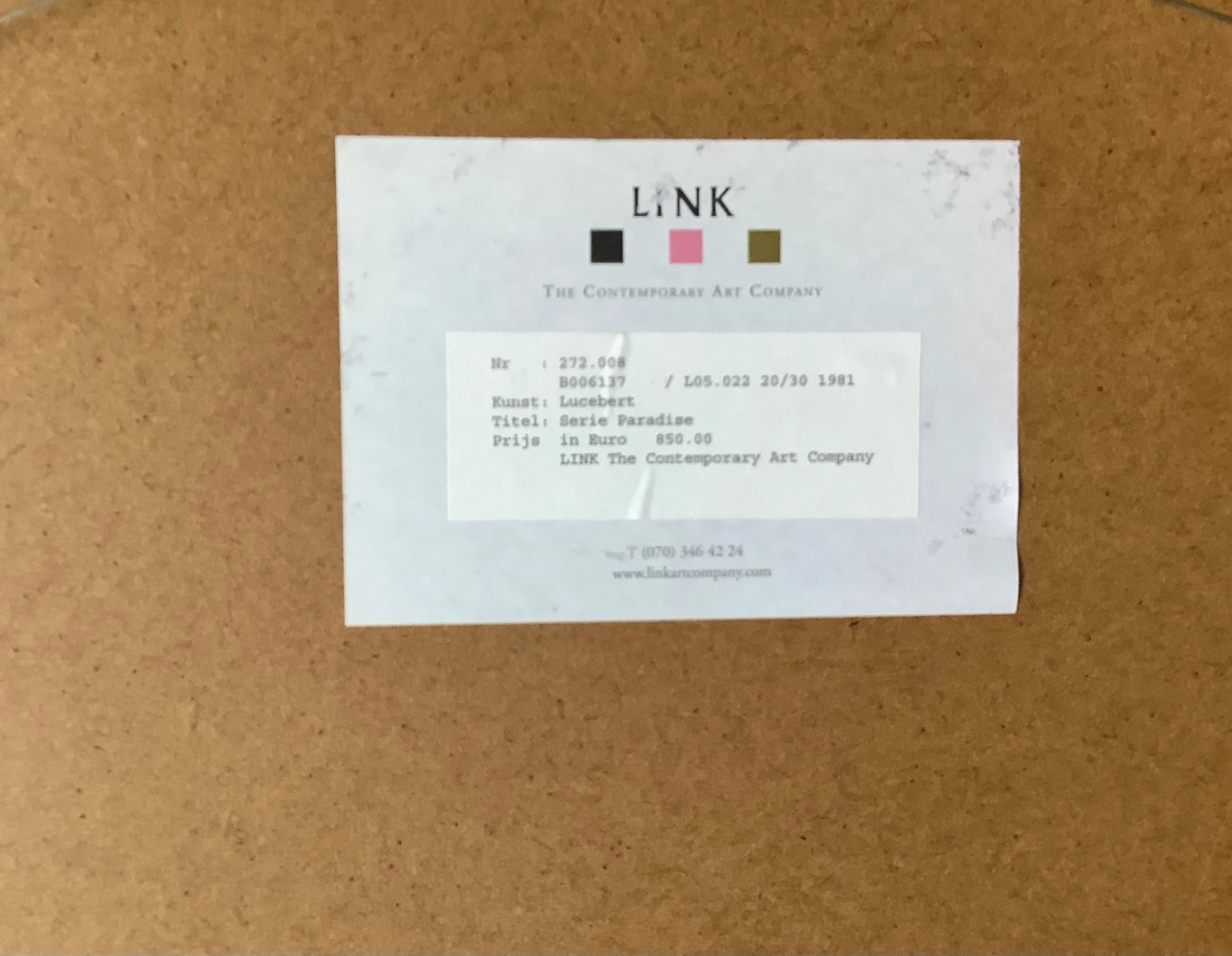
Title: “Paradise”.
Year: 1981
Edition: 20/30 (small print run).
Signature: Hand-signed.
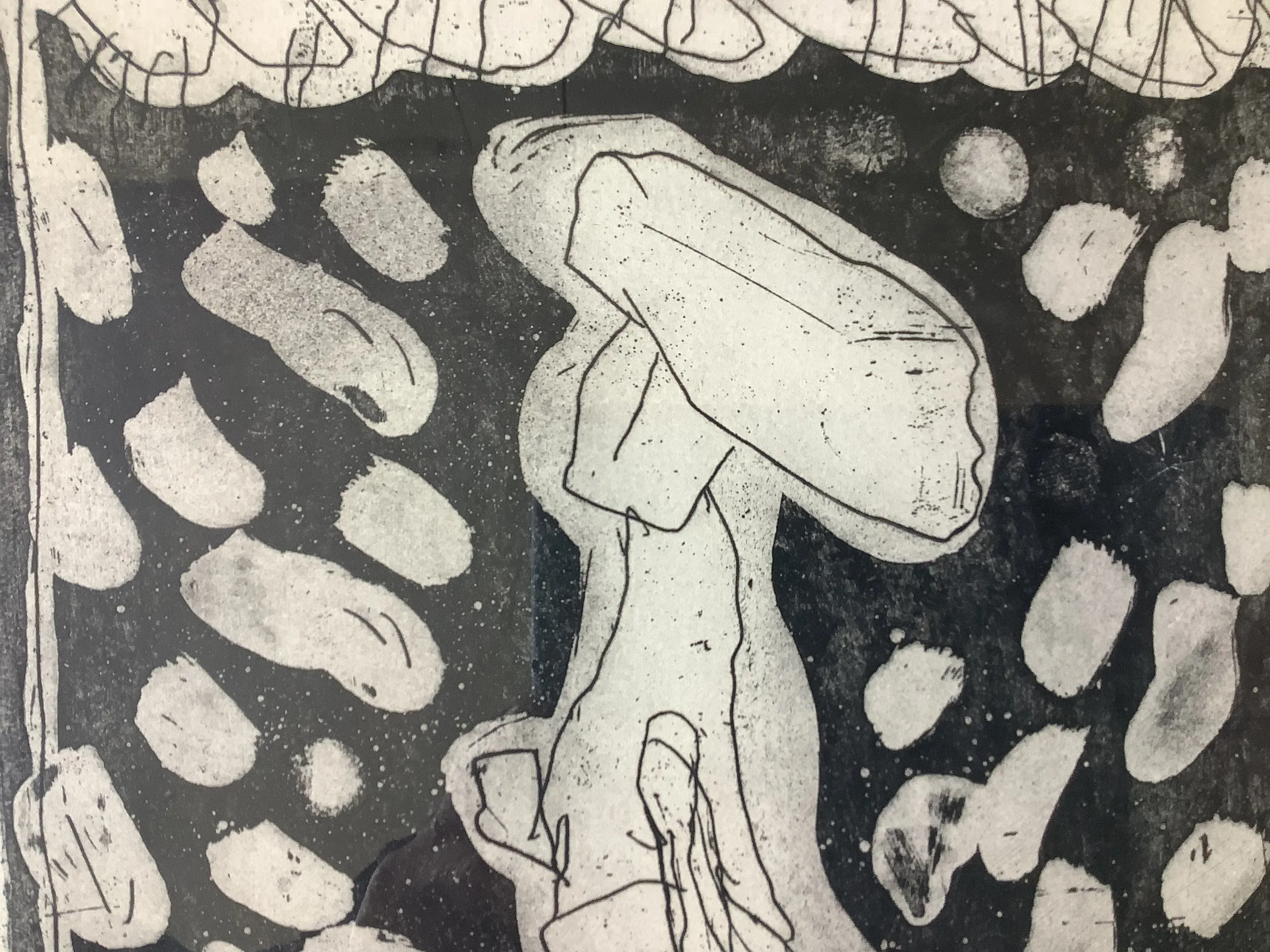
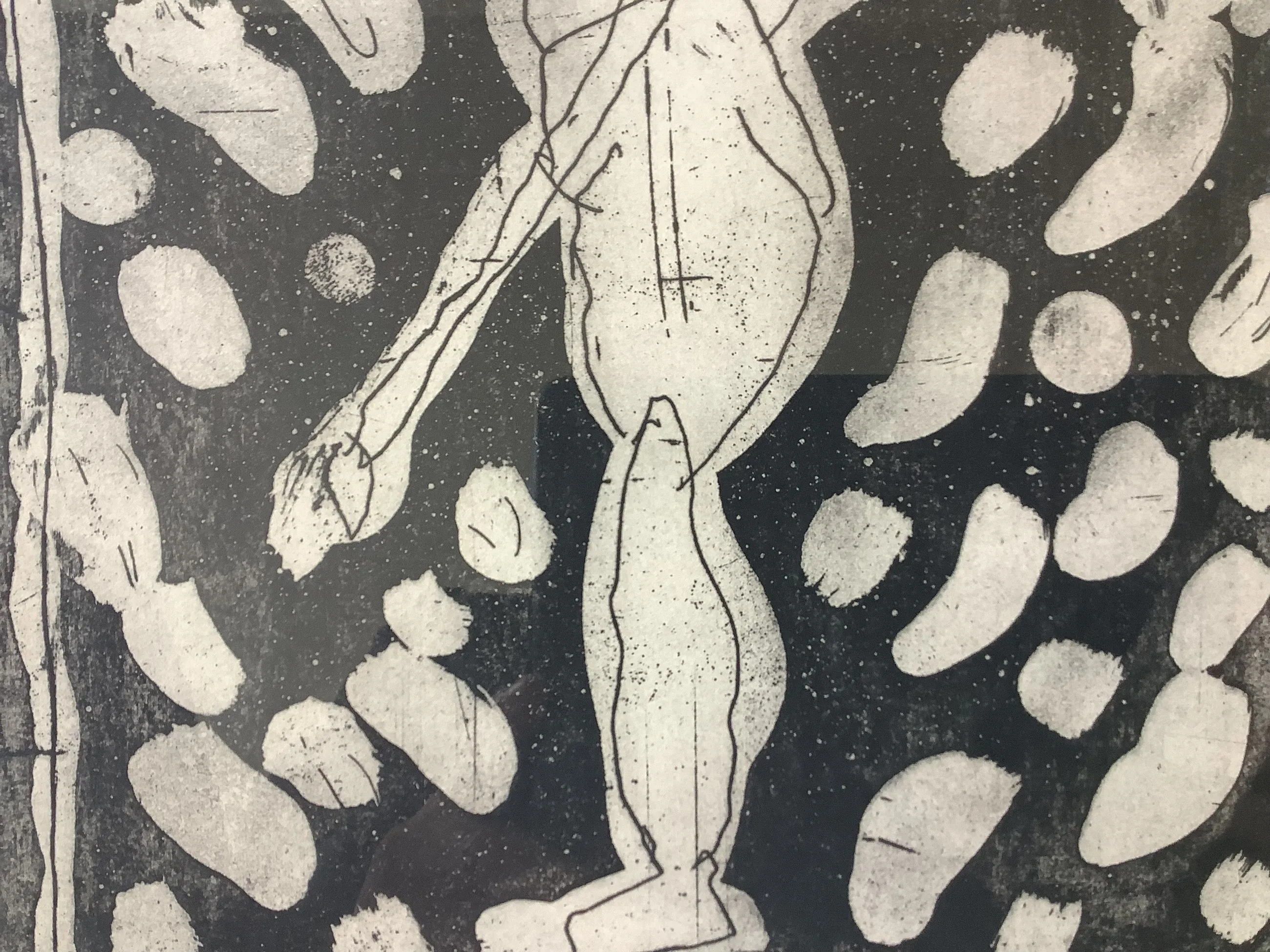
Condition: In good condition.
Image, within passe-partout: 27 cm x 42 cm.
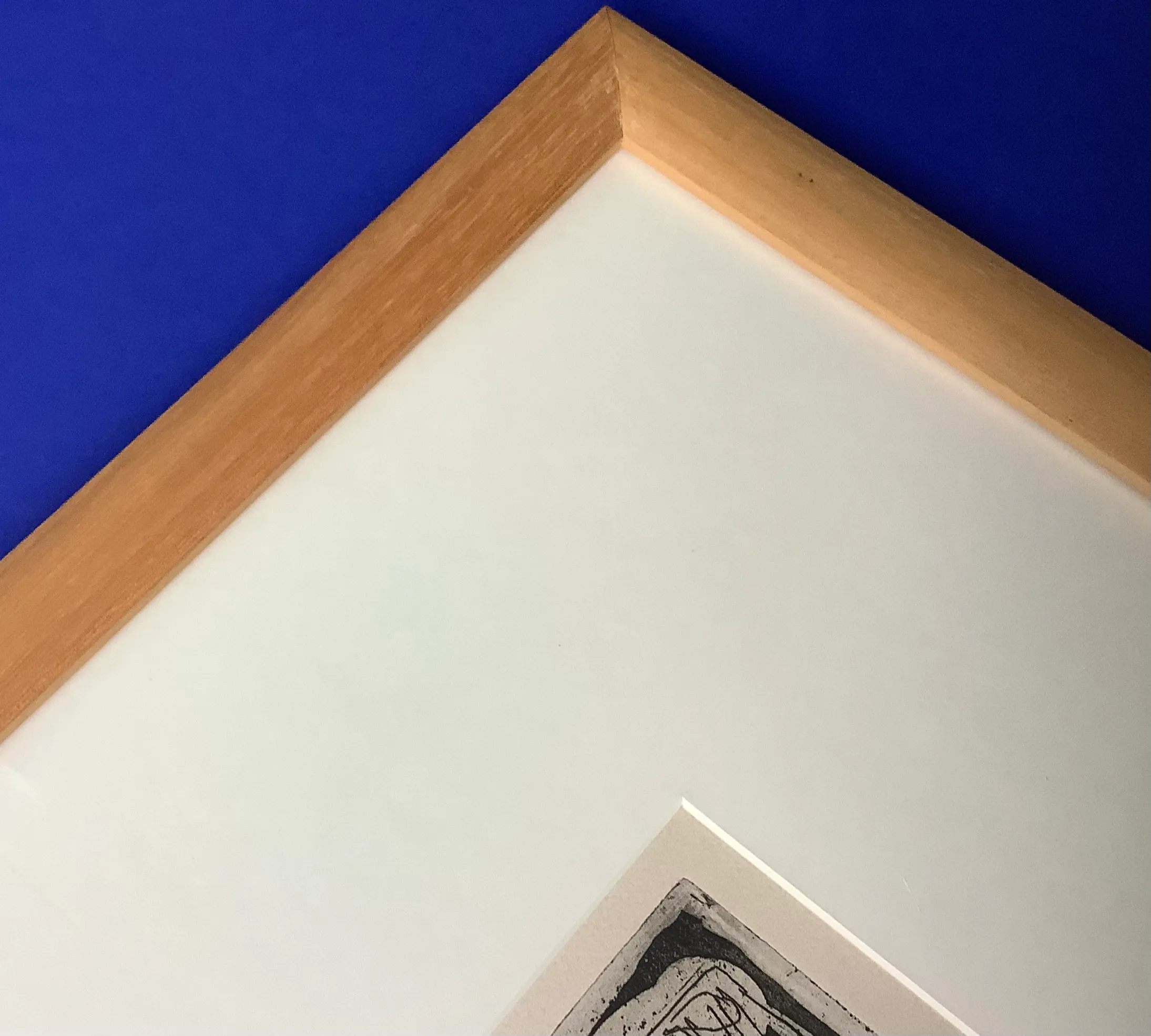
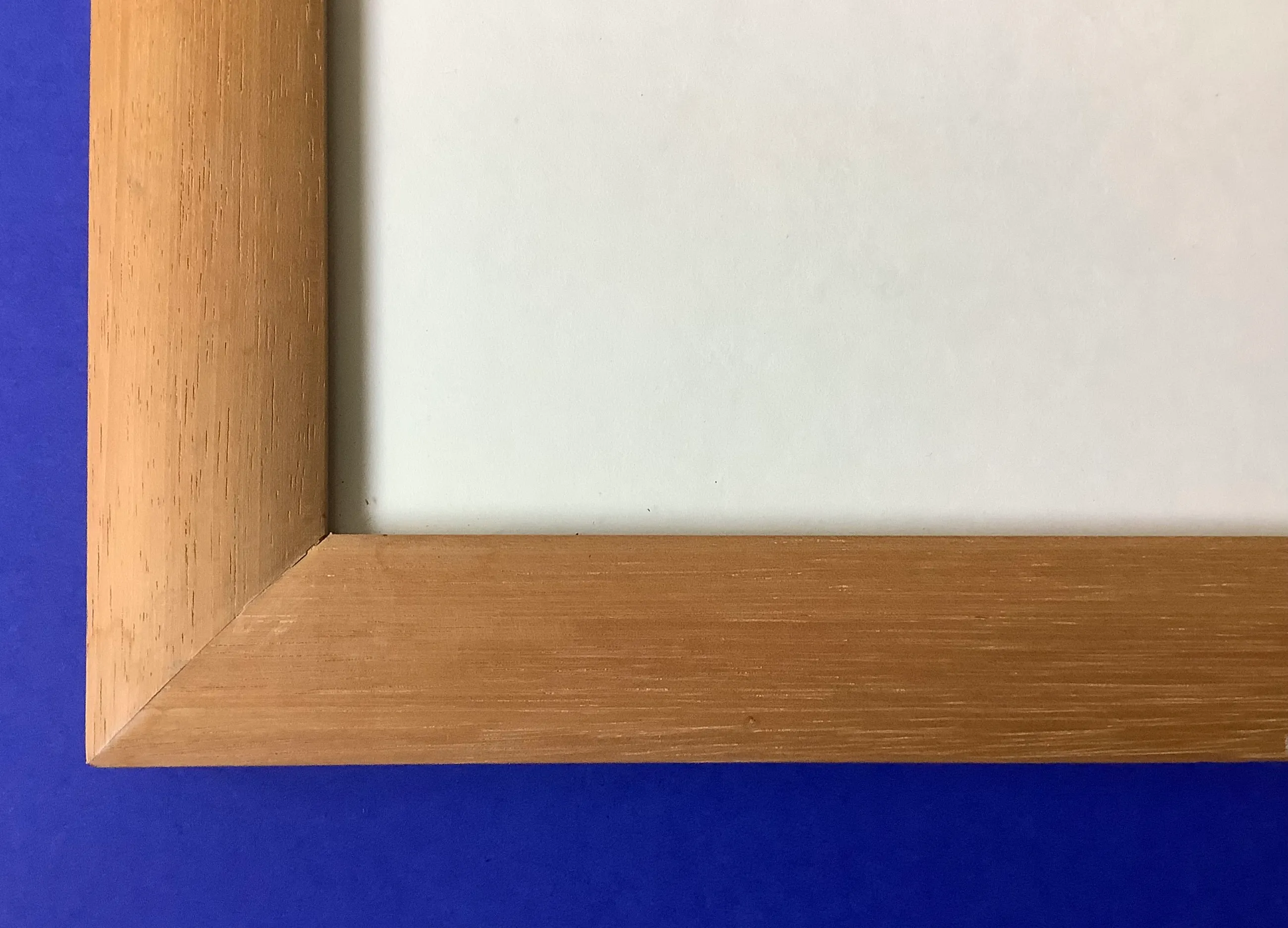
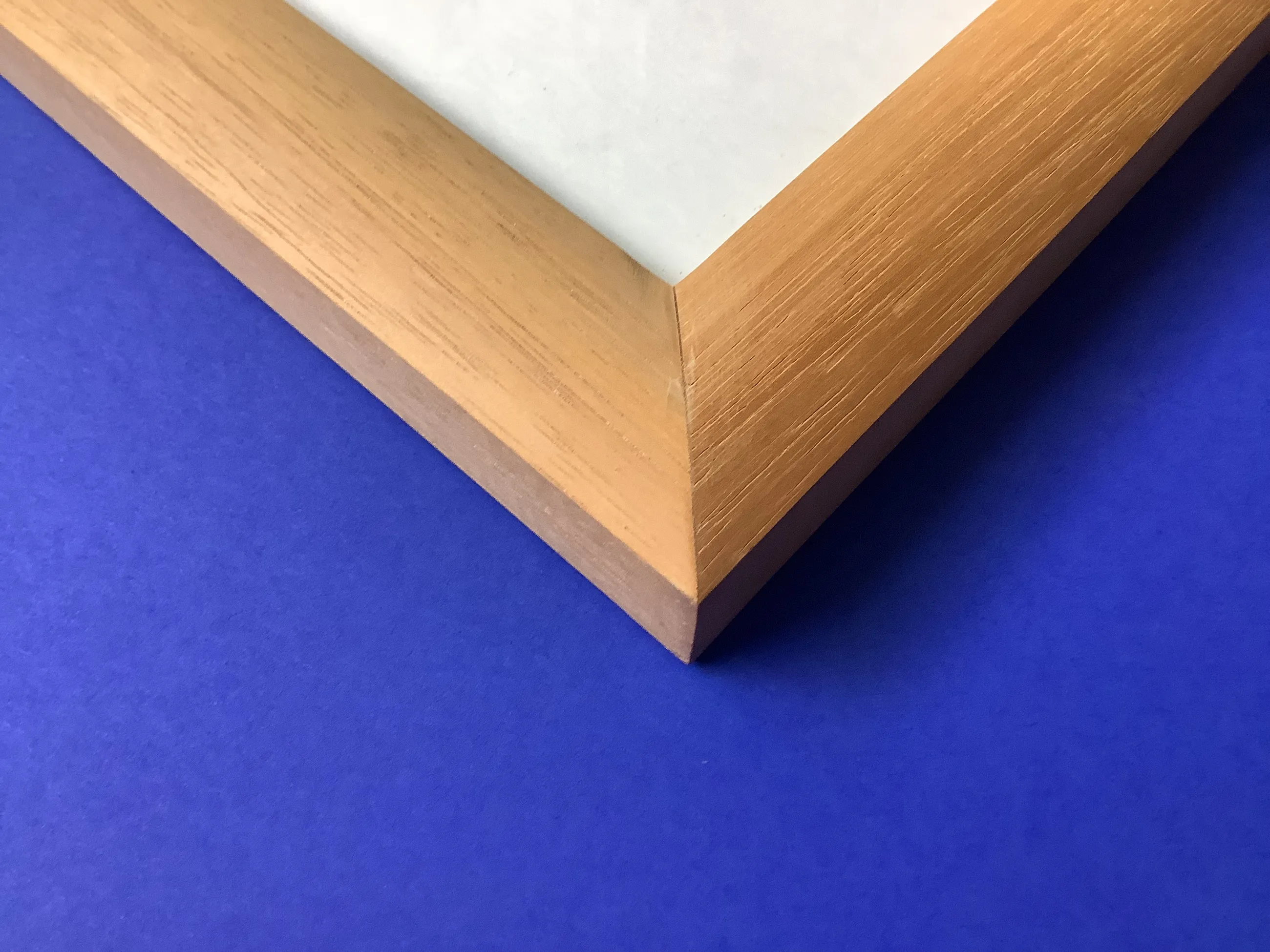
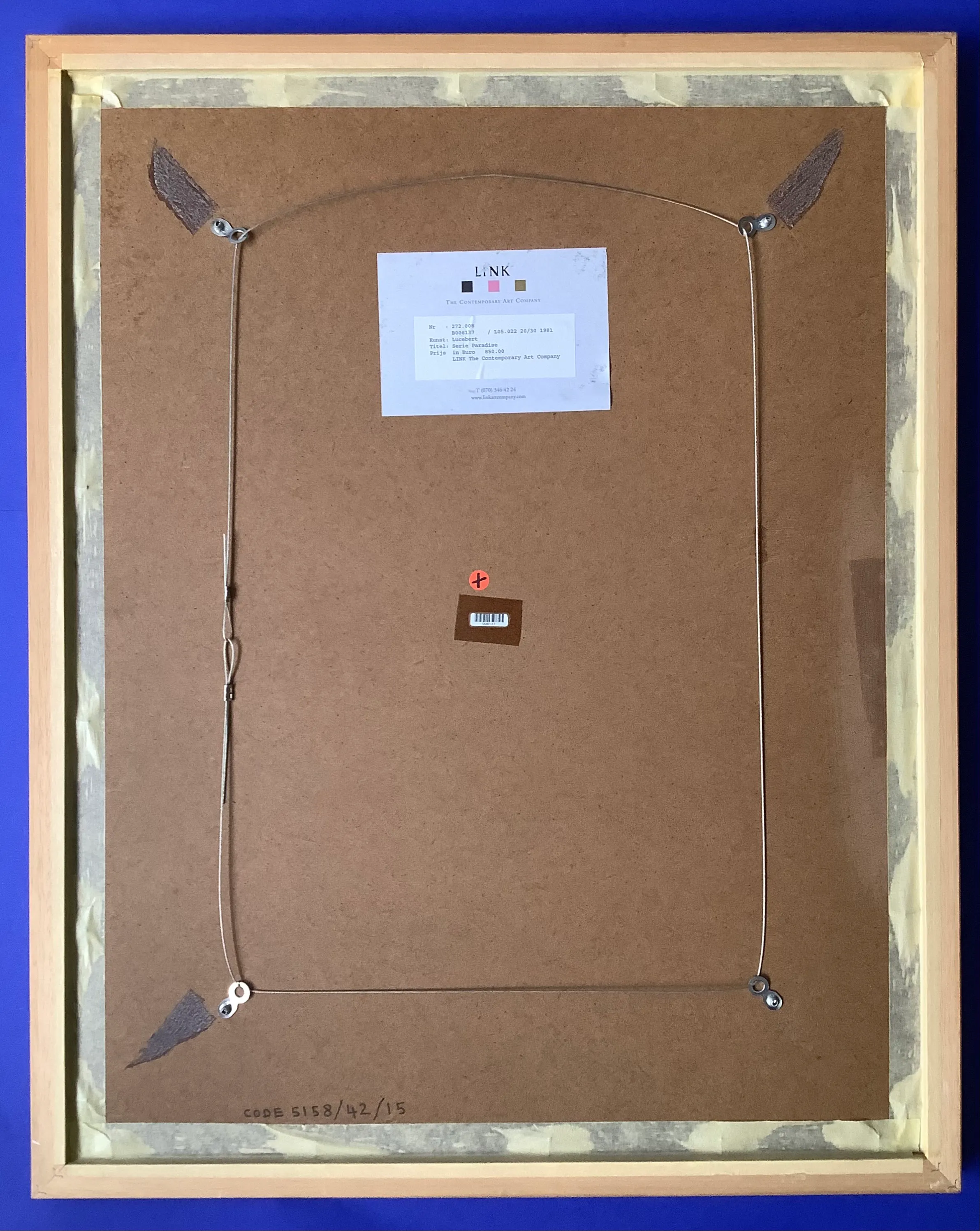
Frame: 60 cm x 74 cm. The work is framed in a plain wood frame. The frame is 3 cm wide and 2 cm high. Has a few small spots of wear and tear, see photos.
Background
Etching from Lucebert's portfolio folder. In total, it comprised 5 different etchings published by gallery Nouvelles Images. Printed by Piet Clement, Amsterdam.
Lucebert (1924-1994)
Lucebert, pseudonym of Lubertus Jacobus Swaanswijk (Amsterdam, September 15, 1924 – Alkmaar, May 10, 1994) was a Dutch poet and painter. As a poet, he was regarded as the leading figure of the Vijftigers movement, a progressive group of poets who began experimenting with form and content after World War II. As a painter, he was closely involved with the Amsterdam branch of the experimental Cobra group.
Life course
Lucebert's father was a house painter and owned his own business. Lucebert's talent for drawing was discovered after junior secondary school when he started working for his father. With a scholarship, he attended the Institute for Applied Arts Education for six months in 1938. After that, he began to wander. At the beginning of the Second World War, he went to work in Nazi Germany. He volunteered for the German Arbeitseinsatz and worked in 1943-1944 in a German explosives factory where experiments with the V1 flying bomb were being conducted. He himself later stated that he was forced to do so. During the war years 1943-1944, he signed letters to his childhood friend Tiny Koppijn with a fascist salute. There are strong suspicions that censorship and forced labor in the camp played a role in this; it is known that all mail in the camp was thoroughly checked and every anomaly was reported. In 2019, the book *Door de schaduwen bestormd* was published, in which Lucebert experts such as Piet Gerbrandy and Cyrille Offermans reflect on Lucebert's wartime past.
After his return in 1944, he regularly received commissions for murals. In 1947, he received an offer from the Franciscan convent in Heemskerk to create an enormous mural in exchange for room and board. Because the sisters did not appreciate the mural, they had it painted over with white paint. In 1989, this painting was partially restored. Lucebert was part of various poetry collectives, including IPA and Contact, and later, together with Gerrit Kouwenaar and Jan Elburg, Cel Majakovski, a name referring to the Russian poet Vladimir Mayakovsky. This collective would merge into the Experimental Group in Holland.
In 1949, Lucebert acted as the leader of the Movement of Fifty, or the Fifties, the group of experimental poets that caused a great stir at the time. In 1949, during the Police Actions, he debuted with the poem *Minnebrief aan onze martelelde bruid Indonesia* (Love Letter to Our Married Bride Indonesia). The collection *Triangel in de jungle, de dieren der democratie* (Triangle in the Jungle, the Animals of Democracy) appeared in 1951. He was soon regarded as the Emperor of the Fifties.
In 1953, he met his future wife, Tony Koek (1927-2011), in a café. They went to live in Bergen, North Holland, in the house with an art gallery belonging to the collector couple Boendermaker, now operated as an artist-in-residence under the name "Luceberthuis." In 1955, at the invitation of Bertolt Brecht, he moved to East Berlin with his wife and children. He devoted himself to drawing and photography. Back in the Netherlands after five months, he said the following about the GDR in the CPN party newspaper De Waarheid: "Discussions and freedom of expression are encouraged as much as possible in the GDR, but there are still many who cannot believe that" and "The stories about lack of freedom come from people who do not yet understand their new situation, and Western propaganda still has a disastrous influence on this." In the 1960s, he focused primarily on visual art, which was called 'figurative-expressionist' at the time. His paintings, which were strongly influenced by Cobra, especially in the beginning, reveal a rather pessimistic worldview.
Lucebert and his wife Tony went to Spain in 1963, motivated by the artistic atmosphere and the light of the Mediterranean. In 1968, they settled in Jávea and, in 1973, bought a house in the Lluca area, situated between Benitachell and Jávea. During this period, Lucebert alternated his stay between Jávea and Mons, producing a considerable number of works that bear witness to his creativity and talent. Lucebert's work *Javea* from 1969 is a representative example of his bond with the Costa Blanca, in which he applied a variety of techniques on paper. His relationship with Spain was further strengthened by his connection with the Spanish artist and collector Antonio Pérez. Lucebert's legacy in the region remains alive thanks to the donations of his widow, Tony, to the IVAM and the Fundación Antonio Pérez de Cuenca. The exhibition *Alles van waarde is weerloos*, held in Jávea, honored his life and work, and highlighted his artistic diversity.
Lucebert died in 1994 at the age of 69 in a hospital in Alkmaar. He left behind his wife and five children.
Exhibitions.
· Cobra Museum of Modern Art Amstelveen, Amstelveen
· Stedelijk Museum, Amsterdam
· Stedelijk Museum Schiedam, Schiedam
· Museum de Fundatie, Zwolle
· Rijksmuseum Amsterdam
· Museo Fundación Antonio Pérez, Cuenca (Castile-La Mancha), Spain.
| Condition | |||||||||
| Condition | Very good | ||||||||
| The frame has a few small spots of use, see photos. | |||||||||
| Shipment | |||||||||
| Pick up | The work can be picked up on location. As a buyer you must bring your own packaging materials. The location is: Bergen op zoom, The Netherlands | ||||||||
| Shipment | Parcel post Please note: When shipping via parcel post, glass breakage is at the buyer's risk. | ||||||||
| Price | Up to 10 kg.
| ||||||||
| Guarantee | |||||||||
| Guarantee | By putting the item up for auction, I agree with the Terms of Guarantee as they are applicable at Kunstveiling regarding the accuracy of the description of the item | ||||||||
| Consumer law | This seller has indicated that they are a private seller. Therefore, consumer law does not apply. Read more | ||||||||
The seller takes full responsibility for this item. Kunstveiling only provides the platform to facilitate this transaction, which has to be settled directly with the seller. More information .
Lucebert (1924-1994)
 Dutch
N
Niv001 The Netherlands
2020 | |
157 sold | 6 followers |
Etching 19811945 to 1999 Cobra Experimentele Groep Liga Nieuw Beelden Cercle Graphique Prent 190 Grafiekkring Groningen ARTA
60 cm
74 cm
27 cm
42 cm