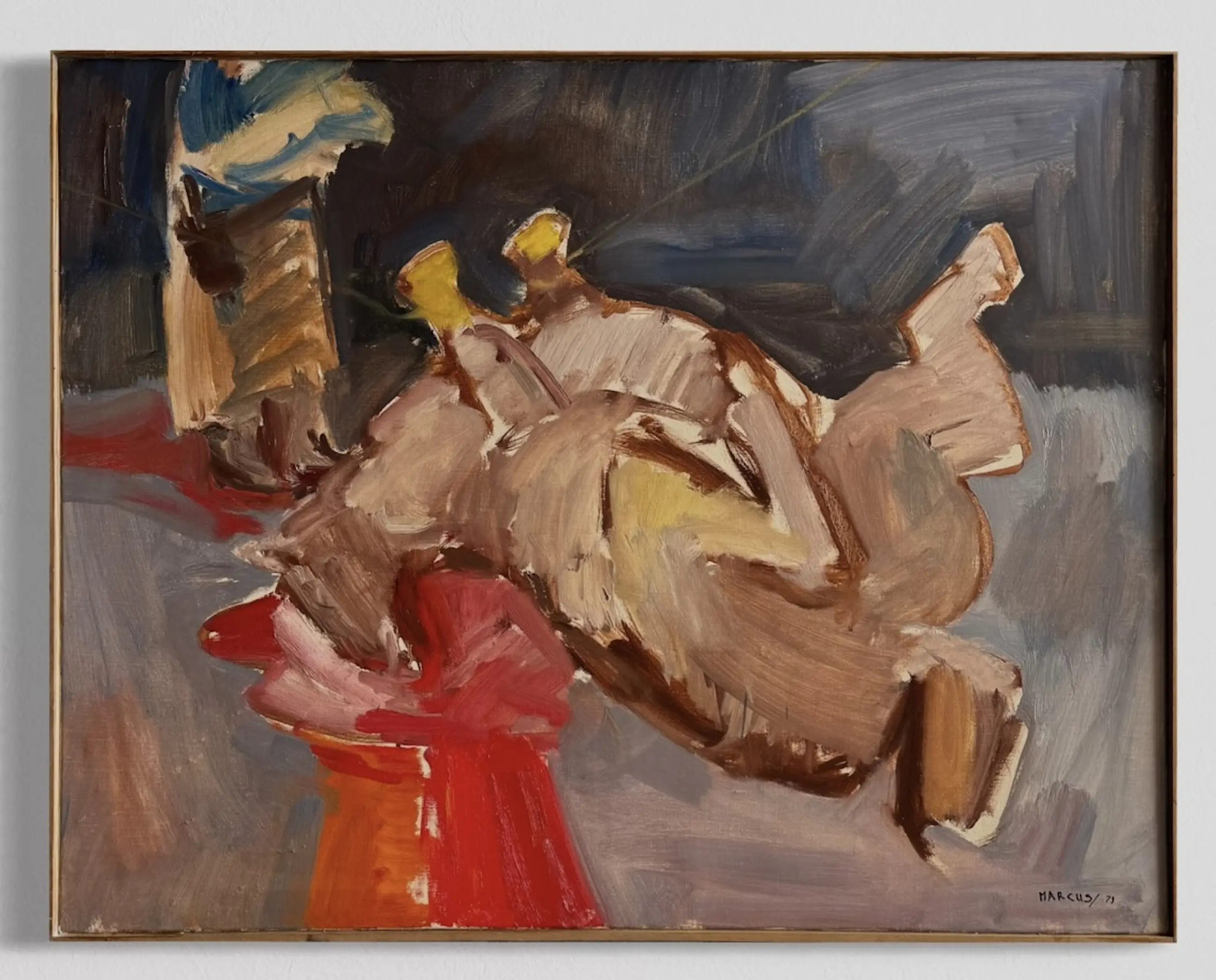
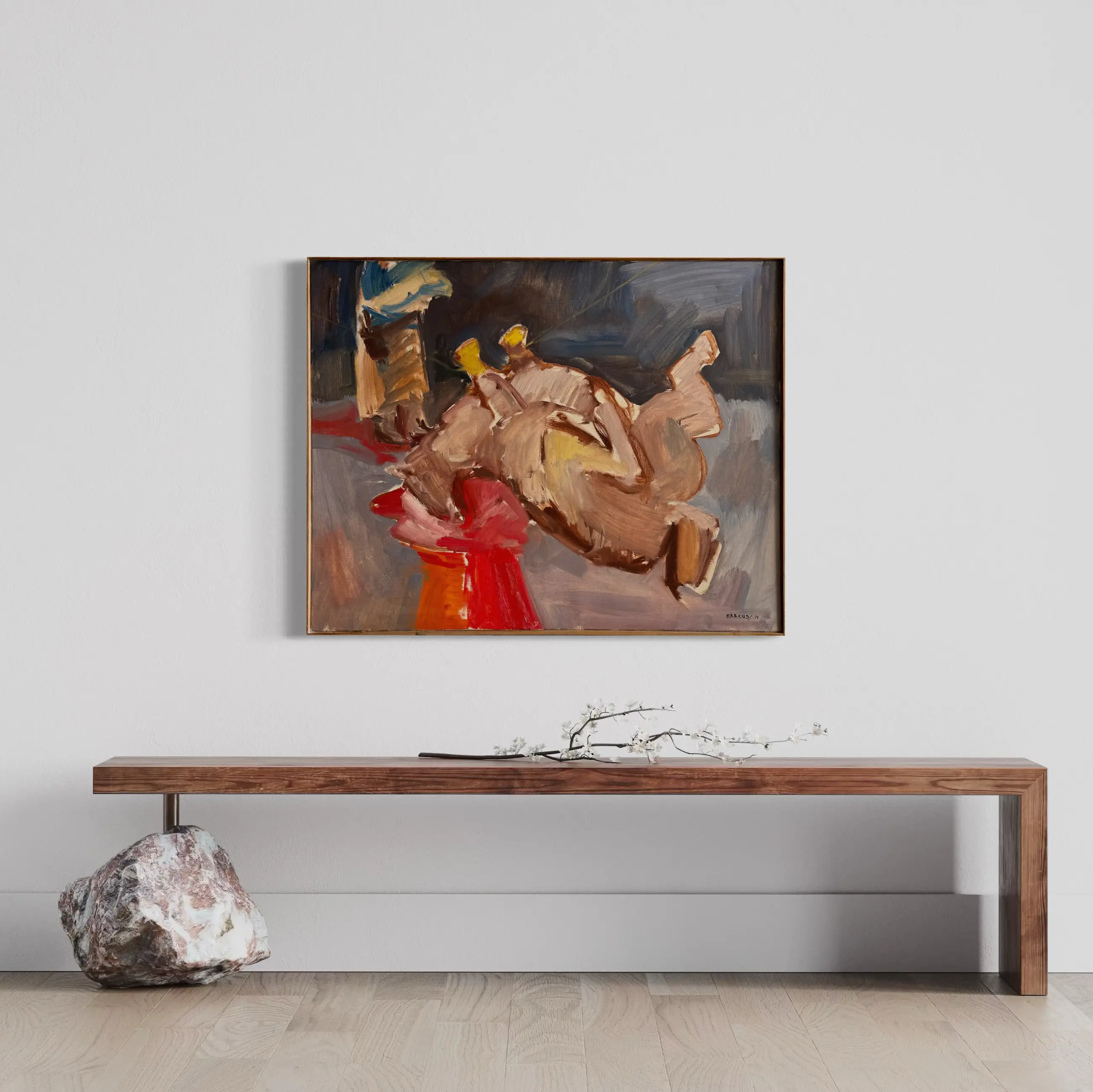
Marcus De Vestele - The Sacrifice - Large oil on canvas from 1971 - Sold
This item has been sold Show item
| Pick up | Yes, possible |
| Location | Batalha, Portugal |
Auction details
| Start time | 16-3-2026 at 10:30 |
| End time | 26-3-2026 at 22:10 |
Bids (1)
Log in or register to view the bidding history T
The-Nomad-Gallery Portugal
2025 | |
44 sold | 2 followers |
- Description
- Marcus De Vestele (1941-2024)
| Type of artwork | Painting |
| Year | 1971 |
| Technique | Oil paint |
| Support | Canvas |
| Style | Abstract |
| Subject | Still life |
| Framed | Framed |
| Dimensions | 70 x 90 cm (h x w) |
| Incl. frame | 72 x 92 cm (h x w) |
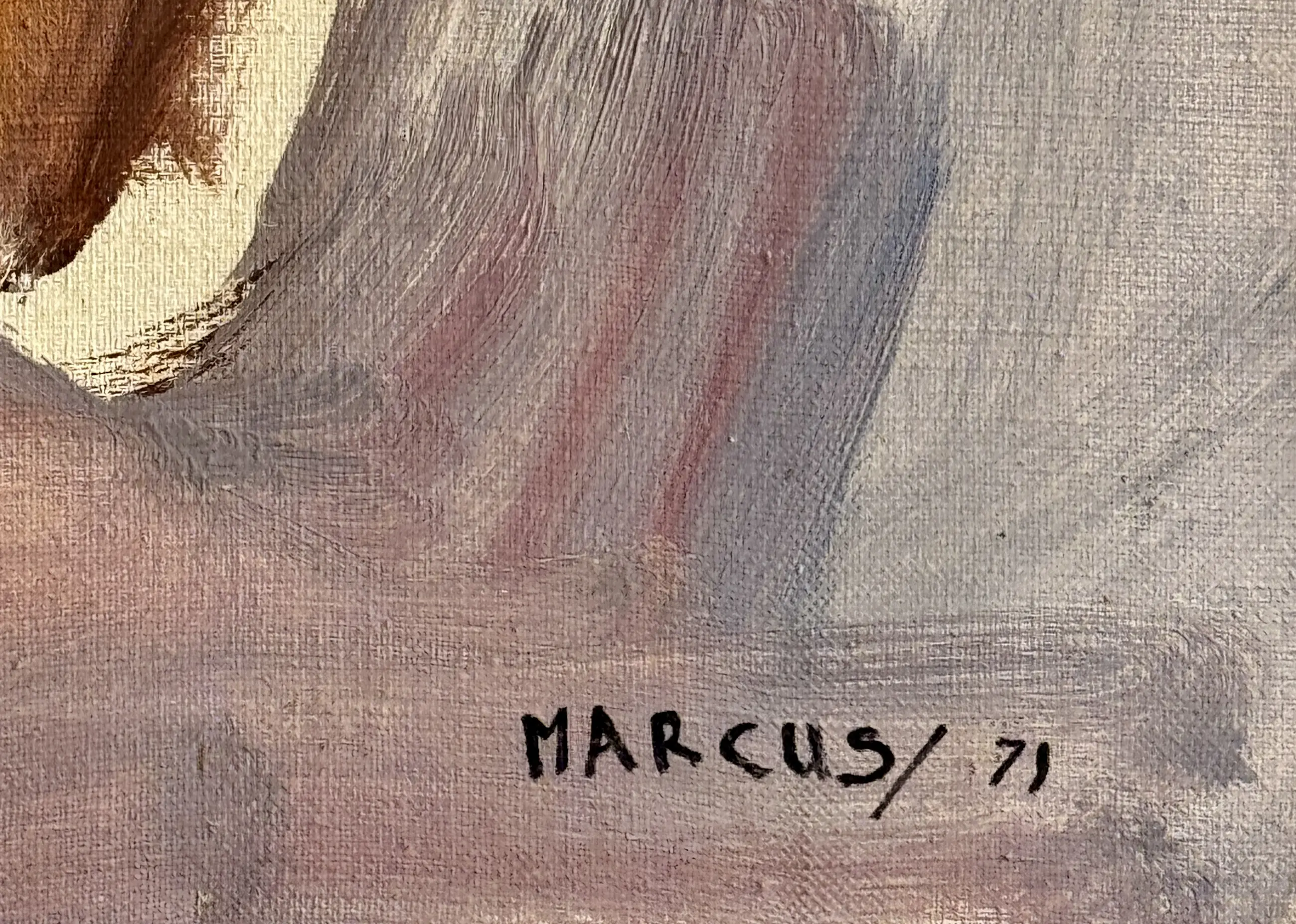
| Signed | Hand signed |
Translated with Google Translate. Original text show .
Marcus de Vestele (1941–2024) – The Sacrifice – 1971
Technique: Oil on canvas
Dimensions: 92 cm × 72 cm
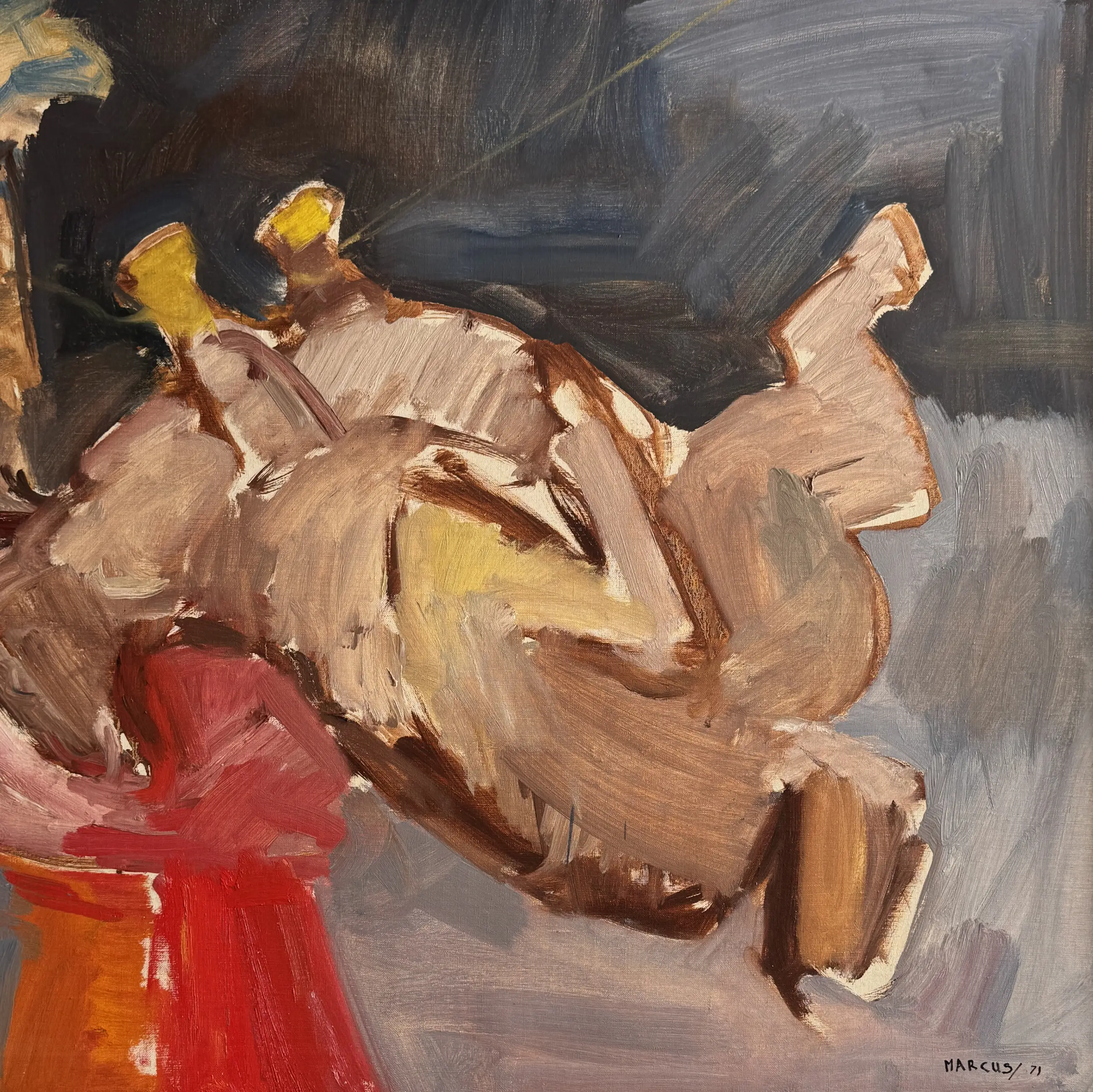
Signature: bottom right (Marcus 71)
Provenance: Collection of the artist's family
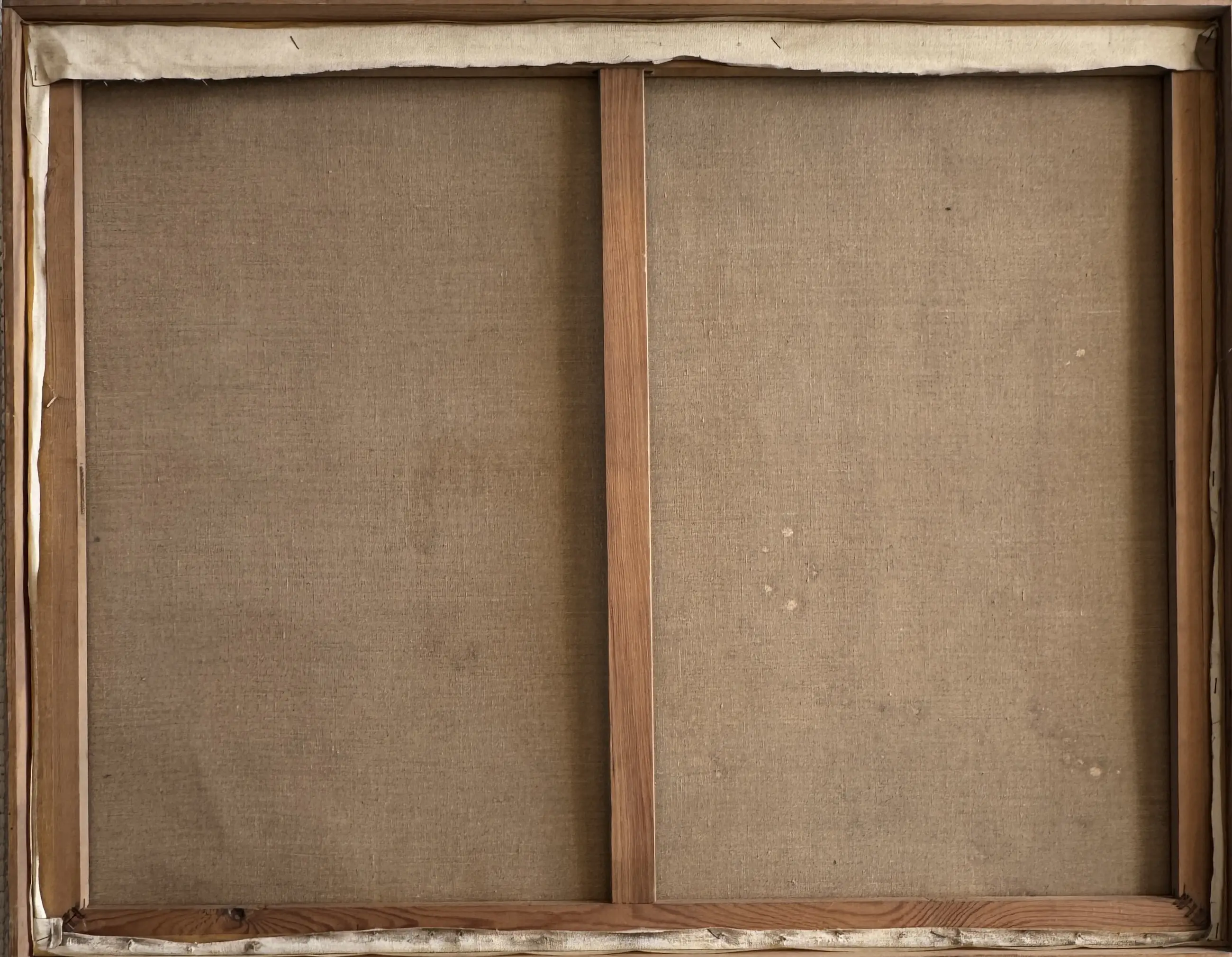
Condition: good overall condition
Framing: artwork sold with its original wooden frame
Shipping: carefully packaged and protected
Description
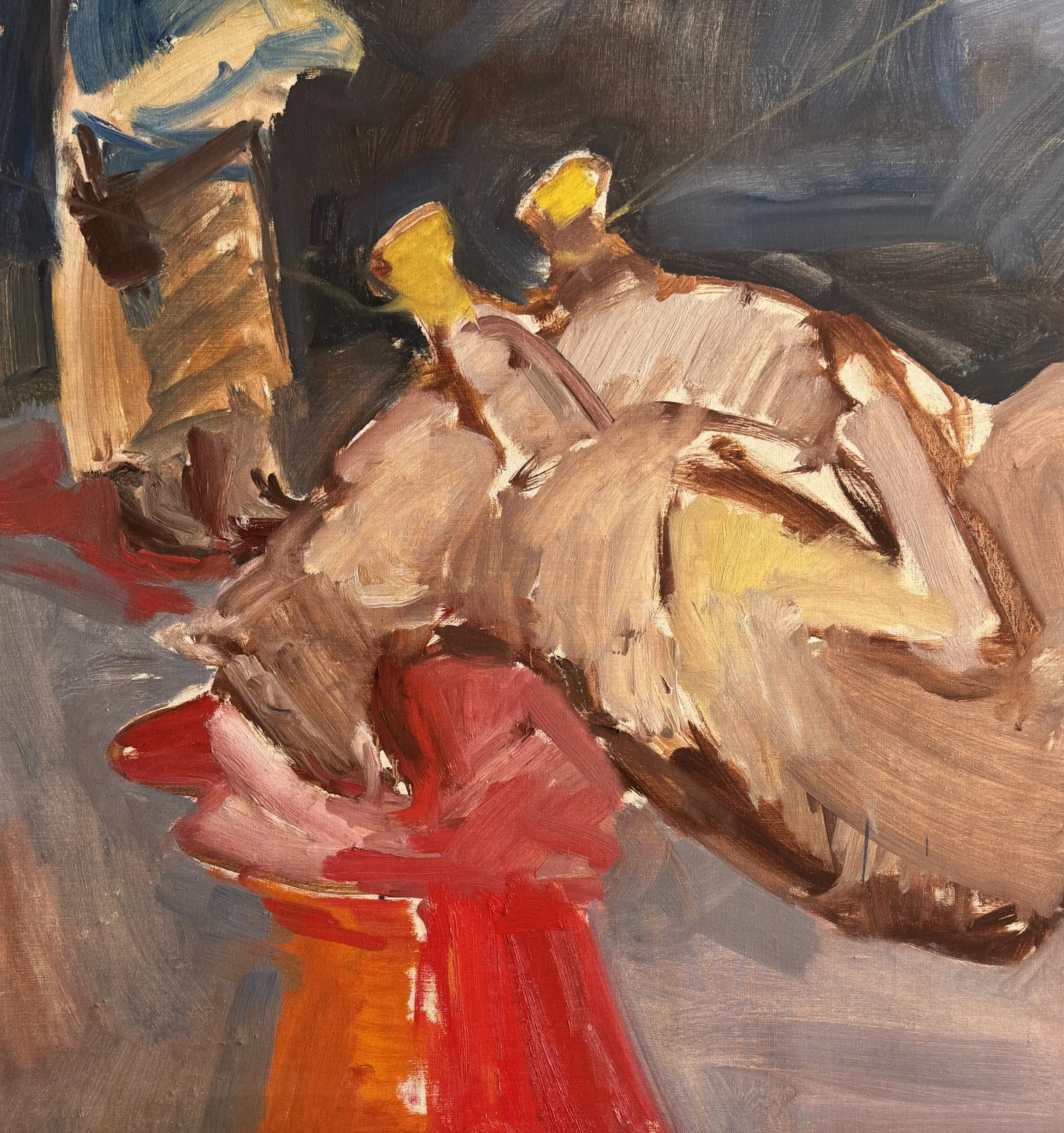
Painted in 1971, The Sacrifice stands out as one of the most intense works of Marcus de Vestele's expressionist period. In this oil on canvas, the pictorial matter becomes flesh and light, in a vibrant dialogue between the violence of the gesture and the depth of feeling.
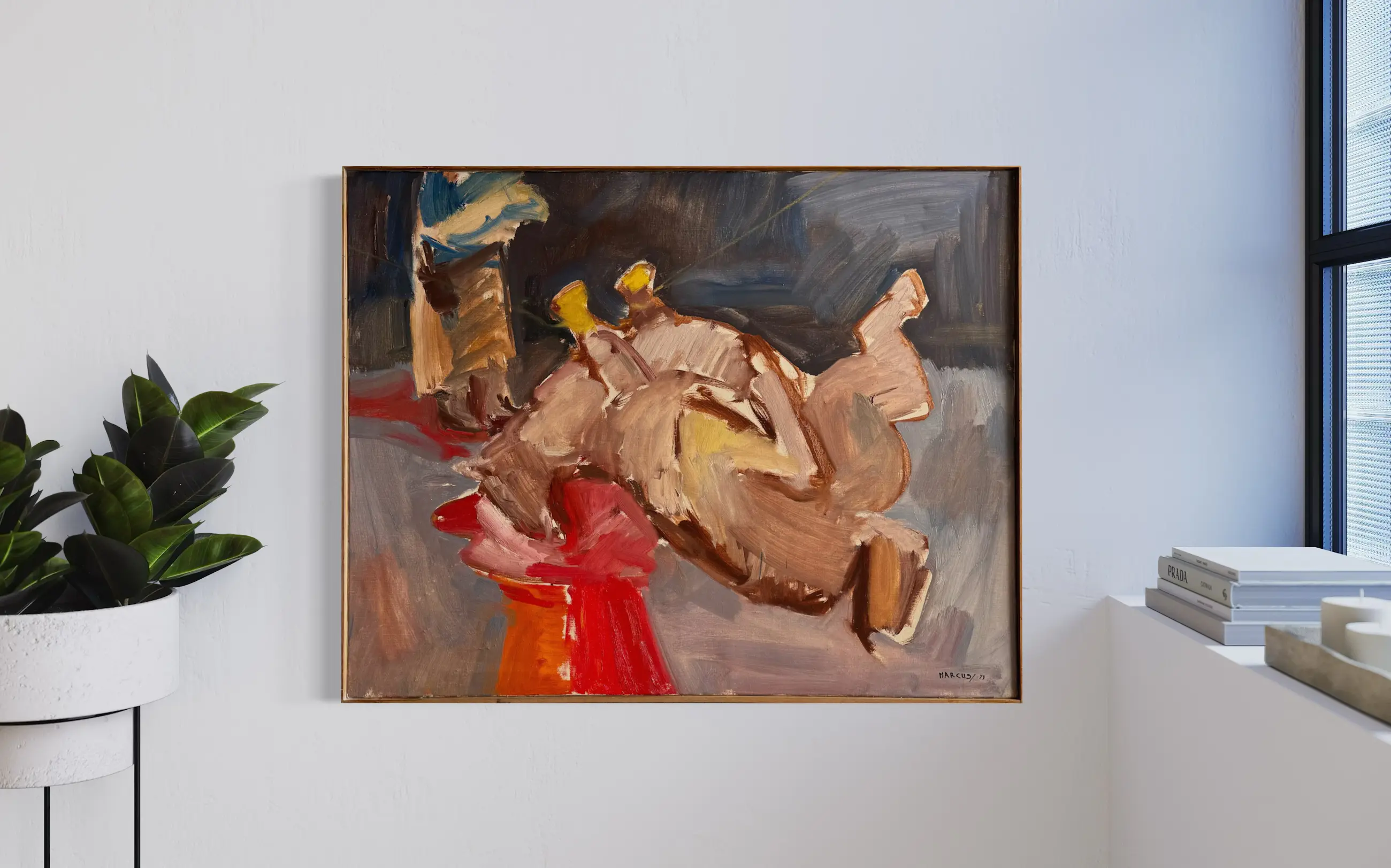
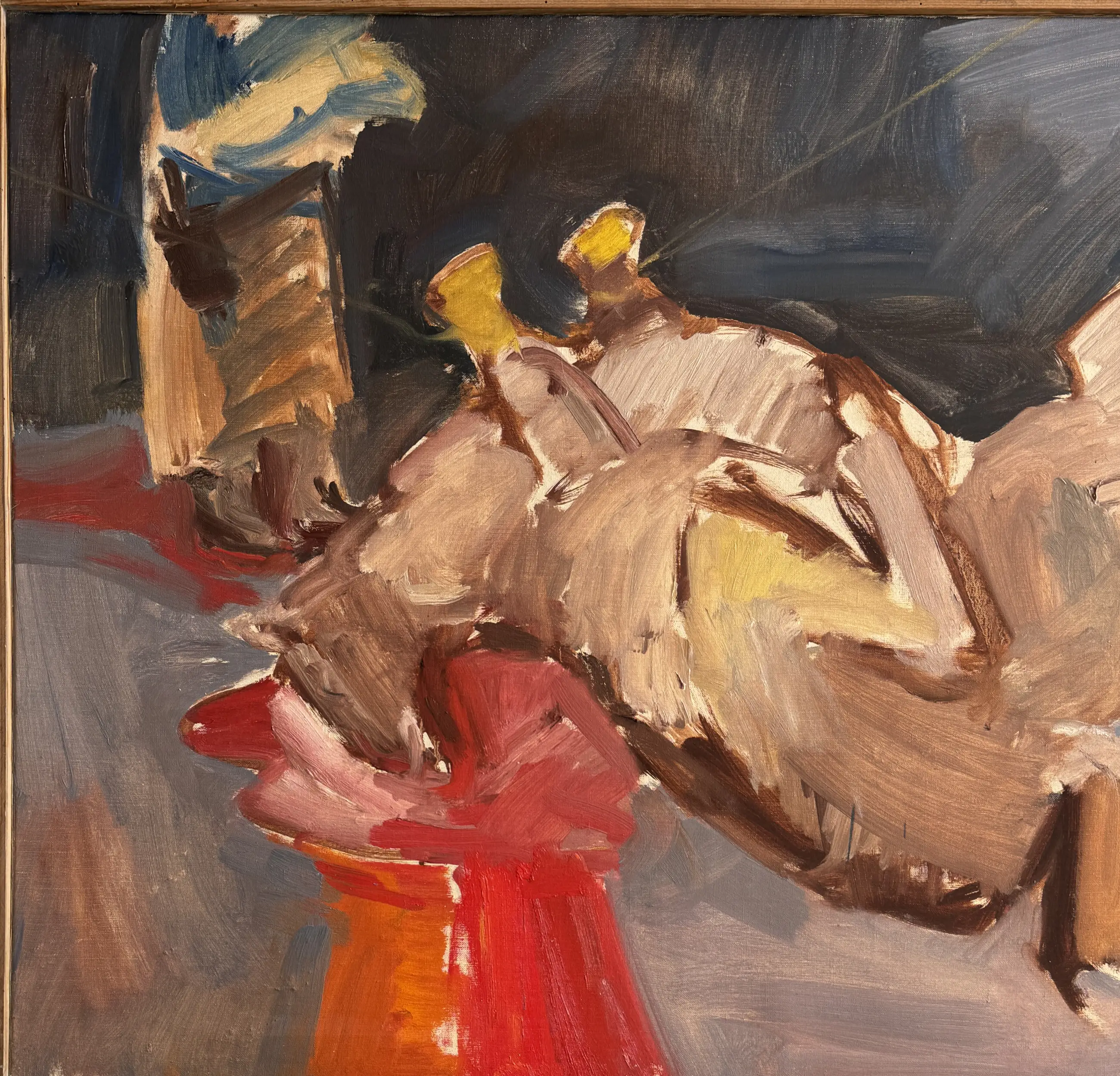
The composition, dominated by shades of brown, ochre, and fiery red, evokes a central, sensual figure suspended in a dramatic space. The vibrant, fluid red acts as a metaphor for blood and life—a symbolic thread connecting earth to light. The forms, poised between figurative and abstract, dissolve into movement, conveying a rare emotional intensity.
De Vestele's free and impetuous gesture reveals a painting experienced as a vital act. Each brushstroke seems an affirmation of the power of color and the body, in a tension between destruction and creation.
Context
Around 1970, Marcus de Vestele developed a style of painting characterized by energy and truth, influenced by European Expressionism and the spirit of the Cobra group (Appel, Alechinsky, Jorn). The Sacrifice belongs to this period of exploration, in which the artist sought to express the violence of the world through the freedom of gesture.
Remaining in the family collection, this work testifies to the expressive and spiritual power of his work. Through its dense texture, incandescent light, and universal theme, The Sacrifice stands out as a meditation on life, death, and beauty—a pictorial offering of exceptional intensity.
A rare and emblematic work from Marcus de Vestele's mature period, The Sacrifice fully embodies painting as an existential act: a cry of color and flesh, where light is born from chaos.
Biography
Marcus de Vestele (1941-2024) remains a major figure in contemporary Belgian art, celebrated internationally for his monumental abstract sculptures that have marked public spaces since the 1980s. Yet, behind the sculptor's renown hid a secret painter, whose pictorial work, long unknown, now reveals a new and moving facet of his creative genius.
An extraordinary artistic journey
Born in Brussels in 1941, Marcus de Vestele grew up in a family with an appreciation for the arts, immersed from a very young age in the cultural ferment of the post-war period. Although he quickly gravitated towards sculpture, it was in the solitude of his studio, between 1963 and the early 1980s, that he developed a unique pictorial language, far removed from the gaze and trends of the time.
Painting, a secret garden
For nearly two decades, Marcus de Vestele painted in secret, relentlessly exploring the infinite possibilities of abstraction. This period, long unknown even to his loved ones, testifies to an intense inner quest, where color, matter, and gesture became the vehicles of a pure expression, free from all constraints.
His profound interest in the Cobra group, a European artistic movement founded in the late 1940s, has greatly influenced his pictorial approach. Fascinated by the creative freedom, spontaneity of gesture, and raw energy that characterize Cobra, Marcus de Vestele draws inspiration from major figures such as Asger Jorn, Karel Appel, and Pierre Alechinsky. This chromatic vitality, rejection of conventions, and desire to reconnect with an instinctive expression, akin to childhood and dreams, are found in much of his work. Marcus's compositions, imbued with organic forms, vibrant colors, and a deliberate gestural lyricism, bear witness to a constant dialogue with the Cobra spirit, while simultaneously asserting a personal language deeply rooted in the history of European abstraction.
His paintings, never exhibited during his lifetime, reveal a formal audacity and a rare sensitivity. The vibrant compositions, oscillating between gestural lyricism and geometric rigor, convey a quest for the essential, a desire to capture the invisible and to give form to raw emotion.
An artistic treasure rediscovered
It was only after the artist's death in 2024 that his family discovered, in the privacy of his studio, nearly 400 previously unknown paintings. This exceptional collection, now accessible to the public, represents a major event in the history of Belgian and international art. It offers a fresh perspective on the work of Marcus de Vestele and allows us to understand the depth of his artistic approach, where painting and sculpture engage in a silent dialogue.
A legacy to discover
The acquisition of this unique collection opens a new chapter in the reception of Marcus de Vestele. Enthusiasts and collectors now have the opportunity to delve into the secret world of a visionary artist, whose paintings, long kept in the shadows, shed new light on his entire oeuvre.
These vibrant, powerful, and strikingly modern paintings are destined to join major collections and spark the curiosity of contemporary art enthusiasts. They bear witness to the freedom, exacting standards, and poetry of an artist who, throughout his life, preserved the very essence of creation: audacity and mystery.
Marcus de Vestele, a reclusive painter and acclaimed sculptor, has now emerged as one of the most fascinating and multifaceted figures of European abstraction. His paintings, finally revealed, promise to enrich the world's artistic heritage in a lasting way and to inspire new generations of artists and collectors.
This exceptional discovery is an invitation to rediscover Marcus de Vestele in a new light, and to measure the extent of a talent that has never ceased to reinvent itself, in discretion as well as in the spotlight.
| Condition | |||||||
| Condition | Very good | ||||||
| Shipment | |||||||
| Pick up | The work can be picked up on location. As a buyer you must bring your own packaging materials. The location is: Batalha, Portugal | ||||||
| Shipment | Parcel post Please note: When shipping via parcel post, glass breakage is at the buyer's risk. | ||||||
| Price | Up to 2 kg.
| ||||||
| Guarantee | |||||||
| Guarantee | By putting the item up for auction, I agree with the Terms of Guarantee as they are applicable at Kunstveiling regarding the accuracy of the description of the item | ||||||
| Consumer law | This seller has indicated that they are a private seller. Therefore, consumer law does not apply. Read more | ||||||
The seller takes full responsibility for this item. Kunstveiling only provides the platform to facilitate this transaction, which has to be settled directly with the seller. More information .
Marcus De Vestele (1941-2024)
 Belgian
T
The-Nomad-Gallery Portugal
2025 | |
44 sold | 2 followers |
92 cm
72 cm
90 cm
70 cm