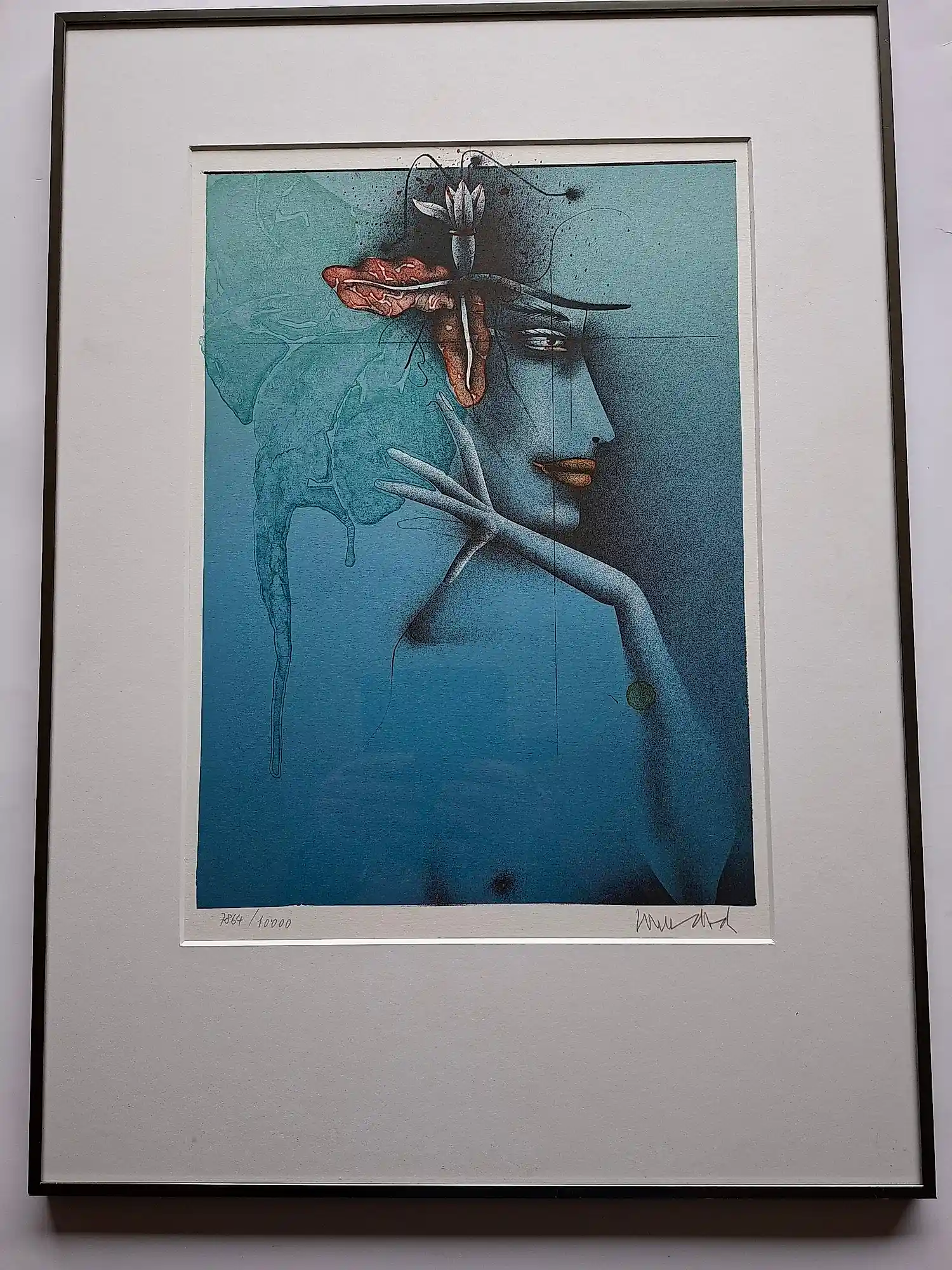
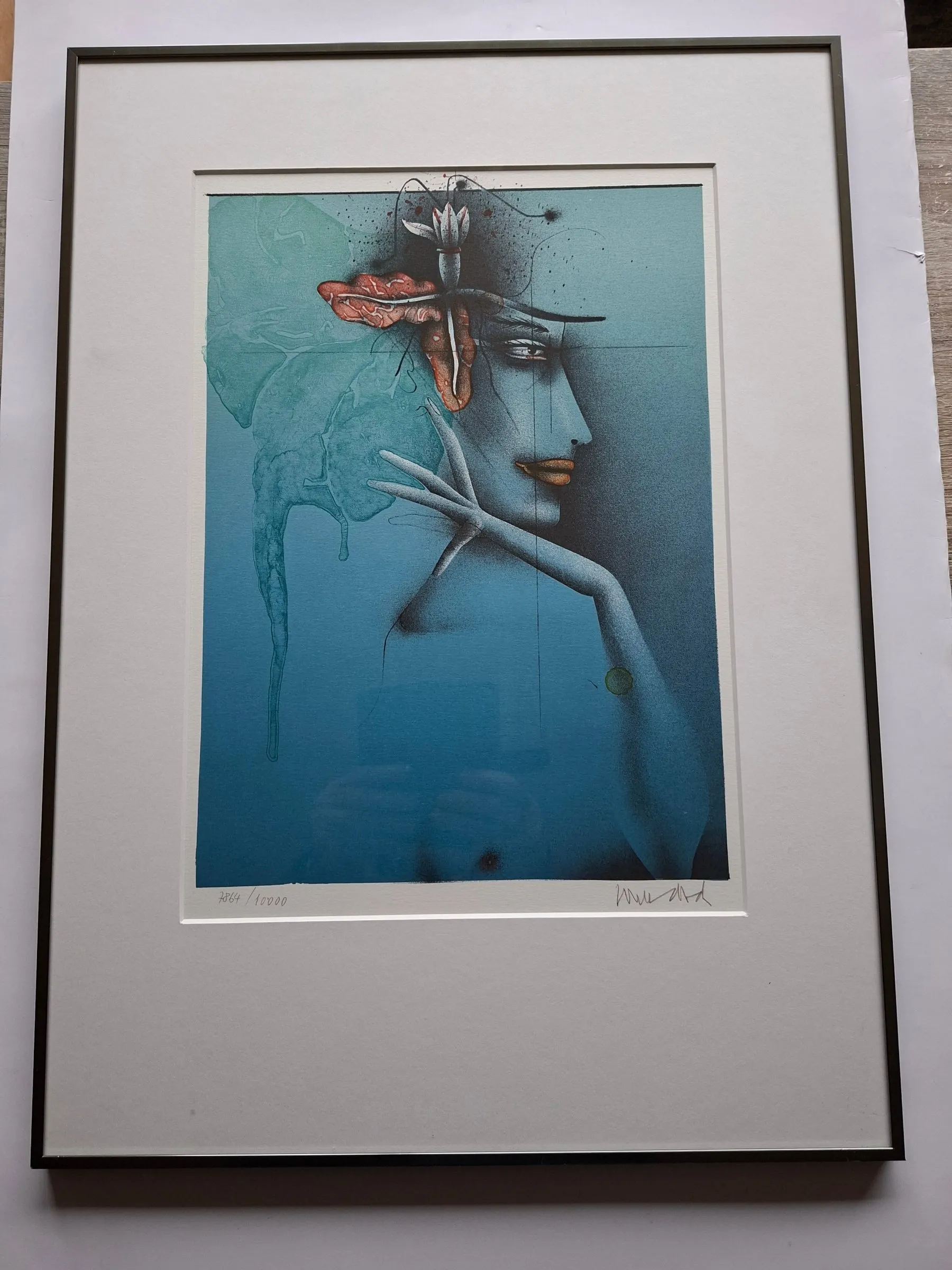
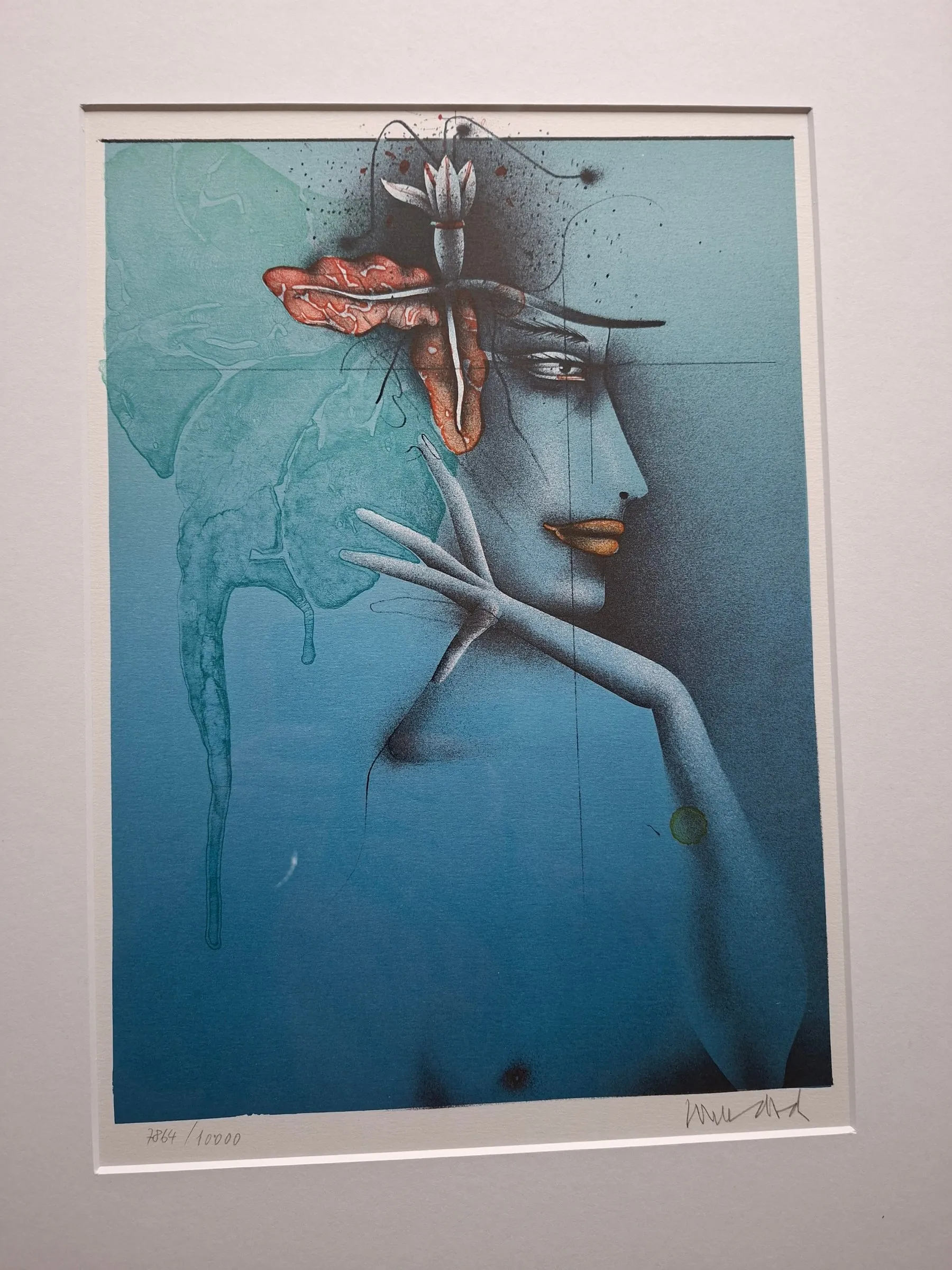
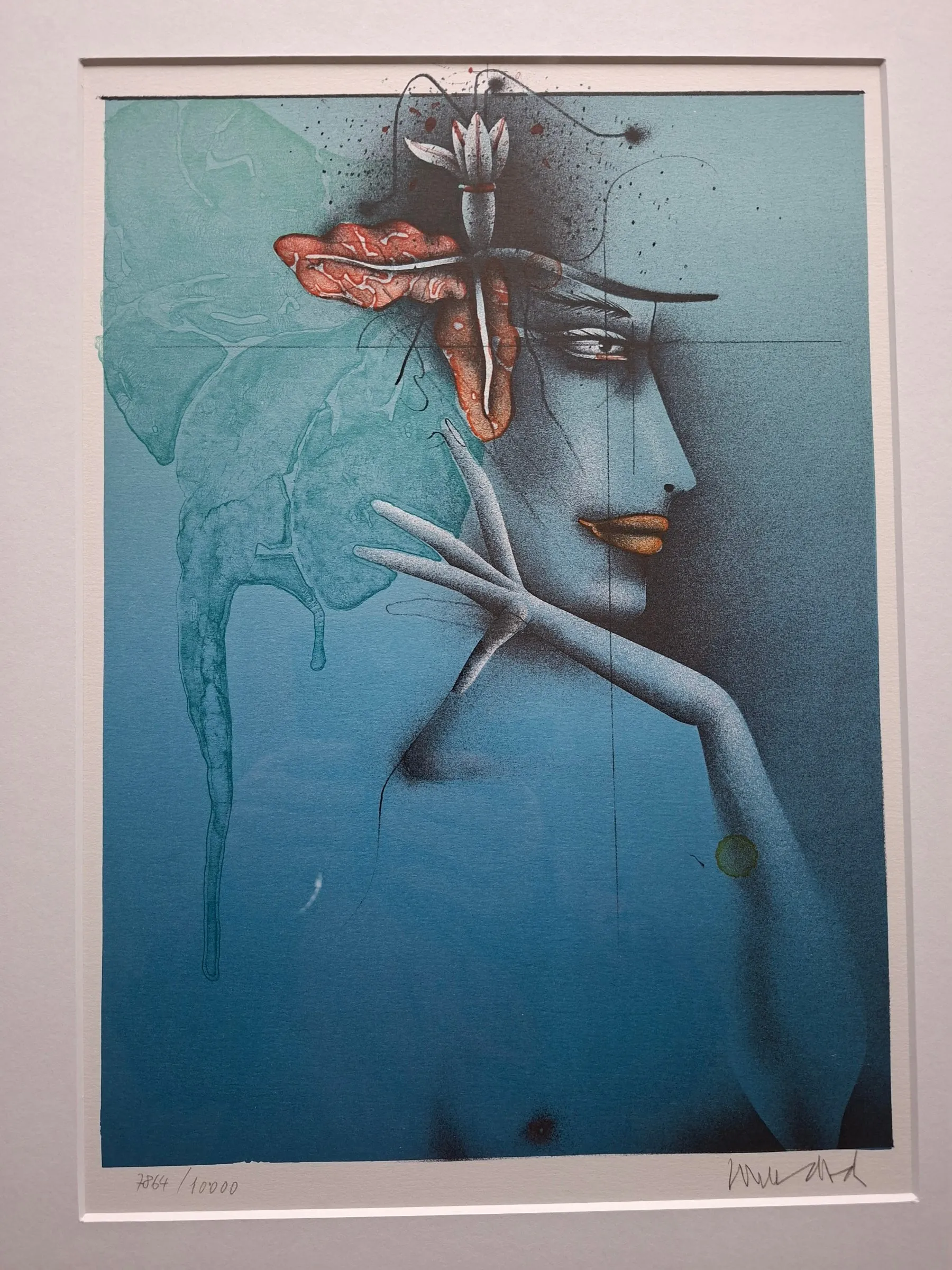
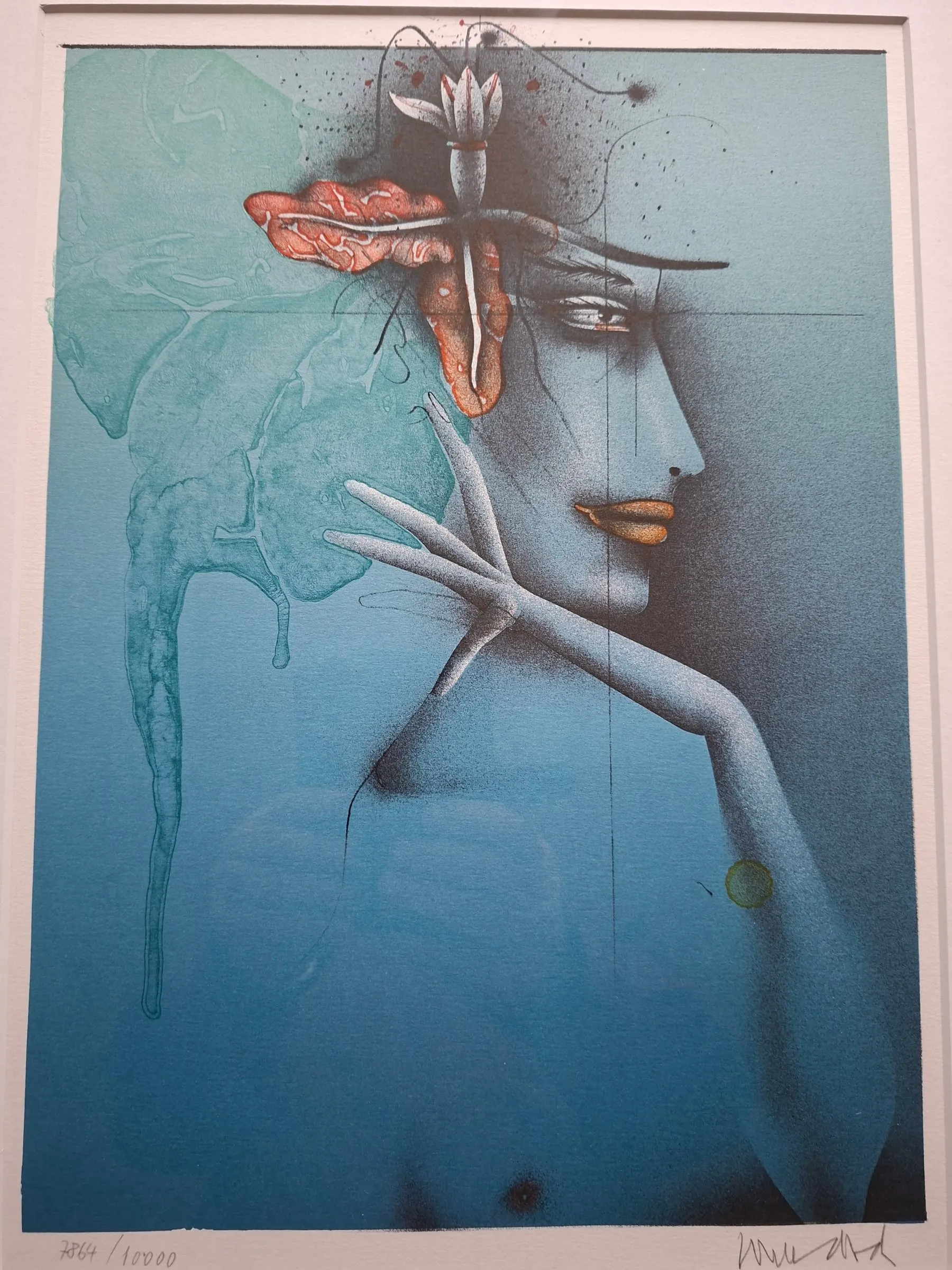
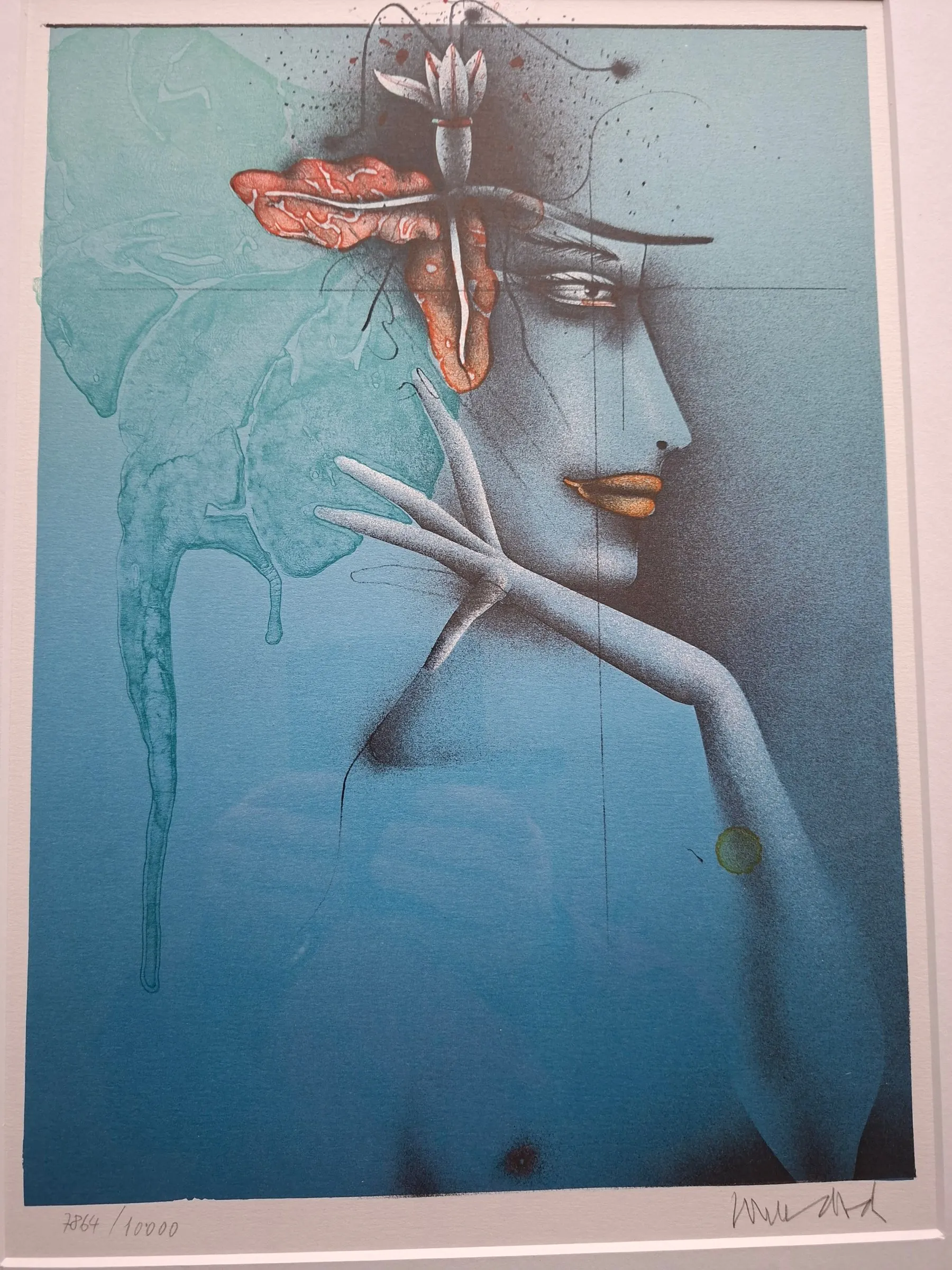
Paul Wunderlich - Tete d' une femme, bleu - Lithograph - Hand signed


Current bid €50
Buyer's premium : 15%
| Pick up | Yes, possible |
| Location | ALKMAAR, The Netherlands |
Auction details
| Start time | 1-11-2026 at 16:19 |
| End time | 12-11-2026 at 21:18 |
Bids (1)
UHING
today / 16:27
€50
Please note: if a bid is made in the last 5 minutes, the auction will be extended by 5 minutes.
C
CGMKunst The Netherlands
2024 | |
655 sold | 19 followers |
- Description
- Paul Wunderlich (1927-2010)
| Type of artwork | Prints (signed) |
| Period | 1945 to 1999 |
| Technique | Lithograph |
| Support | Paper |
| Style | Modern |
| Subject | Portrait |
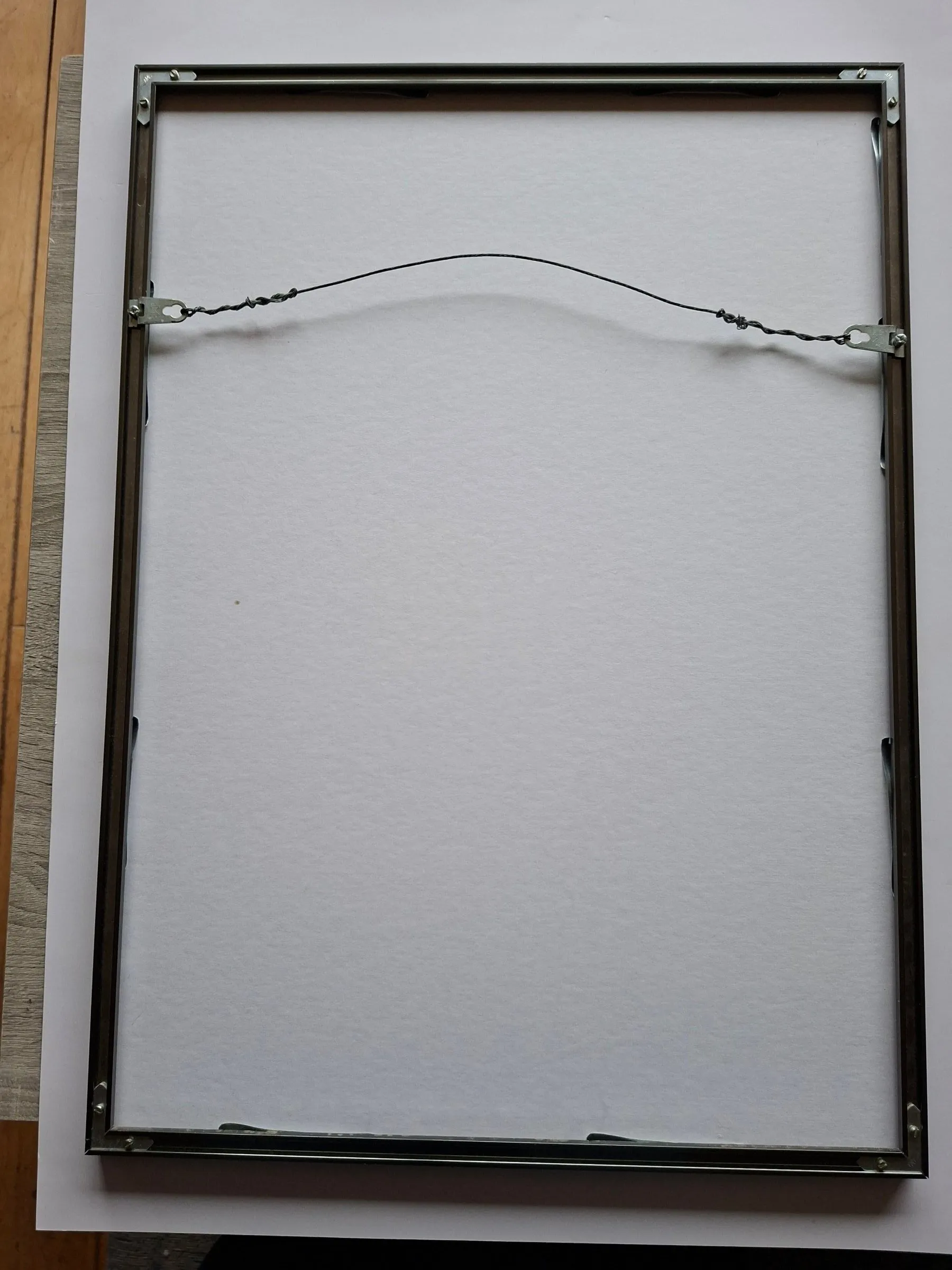
| Framed | Framed |
| Dimensions | 39 x 28 cm (h x w) |
| Incl. frame | 58.5 x 42.5 cm (h x w) |
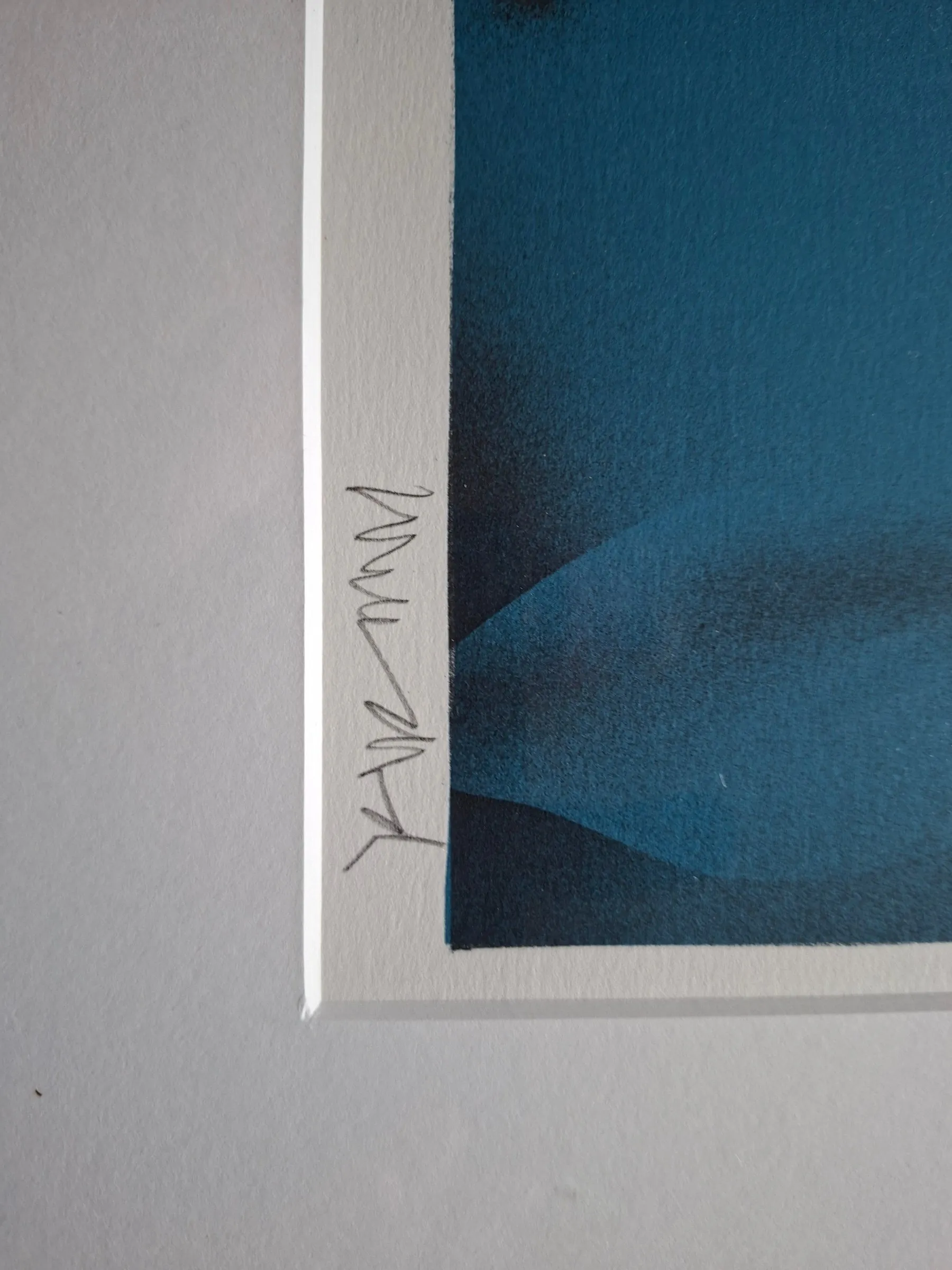
| Signed | Hand signed |
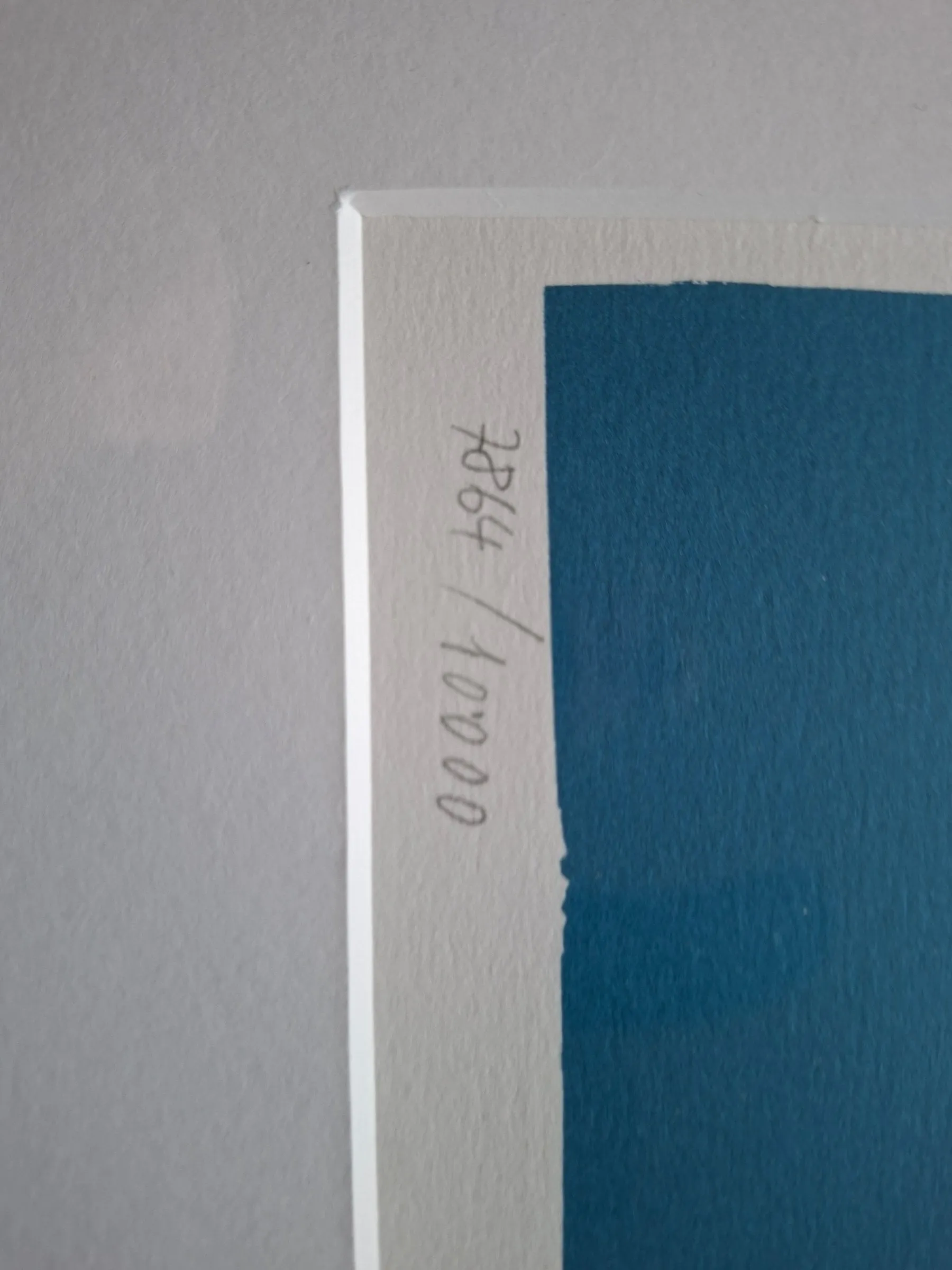
| Edition | 7864/10000 |
Translated with Google Translate. Original text show .
Beautiful lithograph by the German artist Paul Wunderlich (1927-2010). Paul Wunderlich was the late husband of the equally famous German photographer Karin Székessy. The two worked closely together and inspired each other, yet each built their own distinct oeuvre. Paul Wunderlich was, more than almost any other artist of our time, one of the truly style-shaping artists of modernism. In 1960, the Public Prosecutor's Office in Hamburg confiscated his works as "offensive." Three years later, the still young Paul Wunderlich was appointed professor at the Hochschule für Bildende Kunst. Numerous prizes, such as the Edwin Scharff Prize, and awards at graphic art biennials in Ireland, Taiwan, and Bulgaria made Wunderlich internationally known. He was the only German artist admitted to the Parisian "Académie des Beaux-Arts." Paul Wunderlich lived and worked alternately in Hamburg and France until his death in June 2010. The painter and sculptor, born in 1927 in Eberswalde near Berlin, learned to draw at the art school in the orangery of Eutin Castle. Immediately after the war, he went to the Academy of Fine Arts in Hamburg and studied graphic arts there. After his training, he remained there as a drawing teacher and became a professor in 1963. In the early 1950s, he met Emil Nolde and Oskar Kokoschka and printed reproductions of their works under their direction. He himself developed a highly idiosyncratic style in which Mannerism and Surrealism, as well as elements of Art Nouveau and Art Deco, come together. Initially, he derived his themes from German history, for example in the cycle "July 20, 1944". Later, erotic and sexual motifs became more important to him, which he treated delicately and with a touch of morbidity. In 1960, such a graphic cycle was prosecuted by the Public Prosecution Service for alleged indecency. In the 1960s, he began working from photographs by Karin Székessy. After giving up his professorship in 1968, he undertook several study trips to New York and Switzerland. Since then, he also worked on sculpturally aestheticized everyday objects that were in harmony with the refined visual language of his painting. "His works are recognized, appreciated, and purchased by a broad public worldwide," writes Paul Wunderlich's biographer, Jens Christian Jensen. "Art connoisseurs agree: Paul Wunderlich is the foremost master of fantastic realism and one of the few style-shaping artists of our time." "Of the clichés circulated about his life's work, only one holds true: the realization that Paul Wunderlich has become the unsurpassed master of lithography after Picasso." (Prof. Heinz Spielmann)
| Condition | |||||||||
| Condition | Very good | ||||||||
| Shipment | |||||||||
| Pick up | The work can be picked up on location. As a buyer you must bring your own packaging materials. The location is: Alkmaar, The Netherlands | ||||||||
| Shipment | Parcel post Please note: When shipping via parcel post, glass breakage is at the buyer's risk. | ||||||||
| Price | Up to 5 kg.
| ||||||||
| Guarantee | |||||||||
| Guarantee | By putting the item up for auction, I agree with the Terms of Guarantee as they are applicable at Kunstveiling regarding the accuracy of the description of the item | ||||||||
| Consumer law | This seller has indicated that they are a private seller. Therefore, consumer law does not apply. Read more | ||||||||
The seller takes full responsibility for this item. Kunstveiling only provides the platform to facilitate this transaction, which has to be settled directly with the seller. More information .
Paul Wunderlich (1927-2010)
 German
C
CGMKunst The Netherlands
2024 | |
655 sold | 19 followers |
42.5 cm
58.5 cm
28 cm
39 cm