Salvador Dali - Dalinian Flowers - Sold
This item has been sold Show item
| Pick up | No, not possible |
| Pay on location | No, not possible |
| Location | Helmond, The Netherlands |
Auction details
| Start time | 31-3-2026 at 10:36 |
| End time | 5-4-2026 at 19:26 |
Bids (1)
Log in or register to view the bidding history V
verschuiven2408 The Netherlands
2024 | |
50 sold | 4 followers |
- Description
- Salvador Dali (1904-1989)
| Type of artwork | Sculpture / Object |
| Year | 1981 |
| Technique | Other |
| Style | Surrealistic |
| Subject | Flowers and Plants |
| Dimensions | 25 x 25 x 4 cm (h x w x d) |
| Signed | Unsigned/Print signed |
| Edition | 1000 |
Translated with Google Translate. Original text show .
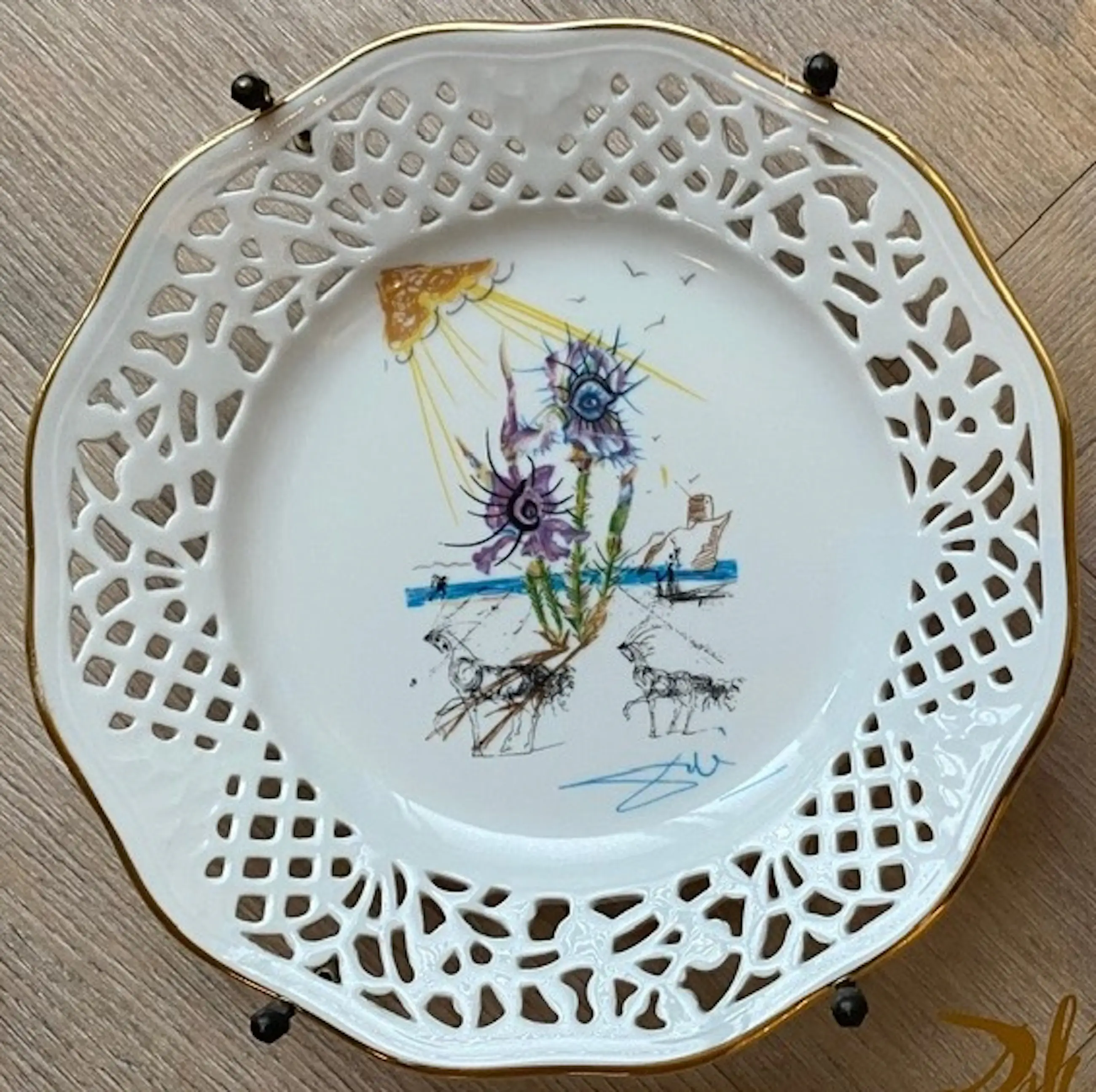
Salvador Dali
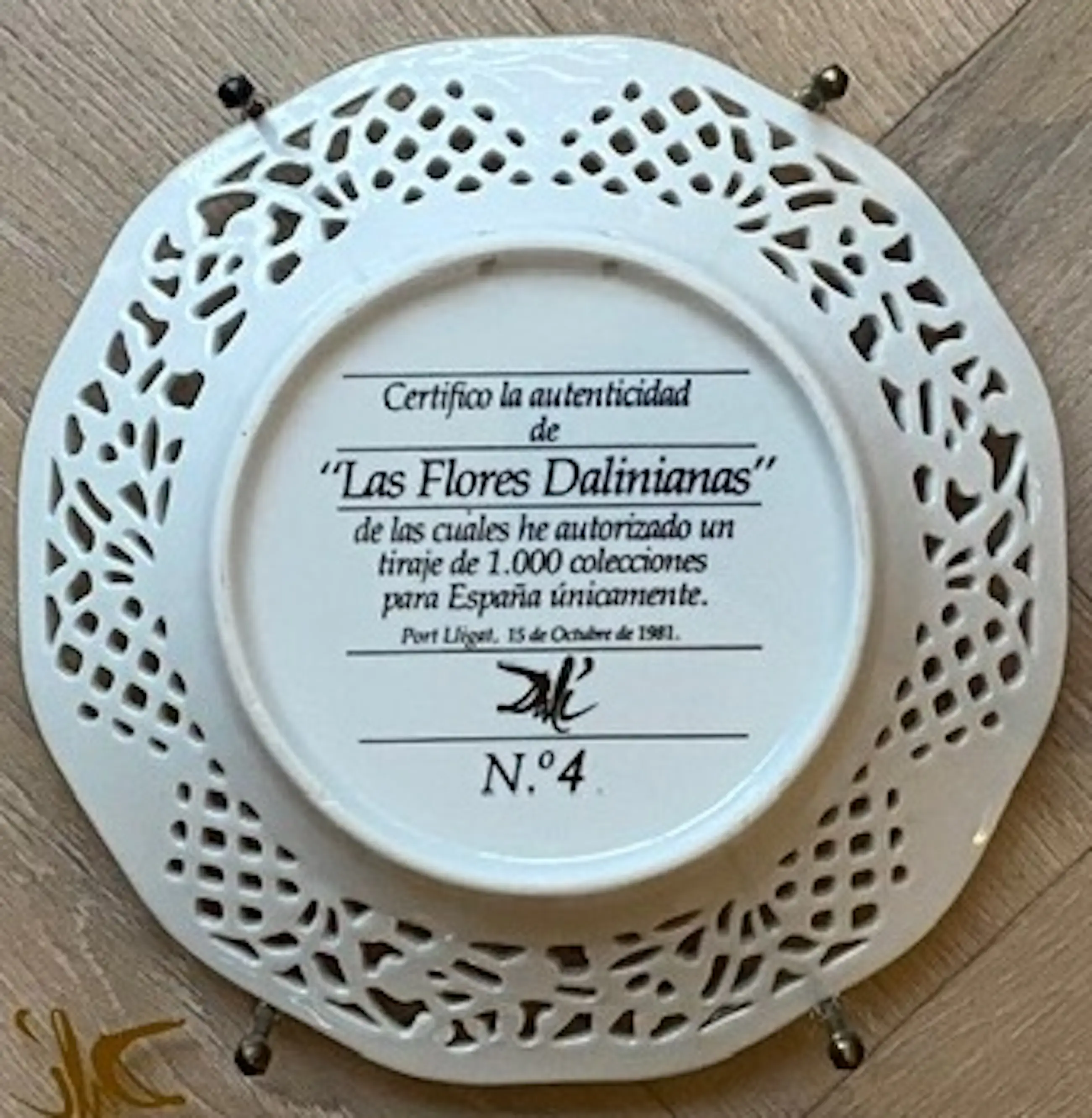
Las Flores Dalinianas 1981
porcelain plate
Published in Port-Lligat on October 15, 1981 under the artist's supervision.
Edition of 1000, signed in print on the board on the front and back.
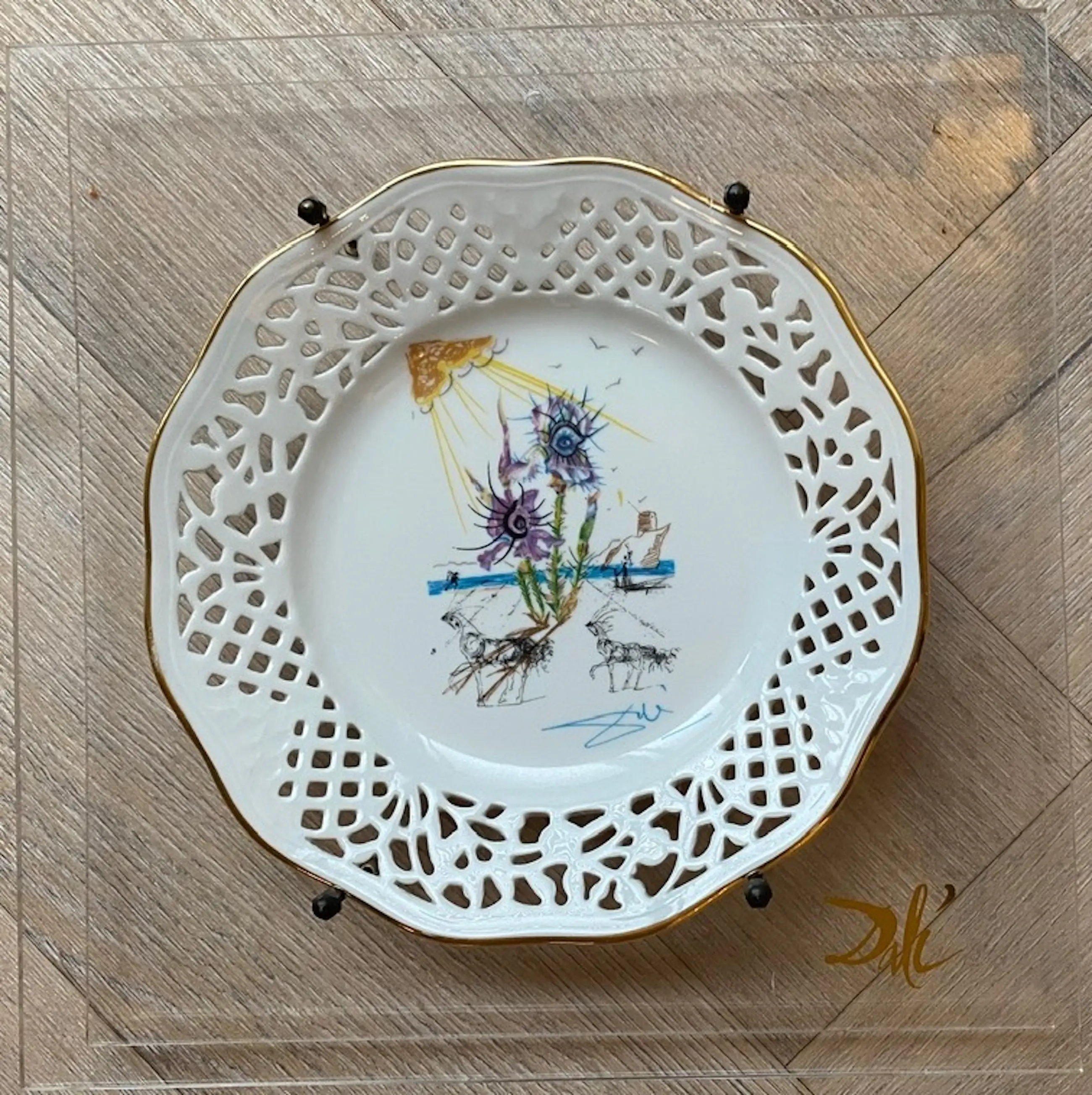
diameter board 19 cm - cassette size 25 x 25 x 4 cm.
no. 4 of a series of 11 different plates.
Salvador Domingo Felipe Jacinto Dalí i Domènech, Marquis de Dalí de Pubol (Figueres, 11 May 1904 – ibid., 23 January 1989) was a world-famous Spanish painter.
Biography
Dalí was born in Figueres, a small town at the foot of the Pyrenees, about 25 kilometers from the French border, in Catalonia, Spain, on May 11, 1904. He had a sister, Anna Maria (1908-1989), who wrote a book about her brother in 1949. Salvador's older brother, also named Salvador, was born on October 12, 1901, but died on August 1, 1903, nine months before Salvador's birth.[8] Dalí received his first drawing lessons at the age of ten from a friend of his father, the Impressionist painter Ramón Pichet (1872-1925). His first exhibition took place in 1918 at the Municipal Theatre of Figueres.
In his younger years, Dalí was interested in painters such as El Greco, Francisco Goya, Michelangelo, and Diego Velázquez. He focused his attention on Impressionism and Cubism at that time.
Classical period (1941-1989)
In 1941, Dalí abandoned his surrealist style for a more universal artistic approach. His interest shifted from personal obsession to universal themes, and he became fascinated by religion and modern science. Dalí looked back for inspiration to classical and Renaissance art. He shared this inspiration with Arno Breker, the German sculptor he had known and admired since his time in Paris. He also looked forward to the scientific discoveries of his own time.
| Condition | |||||||||||
| Condition | Very good | ||||||||||
| Shipment | |||||||||||
| Payment | You must complete the payment in advance via our payment system. Paying in cash upon pickup on location is not possible. | ||||||||||
| Shipment | Parcel post | ||||||||||
| Price | Up to 2 kg.
| ||||||||||
| Guarantee | |||||||||||
| Guarantee | By putting the item up for auction, I agree with the Terms of Guarantee as they are applicable at Kunstveiling regarding the accuracy of the description of the item | ||||||||||
| Consumer law | This seller has indicated that they are a private seller. Therefore, consumer law does not apply. Read more | ||||||||||
The seller takes full responsibility for this item. Kunstveiling only provides the platform to facilitate this transaction, which has to be settled directly with the seller. More information .
Salvador Dali (1904-1989)
 Spanish
V
verschuiven2408 The Netherlands
2024 | |
50 sold | 4 followers |
25
25
4