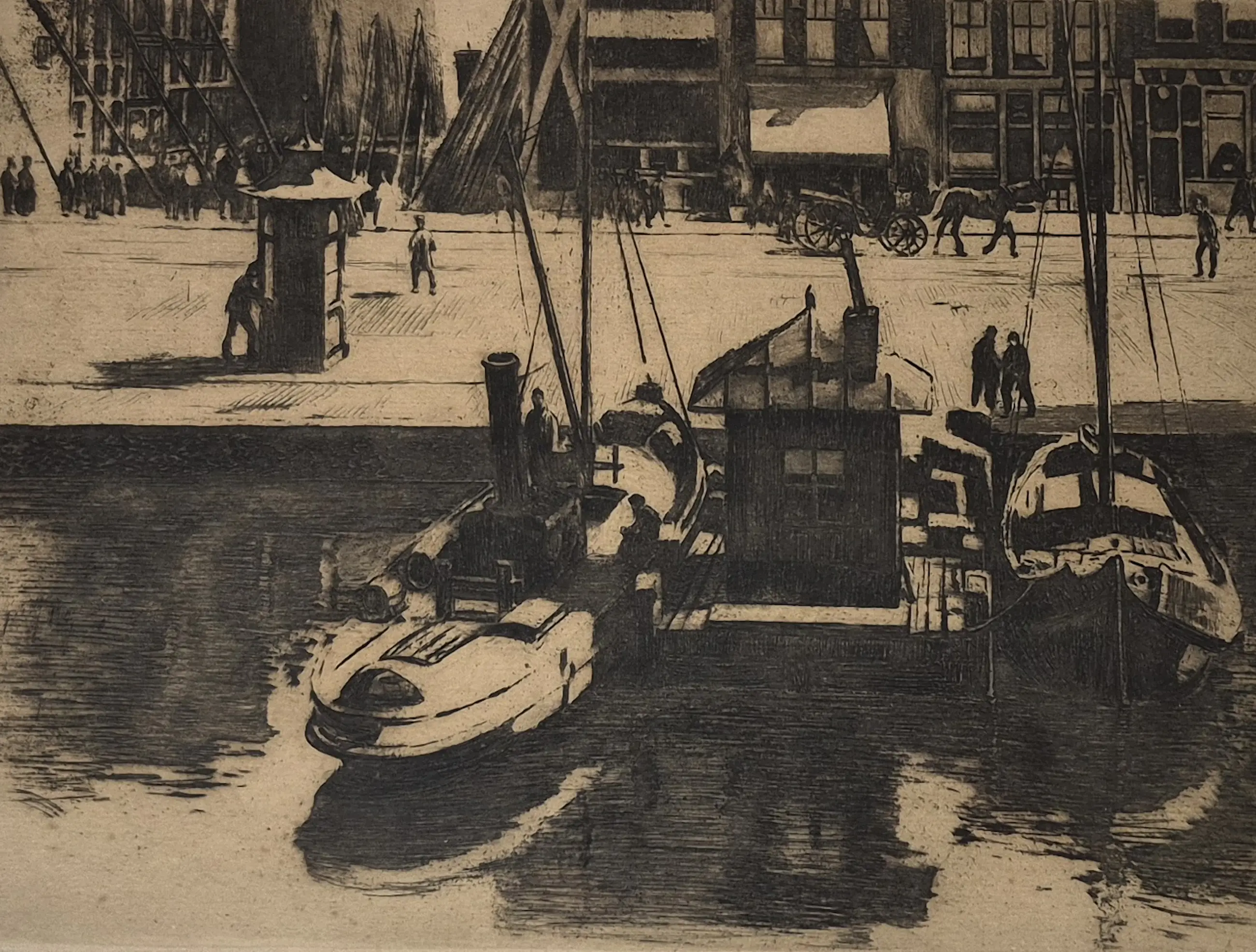
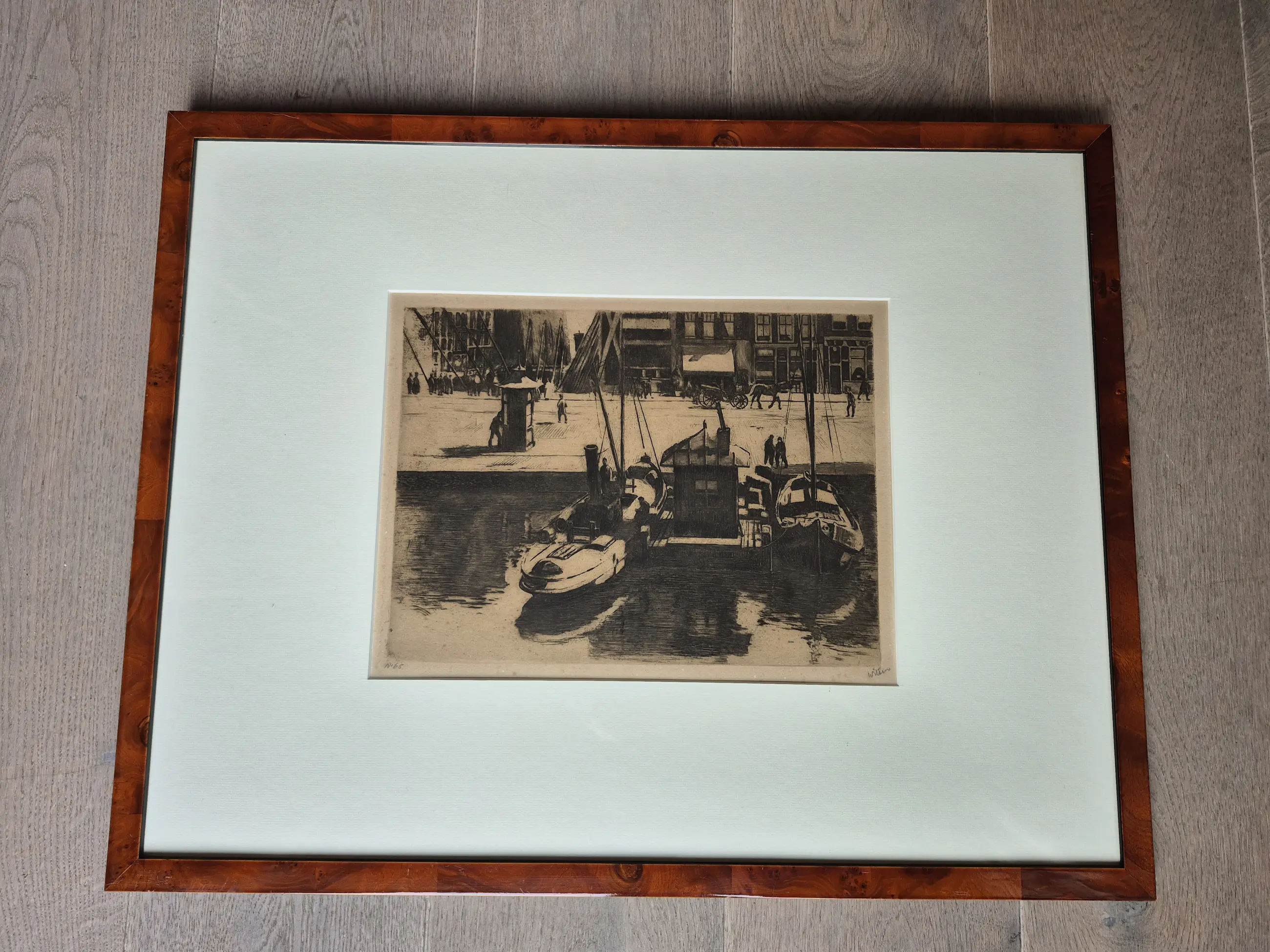
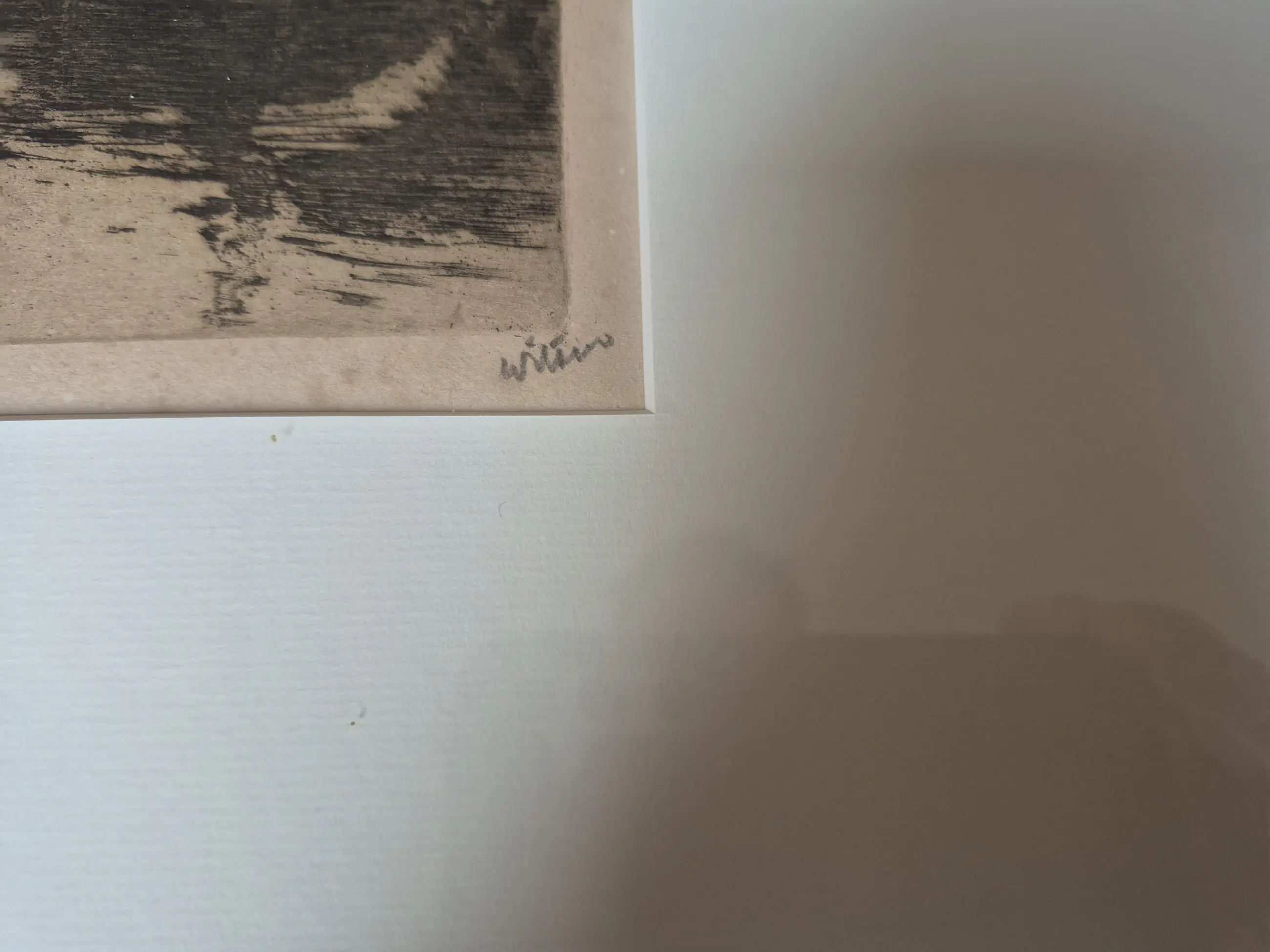
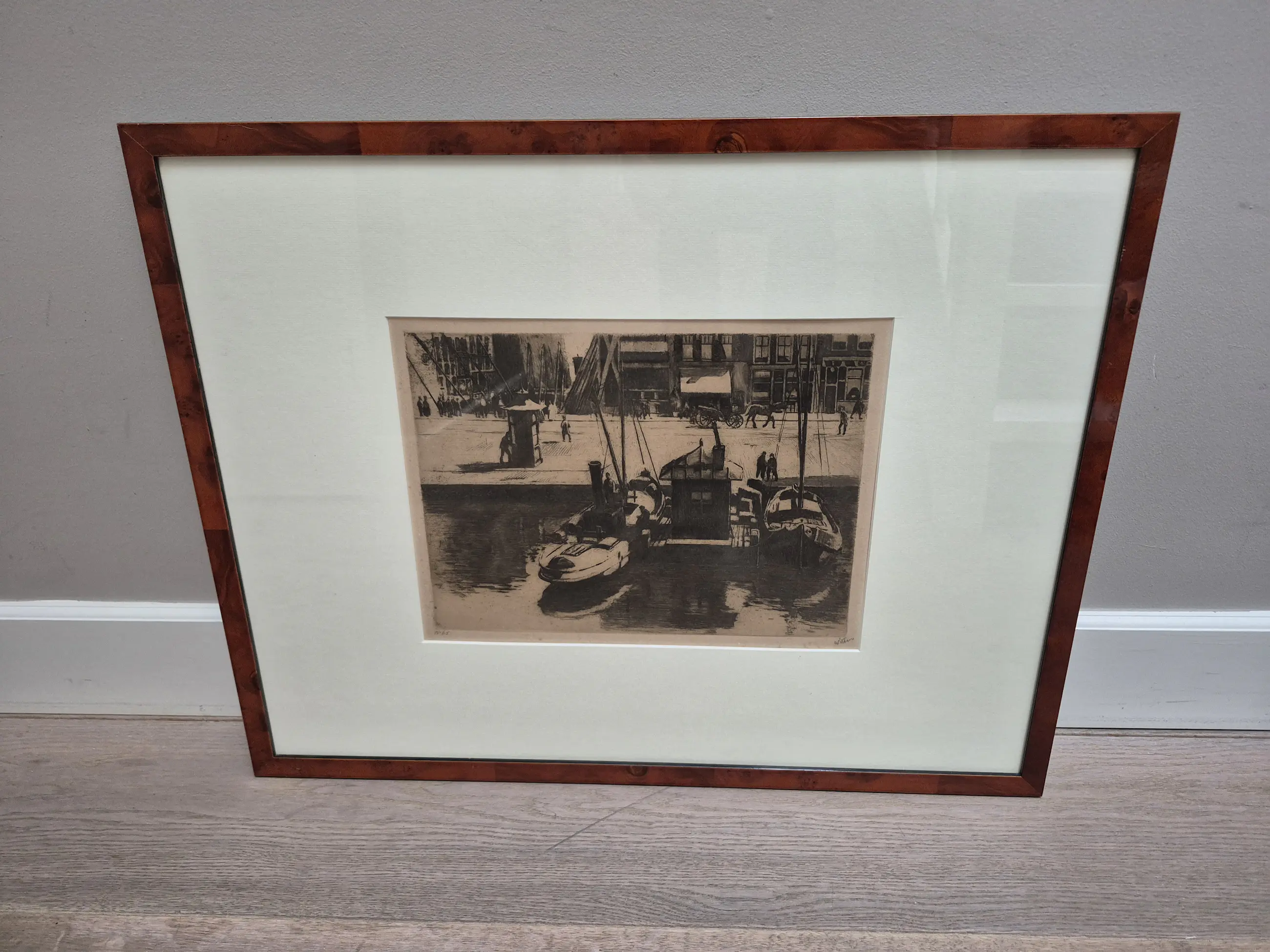
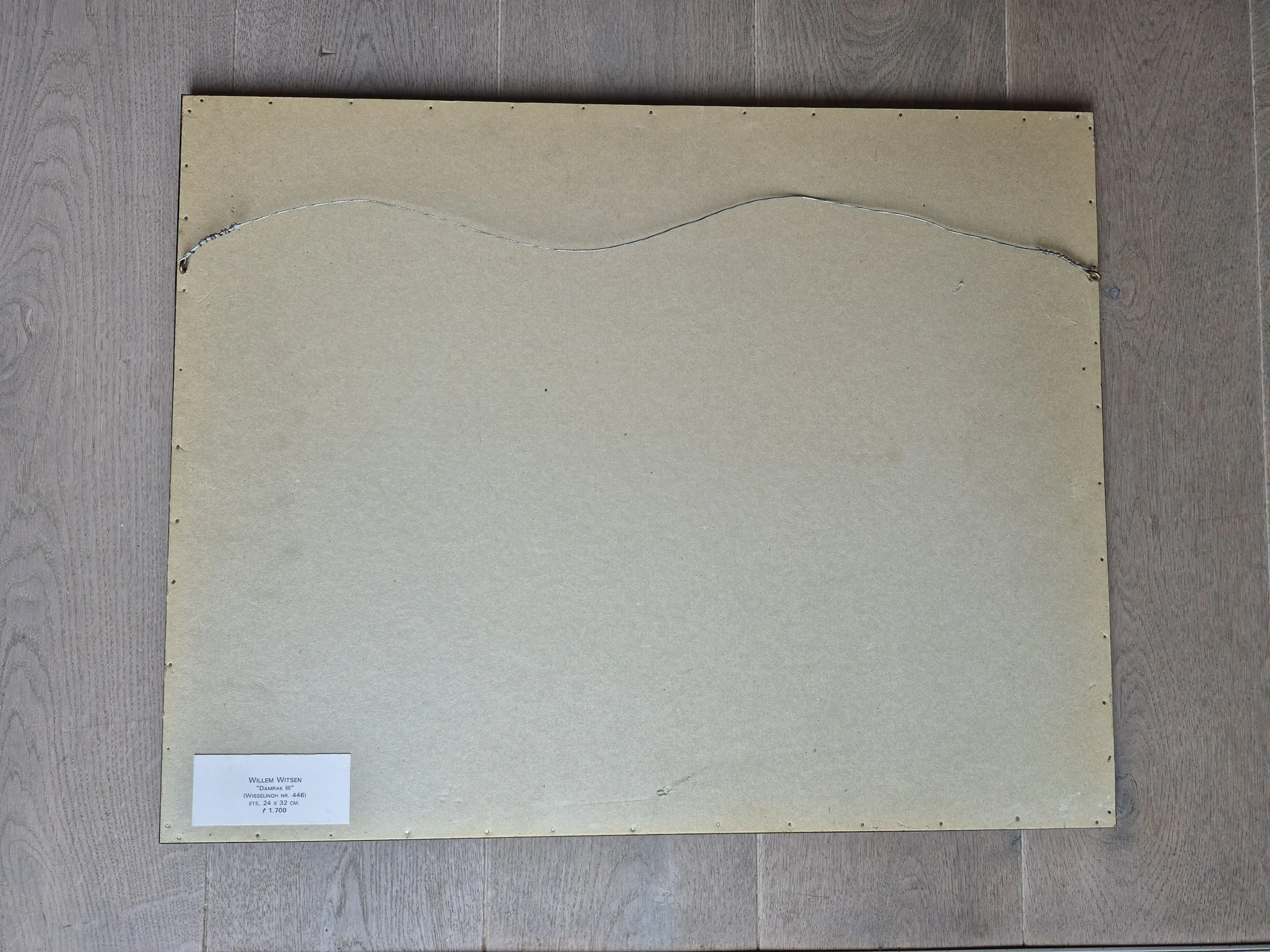
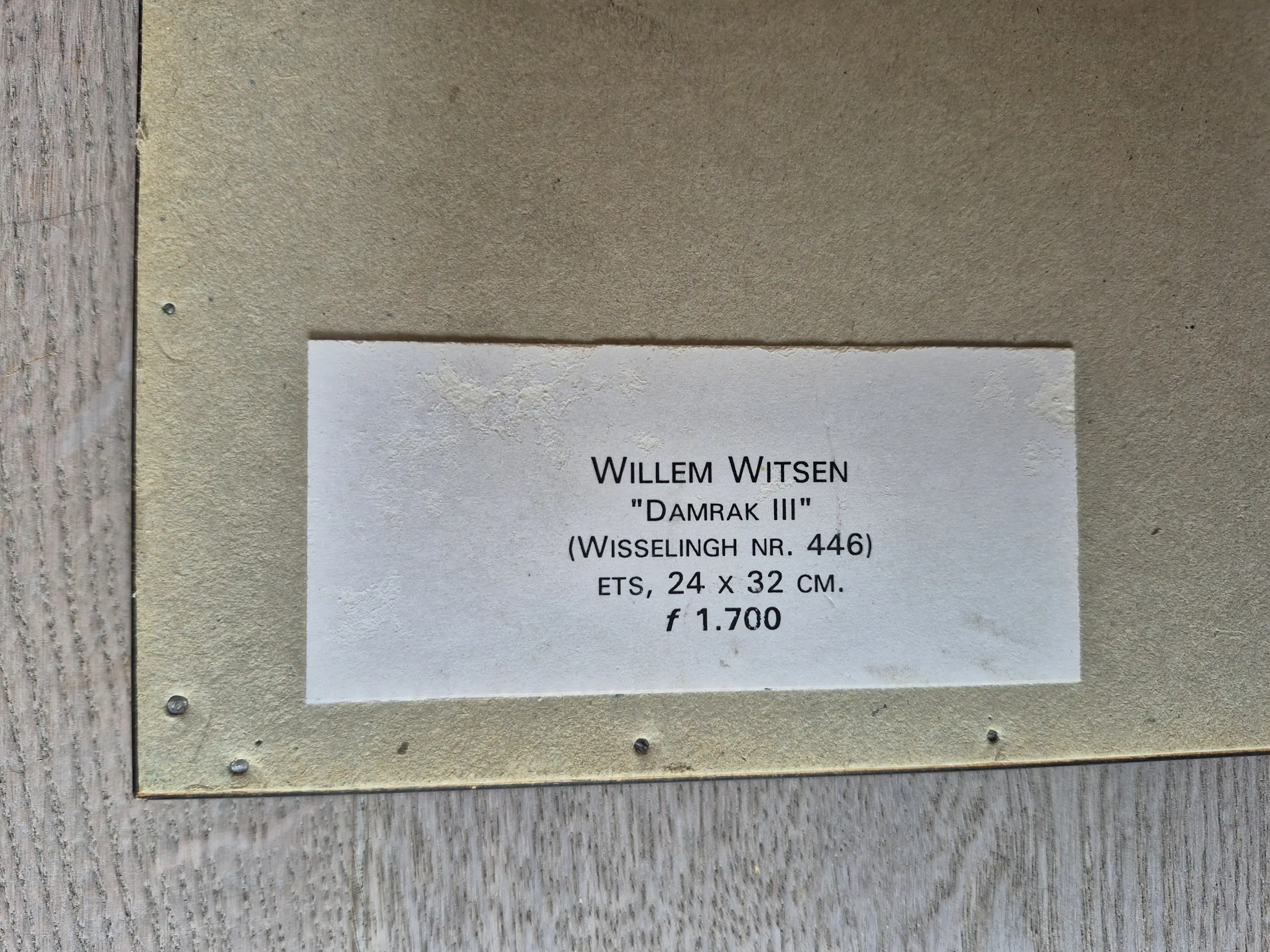
Willem Witsen - Etching - Damrak III - signed r.o. - Sold
This item has been sold Show item
| Pick up | Yes, possible |
| Location | Maarssen, The Netherlands |
Auction details
| Start time | 20-4-2026 at 6:27 |
| End time | 22-5-2026 at 15:22 |
Bids (1)
Log in or register to view the bidding history J
JBK The Netherlands
2014 | |
556 sold | 26 followers |
- Description
- Willem Witsen (1860-1923)
| Type of artwork | Prints (signed) |
| Period | 1900 to 1944 |
| Technique | Etching |
| Support | Paper |
| Style | Classical |
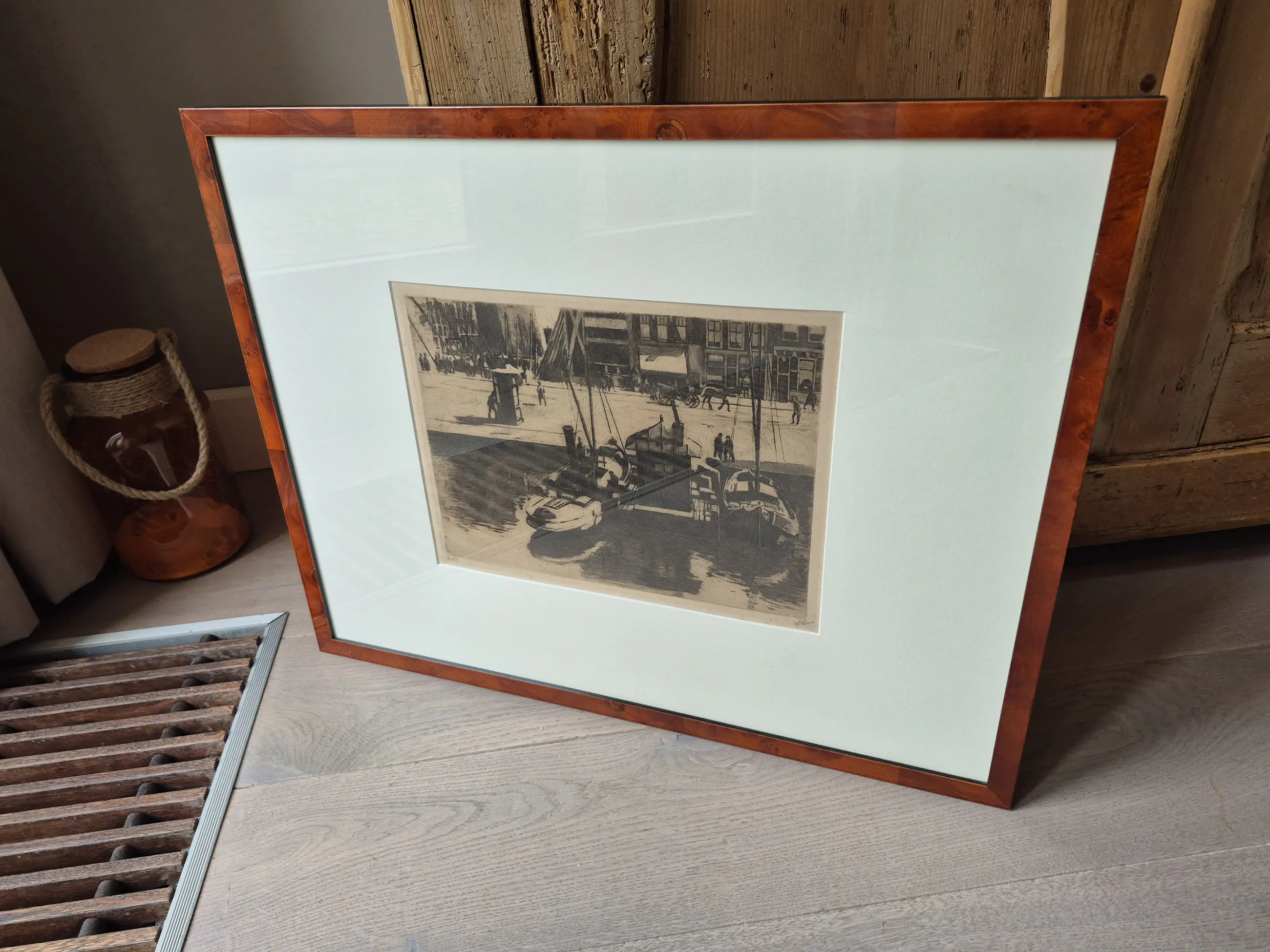
| Framed | Framed |
| Dimensions | 24 x 32 cm (h x w) |
| Incl. frame | 51.5 x 65.5 cm (h x w) |
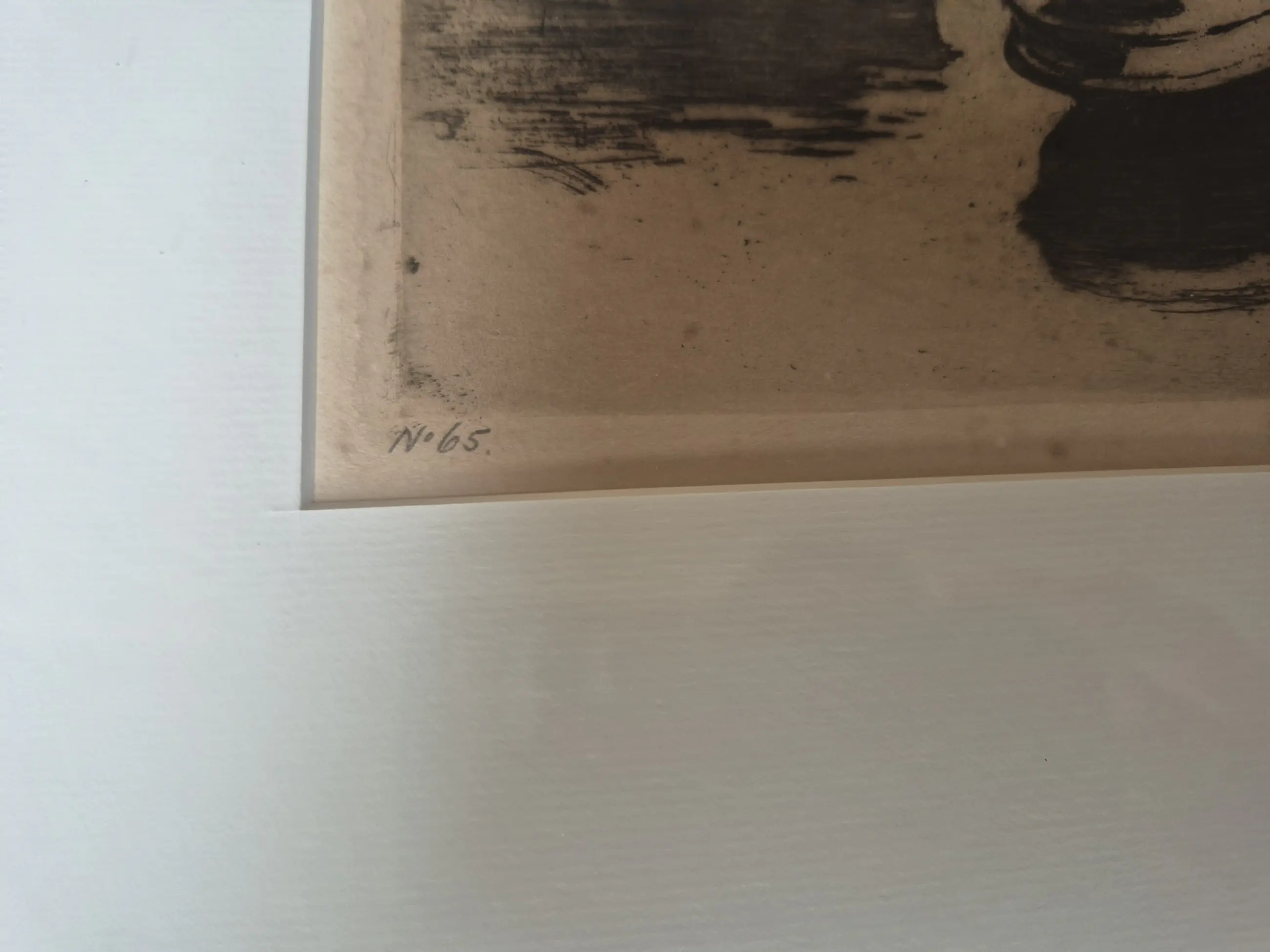
| Signed | Hand signed |
Translated with Google Translate. Original text show .
Willem Witsen became known for his paintings, watercolors, and etchings of cityscapes. He mastered the etching technique to perfection, so much so that fellow artists (including Marius Bauer) sought his help. Witsen sought to capture the essence of the city. In his younger years, he was particularly fascinated by "the large chunks" in rain, snow, steam, and fog. To get as close as possible to his subjects, he even worked from a rowboat. From 1911 to early 1914, he had a barge converted into a studio in Amsterdam. Besides cityscapes, Witsen often chose landscapes as his subject, while toward the end of his life, floral still lifes and portraits became his specialty.
Witsen, the sixth and last child of a wealthy family, whose lineage traces back to a famous Amsterdam regent family, grew up in the capital. Witsen's father ran a hardware store; his mother died when Willem was in grammar school. From 1876 to 1884, Witsen studied at the Amsterdam State Academy of Fine Arts. There he befriended painters who would help shape the face of Dutch art in the 1890s: Antoon Derkinderen, Willem Tholen, Jacobus van Looy, Jan Veth, Eduard Karsen, and Jan Toorop. Later, he met George Breitner and Isaac Israels, who had studied at the Royal Academy in The Hague. In 1880, Witsen and his fellow students founded the artists' association Sint Lucas. Three years later, he became a member of the Flanor Literary Society. There he met Willem Kloos, Albert Verwey and Frederik van Eeden, founders of De Nieuwe Gids in 1885. In the early years of this magazine, Witsen wrote some art criticism under a pseudonym.
During his studies, Witsen regularly worked at 'Ewijkshoeve', his father's country house near Lage Vuursche, and in the winter of 1881/1882 he took classes at the Royal Academy of Fine Arts in Antwerp. From 1888 onwards, Witsen lived in London for several years, a fruitful period. It was here that his enthusiasm for photography also arose; to it we owe many beautiful portraits of his family and friends. Returning to Amsterdam in early 1891, Witsen took over Breitner's studio on the first floor of Oosterpark 82; his downstairs neighbor was Isaac Israels. During this time, Witsen came into contact with the art dealership E.J. van Wisselingh & Co., where his work was subsequently offered for sale. His first solo exhibition took place there in 1895.
In 1893, Witsen married Elizabeth (Betsy) van Vloten, one of Johannes van Vloten's daughters. The couple settled in Ede, where they had three sons, Willem (Pam) (1894), Erik (1896), and Odo (1898). When the marriage ended shortly after the turn of the century, Witsen returned to Amsterdam in 1901, where, after some wanderings, he moved back into his old studio in Oosterpark in 1906. A year later, he remarried, to the brewer's daughter Marie Schorr (1875-1943).
Witsen sought new themes in Wijk bij Duurstede, where he created large etchings of the miller and the blacksmith. Later, in 1914 and 1915, he traveled through Germany, Italy, Switzerland, the United States, and Canada, and finally, in 1920/1921, to the Dutch East Indies. Witsen died on April 13, 1923, at the OLVG Hospital in Amsterdam.
| Condition | |||||||||||
| Condition | Good | ||||||||||
| The work is in good condition, neatly framed and behind glass. | |||||||||||
| Shipment | |||||||||||
| Pick up | The work can be picked up on location. As a buyer you must bring your own packaging materials. The location is: Maarssen, The Netherlands | ||||||||||
| Shipment | Parcel post Please note: When shipping via parcel post, glass breakage is at the buyer's risk. | ||||||||||
| Price | > 10KG or bigger than 1.00 x 0.50 meter
| ||||||||||
| Guarantee | |||||||||||
| Guarantee | By putting the item up for auction, I agree with the Terms of Guarantee as they are applicable at Kunstveiling regarding the accuracy of the description of the item | ||||||||||
| Consumer law | This seller has indicated that they are a private seller. Therefore, consumer law does not apply. Read more | ||||||||||
The seller takes full responsibility for this item. Kunstveiling only provides the platform to facilitate this transaction, which has to be settled directly with the seller. More information .
Willem Witsen (1860-1923)
 Dutch
J
JBK The Netherlands
2014 | |
556 sold | 26 followers |
Etching 1900 to 1944 Amsterdamse School Arti et Amicitiae Gezelschap Michel Angelo Buonarotti Nederlandsche Etsclub Vereeniging Sint Lucas Amsterdams Impressionisme Brabants Palet
65.5 cm
51.5 cm
32 cm
24 cm