Lucebert - Rare early work, signed, 1946 - attributed to
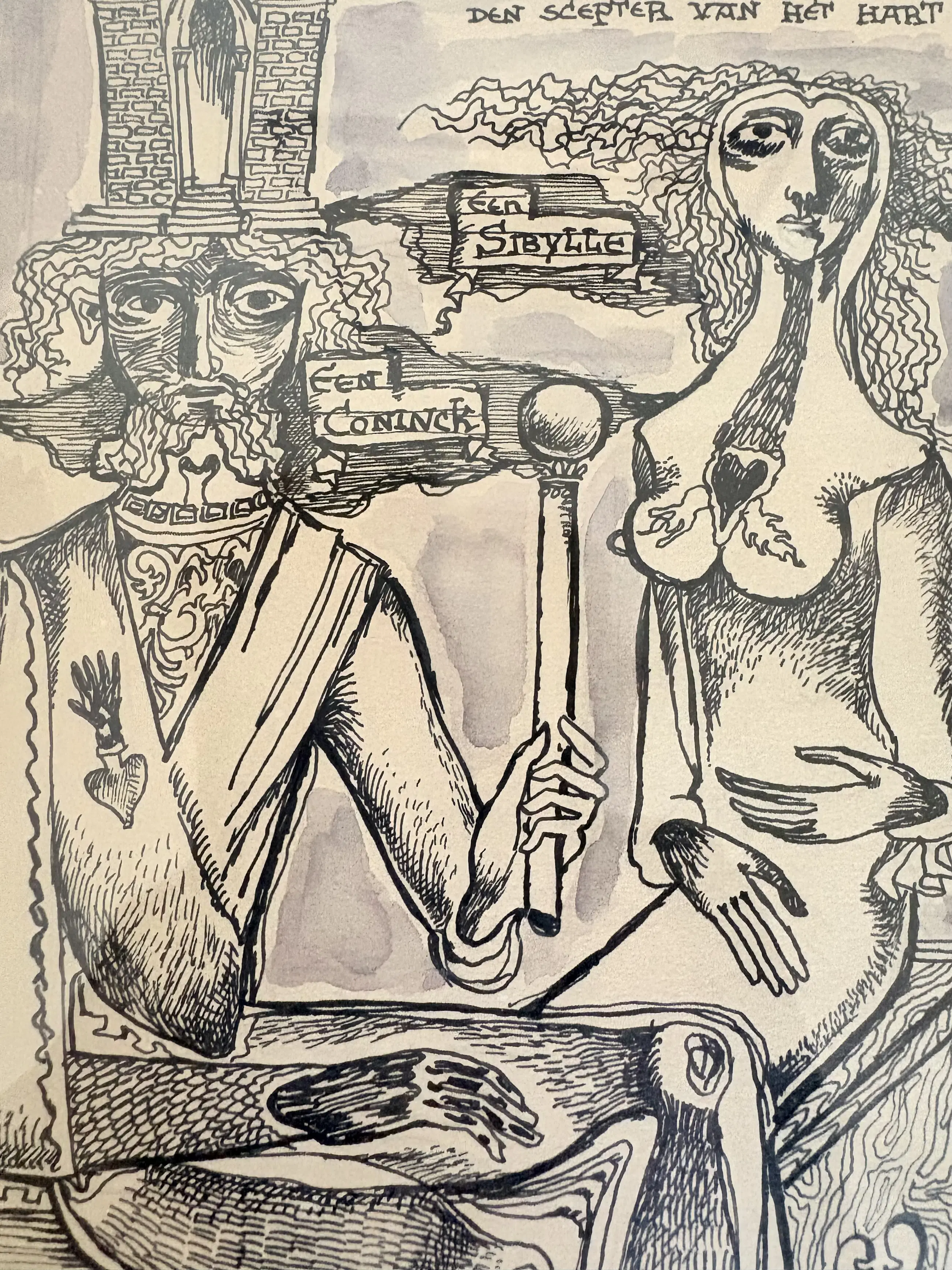
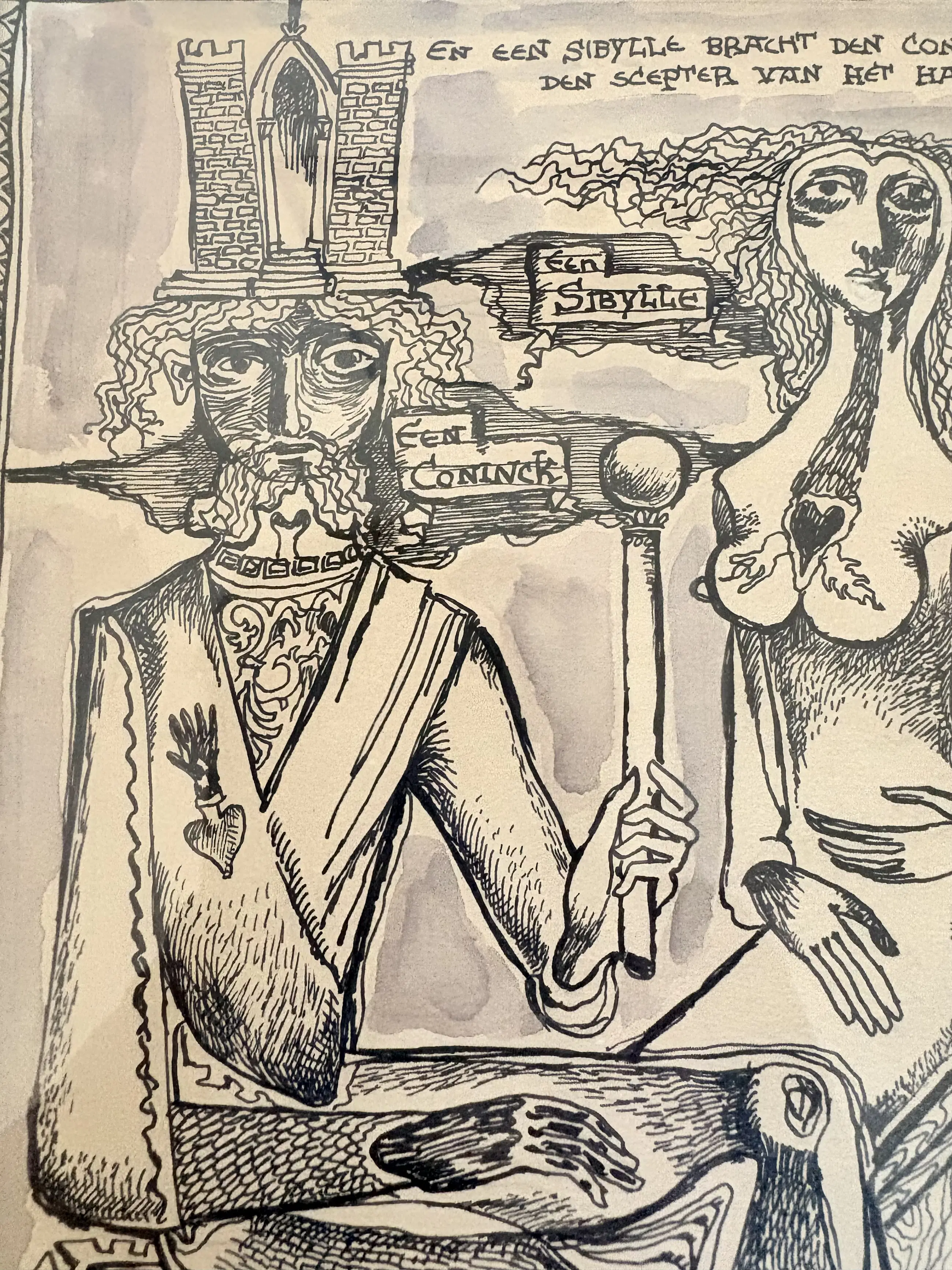
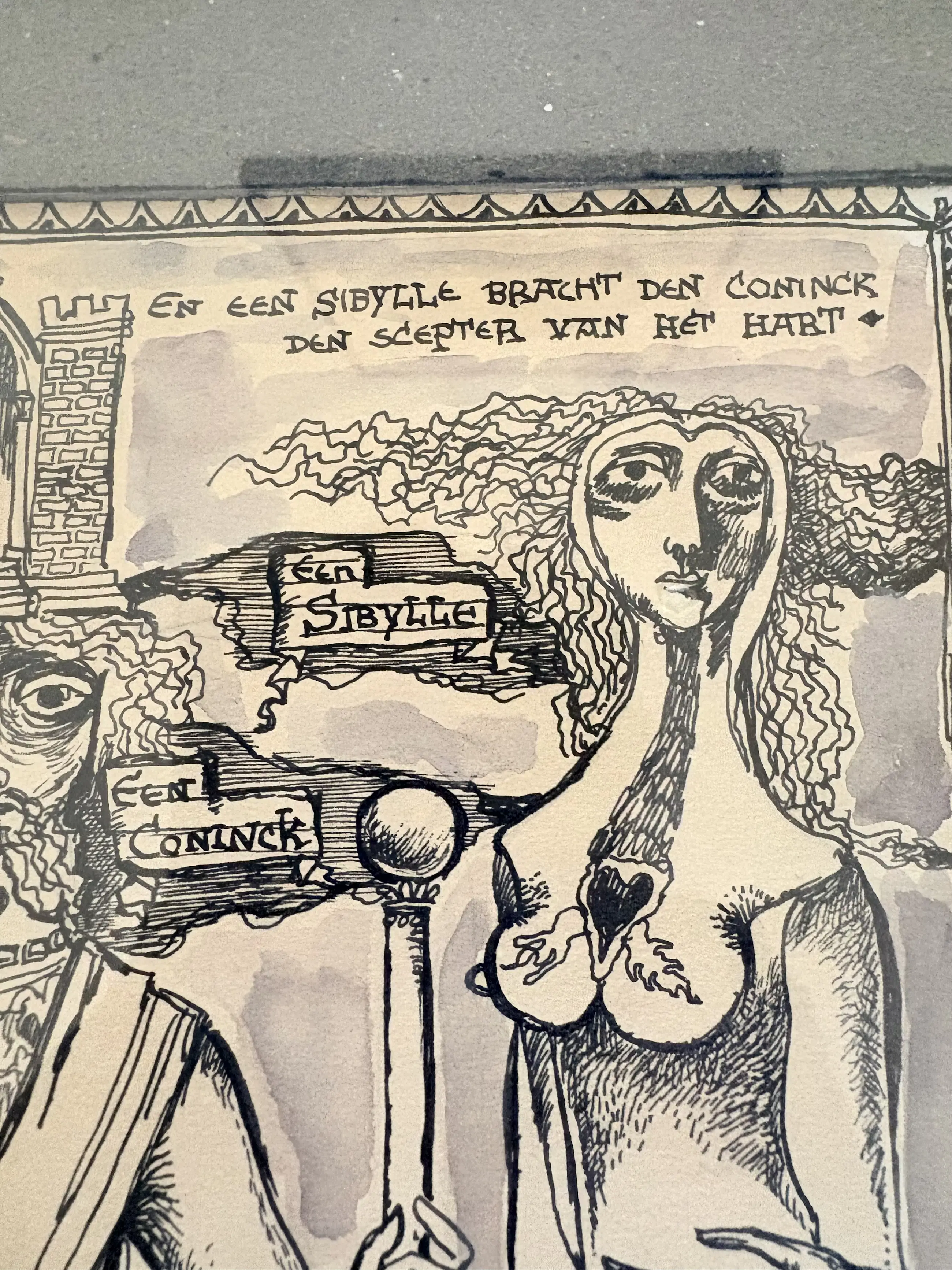
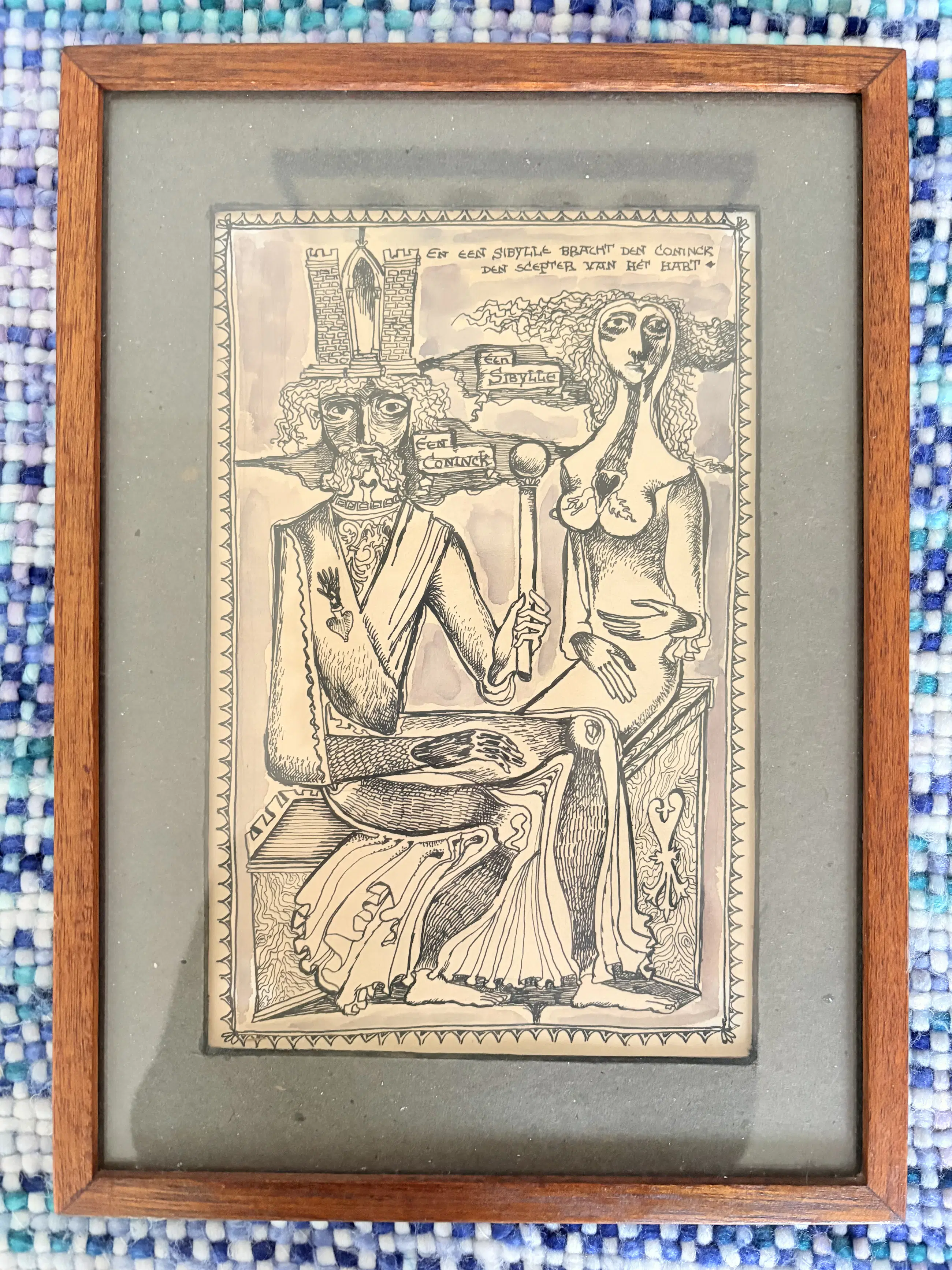
- Omschrijving
- Lucebert (1924-1994)
| Type kunstwerk | Tekening / Aquarel |
| Jaartal | 1946 |
| Techniek | Pen (Inkt) |
| Drager | Papier |
| Ingelijst | Ingelijst |
| Afmetingen | 24 x 16 cm (h x b) |
| Incl. lijst | 31 x 22 cm (h x b) |
| Gesigneerd | Handgesigneerd |
attributed to Lucebert (1924–1994) – Early Work (Pre-CoBrA) – Ink & Wash on Paper – Signed
Striking early figurative composition by Lucebert, executed in ink with subtle wash tones, dating from his formative pre-CoBrA years (mid-1940s).
The work presents a monumental seated figure accompanied by a female presence and symbolic architectural elements. The inscription referencing the Sibyl and “Den Schepper van het Hart” introduces clear religious and prophetic symbolism — themes that strongly marked Lucebert’s immediate post-war period.
The linear execution is precise yet expressive: controlled cross-hatching, elongated anatomy, and medieval-inspired stylisation reveal Northern-European graphic influences. At the same time, the psychological intensity and distortion anticipate the radical energy that would later define CoBrA.
The restrained palette and strong contour lines give the work a graphic clarity reminiscent of early woodcut traditions, while the existential undertone situates it firmly within the post-war European context.
Why this work matters
• Important pre-CoBrA phase
• Clear religious / prophetic iconography
• Early development of Lucebert’s expressive distortion
• Signed example with strong compositional presence
A historically relevant early drawing by one of the Netherlands’ most influential post-war artists, reflecting the intellectual and symbolic foundation of his later avant-garde career.
Striking early figurative composition by Lucebert, executed in ink with subtle wash tones, dating from his formative pre-CoBrA years (mid-1940s).
The work presents a monumental seated figure accompanied by a female presence and symbolic architectural elements. The inscription referencing the Sibyl and “Den Schepper van het Hart” introduces clear religious and prophetic symbolism — themes that strongly marked Lucebert’s immediate post-war period.
The linear execution is precise yet expressive: controlled cross-hatching, elongated anatomy, and medieval-inspired stylisation reveal Northern-European graphic influences. At the same time, the psychological intensity and distortion anticipate the radical energy that would later define CoBrA.
The restrained palette and strong contour lines give the work a graphic clarity reminiscent of early woodcut traditions, while the existential undertone situates it firmly within the post-war European context.
Why this work matters
• Important pre-CoBrA phase
• Clear religious / prophetic iconography
• Early development of Lucebert’s expressive distortion
• Signed example with strong compositional presence
A historically relevant early drawing by one of the Netherlands’ most influential post-war artists, reflecting the intellectual and symbolic foundation of his later avant-garde career.
| Conditie | |||||||||||
| Conditie | Zeer Goed | ||||||||||
| Transport | |||||||||||
| Afhalen | Het werk is af te halen op locatie. Als koper dient u zelf verpakkingsmateriaal mee te nemen. De locatie is: Uccle, België | ||||||||||
| Verzenden | Pakketpost | ||||||||||
| Prijs | Tot 2 kg.
| ||||||||||
| Garantie | |||||||||||
| Garantie | Bij het plaatsen van het item verklaar ik mij akkoord met de garantievoorwaarden zoals deze gelden op Kunstveiling ten aanzien van een juiste omschrijving van het aangeboden item | ||||||||||
De verkoper neemt de volledige verantwoordelijkheid voor dit item. Kunstveiling biedt slechts het platform bij deze transactie, welke direct met de verkoper afgehandeld dient te worden. Meer informatie .
 Nederlands